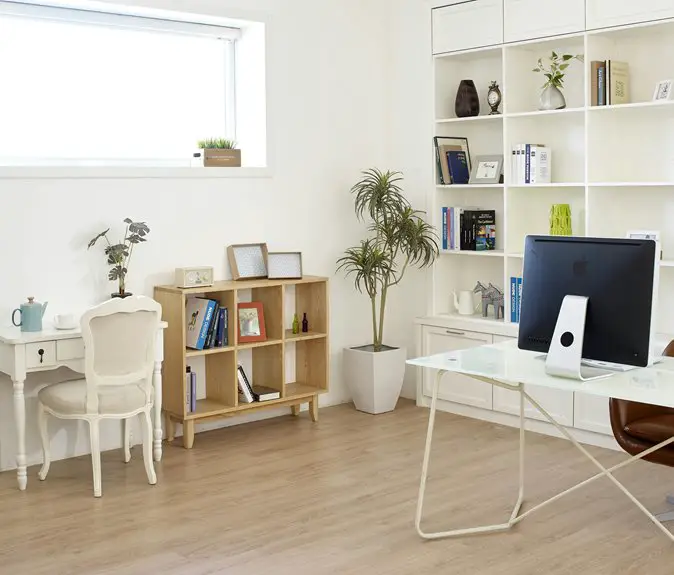
The best lighting for your home office desk setup combines natural light, task lighting, and ambient lighting. Position your desk near a window to maximize daylight and add a desk lamp for focused tasks. Choose adjustable brightness and warmer tones for a cozy feel, while cooler tones can enhance alertness. Don’t forget accent lighting to showcase your style. Want to create a truly effective and inviting workspace? There’s more to discover about optimizing your lighting!
Key Takeaways
- Position your desk near windows to maximize natural light and reduce eye strain.
- Use adjustable task lighting for focused work, ensuring brightness levels suit various tasks.
- Choose ambient lighting with warm tones for relaxation, or cooler tones for increased alertness.
- Avoid glare on screens by arranging your workspace thoughtfully and using sheer curtains.
- Combine different lighting types to create an inviting and productive atmosphere.
Understanding Your Lighting Needs
When you’re setting up your home office, understanding your lighting needs is essential for maintaining focus and productivity. Good lighting can reduce eye strain and enhance your mood, making it easier to concentrate on tasks.
Start by identifying the areas where you’ll work most often. Natural light is ideal, so position your desk near a window if possible. However, you’ll need to supplement with artificial lighting, especially during cloudy days or evenings.
Consider the color temperature of your bulbs; warmer tones create a cozy atmosphere while cooler tones promote alertness. Remember to avoid harsh shadows and glare on your screens, as these can decrease your effectiveness.
Types of Lighting for Home Offices
To create an effective home office, you need to contemplate various types of lighting that can enhance your workspace. The right lighting can reduce eye strain and boost productivity. Here are some common types:
| Type of Lighting | Description |
|---|---|
| Ambient Lighting | Provides overall illumination; typically a ceiling fixture. |
| Task Lighting | Focused light for specific tasks; often a desk lamp. |
| Accent Lighting | Highlights artwork or decor; adds a personal touch. |
| Natural Light | Maximizes daylight; position your desk near windows. |
| Decorative Lighting | Style elements that enhance the room’s aesthetics; like chandeliers. |
Task Lighting: Focus on Your Work
Task lighting can greatly enhance your home office experience by providing focused illumination exactly where you need it.
Enhance your home office with task lighting for focused illumination and improved productivity where you need it most.
This type of lighting helps reduce eye strain and boosts productivity, allowing you to concentrate on your tasks.
Here are some key elements to take into account when selecting task lighting:
- Adjustability: Choose lamps that can be angled or positioned to direct light where it’s needed.
- Brightness: Look for options with adjustable brightness levels to suit different tasks.
- Color Temperature: Select bulbs that emit a cool white light to enhance focus and energy.
- Size: Confirm your light source fits well within your workspace without cluttering.
- Style: Pick a design that complements your decor while remaining functional.
Ambient Lighting: Creating a Comfortable Atmosphere
While task lighting sharpens your focus on specific tasks, ambient lighting sets the overall mood of your workspace.
This type of lighting envelops your room in a soft, warm glow, creating a comfortable atmosphere that encourages productivity and reduces eye strain.
You can achieve the right ambient lighting by using floor lamps, overhead fixtures, or even wall sconces.
Consider the color temperature; warmer tones often promote relaxation, while cooler tones can enhance alertness.
Dimming options are also worthwhile, allowing you to adjust the brightness based on the time of day or your mood.
Ultimately, the right ambient lighting not only complements your task lighting but also transforms your home office into an inviting and inspiring environment.
Accent Lighting: Adding Style and Function
Accent lighting can transform your home office by adding both style and function.
By choosing the right fixtures and layering your light sources, you can enhance your workspace’s mood and focus.
Let’s explore how these elements can elevate your desk setup.
Choose Your Fixture Wisely
Choosing the right fixture can transform your home office from a mundane workspace to a stylish haven.
When selecting an accent light, consider the following elements to enhance both aesthetics and functionality:
- Style: Match the fixture with your overall decor for a cohesive look.
- Size: Confirm the fixture fits well on your desk without overwhelming the space.
- Adjustability: Look for options that allow you to direct light where you need it most.
- Color Temperature: Choose warm tones for a cozy atmosphere or cooler tones for focus.
- Energy Efficiency: Opt for LED fixtures to save on energy costs while minimizing heat output.
Layering Light Sources
Incorporating multiple light sources can elevate your home office by creating a well-rounded and inviting atmosphere.
Start by layering ambient lighting, like a ceiling fixture or soft floor lamp, to provide overall illumination. Next, add task lighting, such as a desk lamp, to focus on your workspace and reduce eye strain.
Finally, consider accent lighting to highlight artwork or architectural features, adding a touch of style and personality to your office. Use dimmable options to adjust brightness as needed, ensuring a comfortable environment for any task.
By thoughtfully combining these layers, you’ll create a functional yet aesthetically pleasing space that inspires productivity and creativity.
Experiment with different arrangements until you find the perfect balance for your unique setup.
Enhance Mood and Focus
While task lighting is essential for productivity, don’t underestimate the power of accent lighting to enhance your mood and focus in your home office.
Accent lighting not only adds style but also creates a more inviting atmosphere. Here are some ways to incorporate it effectively:
- Use table lamps for soft, diffused light that complements your workspace.
- Install wall sconces to highlight artwork or architectural features, adding character to the room.
- Add LED strips under shelves or desks for a modern touch and subtle illumination.
- Choose decorative floor lamps to provide ambient light while enhancing your décor.
- Incorporate color-changing bulbs to adjust the ambiance based on your mood or tasks.
With these elements, you’ll create a workspace that’s both functional and inspiring.
Tips for Optimizing Your Lighting Setup
To optimize your lighting setup, start by maximizing natural light in your workspace.
Position your desk near windows to take advantage of daylight, and consider task lighting options for those darker hours.
The right balance will enhance your focus and comfort throughout the day.
Natural Light Utilization
Utilizing natural light in your home office can greatly enhance your productivity and mood. To make the most of it, consider these tips for optimizing your lighting setup:
- Position your desk near windows to receive ample sunlight throughout the day.
- Use sheer curtains to diffuse harsh sunlight while maintaining brightness.
- Arrange your workspace to avoid glare on your screens.
- Keep windows clean to maximize light penetration and create a pleasant atmosphere.
- Take breaks by stepping outside to refresh your mind and soak up more natural light.
Task Lighting Options
Effective task lighting is essential for a productive home office setup, as it directly impacts your focus and efficiency.
Start by choosing a desk lamp with adjustable brightness and color temperature, allowing you to personalize the light to suit your tasks. Look for LED options, as they’re energy-efficient and long-lasting.
Position your lamp to eliminate glare on your screens while providing ample illumination for your workspace. Consider adding a floor lamp for ambient light that complements your desk lamp, creating a balanced atmosphere.
Don’t forget to assess your room’s overall lighting; combining task lighting with natural light can enhance your productivity.
Experiment with different setups until you find what works best for your workflow and comfort.
Frequently Asked Questions
How Can I Reduce Glare From My Desk Lamp?
To reduce glare from your desk lamp, adjust its angle, use a diffuser, or switch to a lower wattage bulb. Keeping the lamp at a distance can also help minimize harsh reflections on your screen.
What Color Temperature Is Best for Productivity?
For productivity, you’ll want a color temperature around 5000K to 6500K. This range mimics daylight, enhancing alertness and focus. Avoid warmer tones, as they can make you feel more relaxed and less productive.
Are Smart Lights Worth the Investment?
Smart lights can definitely enhance your workspace. They offer customizable brightness and colors, improving your mood and productivity. Plus, you’ll enjoy convenience with remote control and automation, making the investment worthwhile for your office ambiance.
How Do I Position My Lighting Fixtures?
To position your lighting fixtures effectively, you should aim for a combination of overhead and task lighting. Place fixtures at eye level to minimize glare, ensuring they illuminate your workspace without casting harsh shadows.
Can Natural Light Improve My Work Performance?
Natural light boosts your mood and energy, enhancing focus and productivity. It helps reduce eye strain too, making your work environment more comfortable. So, let those rays in and enjoy the benefits!