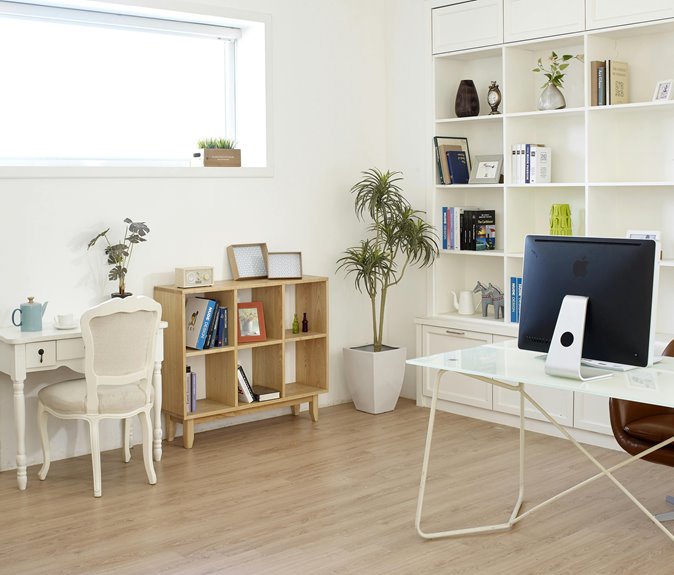
For the best lighting in your home office, you need a mix of natural, task, and ambient lighting. Position your desk near windows to maximize sunlight and use light curtains to filter it. Invest in adjustable desk lamps for focused tasks and opt for warm-toned bulbs to create a cozy atmosphere. Layer different light sources for versatility, and choose energy-efficient bulbs. Interested in how to adjust your setup over time for peak performance?
Key Takeaways
- Utilize a combination of ambient, task, and accent lighting to create a balanced and functional workspace.
- Position your desk near windows to maximize natural light and enhance focus.
- Choose adjustable desk lamps with LED bulbs for effective task lighting that reduces eye strain.
- Opt for soft, warm-toned ambient lighting to create a cozy and inviting atmosphere.
- Select energy-efficient bulbs around 4000K for optimal brightness and productivity without high electricity costs.
The Importance of Lighting in a Home Office
When you’re setting up your home office, lighting plays a crucial role in your productivity and overall well-being. Proper lighting can reduce eye strain, enhance focus, and create an inviting atmosphere.
You should aim for a balance of ambient, task, and accent lighting to suit different activities. Ambient lighting provides general illumination, while task lighting, like desk lamps, helps you see clearly when reading or working on detailed projects. Accent lighting can add personality and warmth to your space.
Avoid harsh overhead lights that can create shadows and discomfort. Instead, opt for softer, adjustable options.
Maximizing Natural Light
Although artificial lighting is essential, maximizing natural light in your home office can greatly enhance your work environment.
Start by positioning your desk near windows to take advantage of the sunlight. This not only brightens your workspace but also boosts your mood and productivity.
Positioning your desk near windows harnesses natural sunlight, enhancing both your workspace brightness and overall productivity.
Use light, sheer curtains to filter the light without blocking it completely. Keep your windows clean to allow as much light in as possible.
Additionally, consider painting your walls in lighter colors, which can reflect natural light and make the space feel larger.
Finally, avoid placing large furniture pieces in front of windows that could obstruct the light.
Task Lighting: Focusing on Your Work
Good task lighting is essential for maintaining focus and reducing eye strain in your home office. You should aim for bright, direct light that illuminates your workspace without being harsh.
A desk lamp with an adjustable arm lets you position light exactly where you need it, whether you’re reading documents or typing on your computer. Consider using LED bulbs for their energy efficiency and longevity.
Make sure the light source is positioned to minimize glare on your screens. If you often work late, a lamp with multiple brightness settings can help you adjust the light according to your needs.
Ultimately, the right task lighting enhances your productivity and keeps your workspace comfortable for extended periods.
Ambient Lighting: Creating a Comfortable Atmosphere
While task lighting helps you focus on specific tasks, ambient lighting sets the overall mood of your home office. It creates a warm, inviting atmosphere that makes you feel comfortable and productive.
To achieve this, consider using soft, diffused light sources like floor lamps, wall sconces, or ceiling fixtures. These lights should illuminate the entire space without being harsh or overpowering. You can also choose adjustable options, allowing you to modify brightness based on the time of day or your mood.
Incorporating warm tones can enhance coziness, making your workspace feel less sterile. Remember, the goal is to create an environment that encourages creativity and focus while keeping distractions at bay.
Choose wisely for a pleasant working experience.
Layering Different Types of Lighting
To create a truly functional and inviting home office, you should consider layering different types of lighting.
Start with ambient lighting to provide a warm, overall glow. This helps set the mood and makes the space comfortable.
Begin with ambient lighting for a cozy atmosphere that enhances comfort and sets the perfect mood.
Next, add task lighting, like a desk lamp, to focus on your work area. This will reduce eye strain while you tackle those important tasks.
Finally, incorporate accent lighting to highlight artwork or shelves; it adds character and depth to the room.
By blending these lighting types, you’ll achieve a balanced environment that enhances productivity and creativity.
Choosing the Right Light Bulbs
When choosing light bulbs for your home office, consider both color temperature and energy efficiency ratings.
The right color temperature can affect your mood and productivity, while energy-efficient bulbs can save you money in the long run.
Let’s explore how these factors can enhance your workspace.
Color Temperature Considerations
Choosing the right color temperature for your home office lighting can considerably impact your productivity and mood. Generally, color temperatures are measured in Kelvin (K), ranging from warm to cool.
Here’s a quick guide to help you decide:
| Color Temperature (K) | Effect on Mood/Focus |
|---|---|
| 2700K – 3000K | Warm, cozy, relaxing |
| 3000K – 4000K | Neutral, balanced, alert |
| 4000K – 5000K | Cool, focused, invigorating |
| 5000K – 6500K | Bright, stimulating, energetic |
| 6500K+ | Harsh, can cause eye strain |
For most tasks, a neutral light around 4000K is ideal. Experiment to find what works best for you, ensuring your home office feels both inviting and conducive to productivity.
Energy Efficiency Ratings
Selecting the right light bulbs for your home office goes beyond just brightness; energy efficiency ratings play a crucial role in your decision.
When you choose bulbs with high energy efficiency ratings, like LED or CFL, you’ll save on electricity costs while reducing your carbon footprint.
Look for the Energy Star label, which indicates that the bulb meets strict efficiency guidelines.
Compare lumens to watts—more lumens mean brighter light without higher energy consumption.
Understanding these ratings helps you select bulbs that not only illuminate your workspace effectively but also align with your budget and eco-friendly goals.
Tips for Adjusting Your Lighting Setup Over Time
As the seasons change, you should keep an eye on how natural light affects your workspace.
Don’t hesitate to experiment with different light sources to find what works best for you.
Adjusting your setup can make a big difference in your comfort and productivity.
Monitor Natural Light Changes
While you mightn’t notice it at first, natural light in your home office changes throughout the day and across seasons, impacting your workspace’s overall ambiance and functionality.
To keep your environment productive, pay attention to how light shifts. In the morning, sunlight might flood your space, while afternoons could bring shadows from nearby trees or buildings.
Take note of these changes and adjust your artificial lighting accordingly. Consider using adjustable blinds or curtains to control glare and enhance daylight when needed.
During darker months, you may need to increase your lighting intensity to maintain focus. By staying aware of these fluctuations, you can create a dynamic workspace that adapts to your needs throughout the year.
Experiment With Light Sources
To create the ideal lighting setup in your home office, it’s crucial to experiment with different light sources.
Start with a mix of ambient, task, and accent lighting to achieve balance. Consider using LED bulbs for their energy efficiency and adjustable brightness. Try a desk lamp with a color temperature that complements your screen—around 5000K is often best for reducing eye strain.
Don’t hesitate to switch things up; move your lamps around, or add floor lamps for additional layers.
Observe how different setups affect your focus and mood throughout the day. Also, remember to adjust as seasons change; natural light can vary considerably.
Regularly reassess your lighting to guarantee it continues to support your productivity and comfort.
Frequently Asked Questions
How Does Color Temperature Affect My Home Office Lighting?
Color temperature impacts your home office lighting by influencing mood and productivity. Warmer tones create a cozy atmosphere, while cooler tones enhance focus and alertness. Choose wisely to optimize your workspace for comfort and efficiency.
What Is the Best Position for Desk Lamps?
The best position for desk lamps is usually to the side or behind your monitor, ensuring light doesn’t create glare. Adjust the height so it illuminates your workspace without causing shadows or distractions.
Can Smart Lighting Improve My Productivity?
Smart lighting can boost your productivity by allowing you to adjust brightness and color temperature. You’ll find it easier to focus and stay energized throughout the day, enhancing your overall work experience.
How Do I Reduce Glare on Screens?
To reduce glare on screens, adjust your monitor’s angle, use an anti-glare screen protector, and position your lighting sources behind or beside you. Also, consider using curtains to block direct sunlight.
What Are the Best Lighting Options for Small Spaces?
For small spaces, consider using wall-mounted fixtures, pendant lights, or floor lamps. These options maximize light without taking up much room. You’ll create a brighter atmosphere while maintaining a cozy, inviting environment.