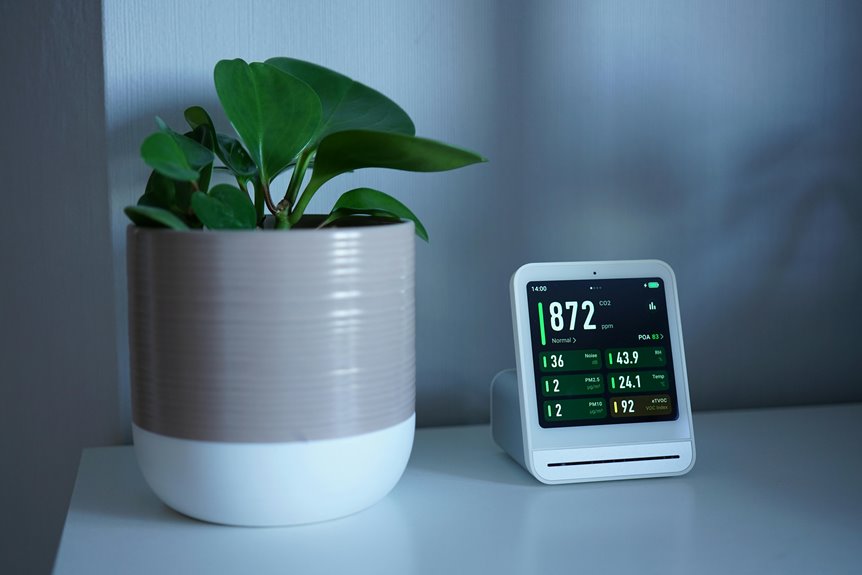
Air quality monitors primarily detect common pollutants like particulate matter and VOCs, but they often struggle to accurately identify mold spores. Mold spores are tiny and can fall below the detection range of many devices. They also can’t differentiate between harmful and harmless molds. So, while these monitors offer valuable insights into air quality, they’re not the best at spotting mold. If you want to understand more about choosing the right monitor, there’s plenty more to contemplate.
Key Takeaways
- Most air quality monitors are limited in detecting specific mold spores, as they often focus on particulate matter instead.
- Mold spores range from 1 to 30 microns, making them difficult to detect with standard devices.
- Monitors typically measure airborne pollutants but may miss settled mold spores on surfaces.
- They cannot differentiate between harmful and harmless mold types, leading to potential health risks.
- Regular calibration is necessary for accurate monitoring, but many users neglect this, affecting detection reliability.
Understanding Air Quality Monitors
Air quality monitors are essential tools that help you track the levels of various pollutants in your environment. These devices measure airborne particles, gases, and other contaminants, providing real-time data on your indoor and outdoor air quality.
By using an air quality monitor, you can identify potential health hazards and take steps to improve your living space. Understanding the different types of pollutants these monitors detect is vital for your health.
Using an air quality monitor allows you to pinpoint health risks and enhance your living environment effectively.
For example, particulate matter, volatile organic compounds, and carbon dioxide can all affect your well-being. With this knowledge, you can make informed decisions about air purification, ventilation, and overall environmental safety.
Ultimately, monitoring air quality empowers you to create a healthier, more comfortable atmosphere in your home or workplace.
How Air Quality Monitors Work
Air quality monitors use advanced sensor technology to detect pollutants in your environment.
These sensors measure various air quality parameters, giving you real-time data on what’s in the air you breathe.
Understanding these measurement techniques can help you make informed decisions about your indoor air quality.
Sensor Technology Explained
When you rely on an air quality monitor, you’re tapping into sophisticated sensor technology designed to measure various pollutants and particles in your environment.
These sensors work by detecting changes in air composition, allowing you to understand what’s lurking around you.
Key elements of this technology include:
- Particulate Sensors: These detect tiny particles, like dust and mold spores, by measuring light scattering.
- Gas Sensors: These identify harmful gases, such as carbon dioxide and volatile organic compounds (VOCs), through chemical reactions.
- Humidity Sensors: These monitor moisture levels, which are essential for mold growth and overall air quality.
Together, these sensors provide thorough insights, helping you maintain a healthier living space.
Measurement Techniques Overview
Understanding how air quality monitors work involves examining the measurement techniques they employ to assess your environment.
These devices typically utilize sensors to detect particulate matter, including mold spores. Optical sensors use light scattering to identify and count particles in the air, while laser-based methods provide higher precision.
Some monitors also employ electrochemical sensors to measure specific pollutants, giving you a broader understanding of air quality.
When you activate the monitor, it continuously samples air, analyzing the data in real-time. This information is then displayed through user-friendly interfaces, allowing you to track changes and understand potential mold risks.
Types of Pollutants Detected by Air Quality Monitors
When you use an air quality monitor, you’ll often find it detects common indoor pollutants like dust, pet dander, and volatile organic compounds.
However, it’s important to understand the limitations in mold spore detection, as not all monitors can accurately identify different types of spores.
Knowing what your device can and can’t detect helps you take the right steps for a healthier indoor environment.
Common Indoor Pollutants
Air quality monitors play an essential role in identifying common indoor pollutants that can affect your health and comfort.
These devices help you keep track of various harmful substances in the air you breathe. Here are three common indoor pollutants you should be aware of:
- Volatile Organic Compounds (VOCs): Emitted by paints, cleaning agents, and furniture, VOCs can cause headaches and respiratory issues.
- Particulate Matter (PM): Tiny particles from dust, smoke, or pet dander can lead to allergies and asthma flare-ups.
- Carbon Dioxide (CO2): Elevated levels can indicate poor ventilation, leading to fatigue and decreased cognitive function.
Mold Spores Detection Limitations
While air quality monitors can effectively track common indoor pollutants like VOCs, particulate matter, and CO2, they often struggle with detecting mold spores. Mold spores are tiny and can easily go unnoticed by standard monitors. Typically, these devices are calibrated for larger particles, leaving them less equipped to identify the smaller, airborne mold spores.
Here’s a quick comparison of what air quality monitors usually detect:
| Pollutant Type | Detection Capability |
|---|---|
| VOCs | High |
| Particulate Matter | High |
| CO2 | High |
| Mold Spores | Low |
| Bacteria | Low |
Because of these limitations, you might need specialized equipment for accurate mold detection in your environment.
The Science Behind Mold Spores
Mold spores are microscopic particles that play an essential role in the natural decomposition process. You mightn’t realize it, but these spores are everywhere, floating in the air and settling on various surfaces.
Understanding their characteristics helps you grasp their impact on air quality. Here are some key points about mold spores:
Understanding mold spores is crucial for recognizing their effects on air quality and potential health risks.
- Size: Mold spores typically range from 1 to 30 microns, making them invisible to the naked eye.
- Reproduction: They reproduce rapidly, especially in warm, damp environments, which can lead to mold outbreaks.
- Health Effects: Exposure can trigger allergic reactions and respiratory issues in sensitive individuals.
Limitations of Air Quality Monitors in Detecting Mold
Although air quality monitors can be valuable tools for detecting pollutants, they’ve significant limitations when it comes to identifying mold spores.
First, many monitors focus on particulate matter but mightn’t capture the specific size and type of mold spores accurately. Mold spores can be tiny, often falling below the detection range of standard devices.
Also, these monitors typically measure ambient air quality, missing spores that settle on surfaces or exist in still air.
Additionally, they may not differentiate between harmful and harmless mold types, which can lead to confusion.
Finally, without regular calibration, their accuracy can diminish, putting your health at risk.
Understanding these limitations is vital if you’re relying on these devices to keep your environment safe from mold.
Choosing the Right Air Quality Monitor for Mold Detection
Selecting an appropriate air quality monitor for mold detection requires understanding what features are most beneficial for your needs.
Not all monitors are created equal, so you’ll want to focus on a few key aspects that can enhance your mold detection efforts:
- Particulate Matter Sensors: Look for monitors that can detect PM2.5 and PM10 particles, as mold spores fall within these categories.
- Real-Time Monitoring: Opt for devices that give you real-time data, allowing you to address mold issues promptly.
- Humidity Sensors: Since mold thrives in damp environments, a monitor with humidity tracking can help you maintain ideal conditions that prevent growth.
Frequently Asked Questions
Can Air Quality Monitors Prevent Mold Growth in Homes?
Air quality monitors can’t directly prevent mold growth, but they help you identify humidity levels and air quality issues. By addressing these factors, you can create an environment less conducive to mold development in your home.
What Are the Symptoms of Mold Exposure?
If you’re exposed to mold, you might experience symptoms like sneezing, coughing, runny nose, itchy eyes, and skin irritation. In some cases, headaches and respiratory issues can also occur, especially for those with allergies or asthma.
How Often Should I Check Indoor Air Quality for Mold?
You should check your indoor air quality for mold at least once a month. If you notice any symptoms or changes, increase your frequency. Regular checks help guarantee a healthier living environment for you and your family.
Are There Specific Brands Better for Mold Detection?
When choosing a monitor, consider brands like IQAir or Aeroqual, known for precision. They specialize in mold detection, enhancing your indoor air quality checks. Always research user reviews to guarantee it fits your specific needs.
What to Do if Mold Is Detected by the Monitor?
If your monitor detects mold, you should immediately assess the area. Identify moisture sources, ventilate the space, and clean affected surfaces. If necessary, consult a professional for thorough remediation to guarantee a safe environment.