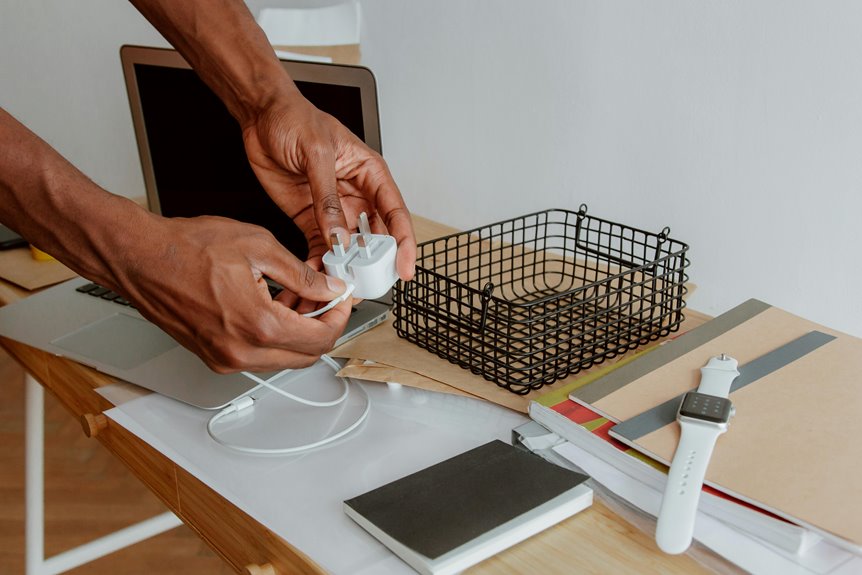
Bad cable management can definitely lead to ergonomic problems. When cables are tangled or sprawled across your workspace, you might find yourself reaching awkwardly or adjusting your posture constantly, which can strain your neck and back. Loose cables can also create tripping hazards, increasing the risk of injury. By organizing your cables, you’ll create a cleaner, safer environment that promotes better posture and productivity. Discover more insights on how to improve your workspace’s efficiency and comfort.
Key Takeaways
- Poor cable management can cause distractions, leading to awkward postures and increased strain on the neck and shoulders.
- Tangled cables can create tripping hazards, increasing the risk of falls and workplace injuries.
- Cluttered cables restrict movement, forcing constant position adjustments that contribute to discomfort and fatigue.
- Disorganized cables lead to a chaotic workspace, reducing focus and overall productivity.
- Effective cable management supports natural posture and enhances comfort, promoting better ergonomic practices.
The Connection Between Cable Management and Ergonomics
While you may not realize it, poor cable management can considerably impact your ergonomic setup. When cables are tangled or in disarray, they can create visual clutter that distracts you from your work. This distraction can lead to poor posture as you lean closer to your screen or reach awkwardly to untangle cords.
Additionally, having cables strewn about increases the risk of tripping, which can lead to injuries that affect your ability to work comfortably. A clean, organized workspace allows you to focus better and maintain a more natural posture.
Common Ergonomic Issues Caused by Poor Cable Organization
When cables are tangled and disorganized, they can lead to several ergonomic issues that affect your comfort and productivity. You might find yourself straining to reach devices, causing discomfort in your neck and shoulders. Tripping hazards can arise, increasing the risk of falls and injuries. Additionally, poor cable organization can contribute to a cluttered workspace, leading to distractions and decreased focus.
| Issue | Description | Impact |
|---|---|---|
| Strain | Reaching for tangled cables | Neck and shoulder discomfort |
| Tripping Hazard | Loose cables on the floor | Risk of falls and injuries |
| Workspace Clutter | Disorganized cables | Decreased focus and productivity |
Impact on Posture and Movement
Poor cable organization doesn’t just create clutter; it can greatly impact your posture and movement throughout the day.
When cables are tangled or sprawled across your workspace, you may find yourself constantly adjusting your position to avoid them. This can lead to awkward postures as you twist or lean in unnatural ways. Over time, these habits strain your back, neck, and shoulders, contributing to discomfort and fatigue.
Additionally, poor cable management can restrict your movement, making it harder to reach for necessary items or adjust your chair.
Tripping Hazards and Workplace Safety
Even if you don’t realize it, tangled cables can create serious tripping hazards in your workspace. These cables often stretch across walkways, making it easy for you or your coworkers to trip and fall. Such accidents can lead to injuries, lost productivity, and even potential lawsuits.
You might think you’re careful, but distractions happen, and a single misplaced cable can cause a significant mishap. Additionally, maneuvering around tangled cords can disrupt your workflow and focus, increasing stress levels.
To maintain a safe environment, it’s essential to keep cables organized and out of high-traffic areas. By doing so, you not only enhance safety but also improve overall workplace efficiency.
Strategies for Effective Cable Management
To tackle messy cables, start organizing with cable ties to keep everything neat and secure.
You can also utilize cable management boxes to hide unsightly cords, creating a cleaner look.
Finally, implementing under-desk solutions can free up valuable space and reduce clutter in your workspace.
Organize With Cable Ties
Transform your workspace by using cable ties for effective cable management. These simple tools can help you bundle cables neatly, reducing clutter and enhancing your ergonomic setup. By securing cables together, you prevent tangling and make it easier to identify each wire, promoting a more organized environment.
| Cable Type | Recommended Tie Length |
|---|---|
| Power Cords | 8-12 inches |
| HDMI Cables | 6-10 inches |
| USB Cables | 4-8 inches |
| Ethernet Cables | 8-12 inches |
| Audio Cables | 6-10 inches |
Choose the right length for your cables to maintain flexibility while keeping them tidy. With cable ties, you’ll enjoy a cleaner, more efficient workspace that supports your ergonomic needs.
Utilize Cable Management Boxes
While you might be tempted to leave cables exposed, utilizing cable management boxes can greatly improve the aesthetics and functionality of your workspace.
These boxes not only hide unsightly cords but also help prevent tangling, making it easier for you to maintain an organized environment.
Here are three key benefits of using cable management boxes:
- Enhanced Safety: By containing cables, you reduce tripping hazards and protect cords from damage.
- Cleaner Appearance: A box conceals clutter, creating a more professional and visually appealing workspace.
- Easier Access: When you need to unplug or rearrange devices, a management box allows for quick access without the hassle of untangling.
Investing in cable management boxes can greatly enhance your overall work experience.
Implement Under-Desk Solutions
After setting up cable management boxes, you can take your organization a step further by implementing under-desk solutions.
Start by using cable clips or adhesive cable organizers to secure cords along the underside of your desk. This keeps cables hidden and prevents them from tangling.
Consider a cable management tray mounted to the desk’s underside; it can hold multiple cords neatly. You might also try using Velcro straps to bundle cables together, creating a streamlined look.
If you have a standing desk, guarantee that cables have enough slack to move freely without pulling.
Tools and Accessories for Organized Workspaces
To create an organized workspace, you need the right tools and accessories.
Cable management solutions like clips and sleeves can keep your cords tidy, while workspace organization tools help you maximize your efficiency.
Let’s explore how these items can transform your setup.
Cable Management Solutions
Effective cable management is essential for creating an organized workspace, especially when you want to maximize productivity and reduce distractions.
By implementing the right tools and accessories, you can keep your cables tidy and accessible. Here are three cable management solutions you should consider:
- Cable Clips: Use these to secure cables along your desk or wall, preventing tangles and keeping them out of sight.
- Wire Sleeves: These flexible sleeves bundle multiple cords together, providing a clean look and protecting them from wear.
- Cable Trays: Install trays under your desk to hold excess cables, ensuring a clutter-free surface.
Workspace Organization Tools
A well-organized workspace can greatly enhance your productivity and focus. To achieve this, consider investing in workspace organization tools.
Start with drawer organizers to keep stationery and small items neatly stored. Use cable clips and ties to manage cords, preventing clutter and potential hazards.
Desk organizers can help you maintain a clear surface, allowing easy access to essentials without distractions. Labeling systems can streamline document retrieval, saving you time and minimizing stress.
Additionally, a pegboard or wall-mounted shelves can free up desk space while providing a place for tools and supplies.
Benefits of a Tidy Work Environment on Health and Productivity
While you may not realize it, a tidy work environment greatly impacts your health and productivity.
When your workspace is organized, you’ll notice several benefits that enhance both your physical well-being and work performance.
Here are three key advantages:
- Reduced Stress: A clutter-free space minimizes distractions, allowing you to focus better, which leads to less anxiety and more efficient work.
- Improved Posture: Proper cable management and organization encourage ergonomic setups, promoting better posture and reducing the risk of musculoskeletal issues.
- Enhanced Creativity: A clean environment fosters creativity by providing a clear mental space, helping you think more effectively and generate innovative ideas.
Frequently Asked Questions
Can Poor Cable Management Affect My Mental Well-Being?
Imagine a tangled garden, where weeds choke the flowers. Poor cable management can clutter your space, creating stress and distraction. When your environment feels chaotic, your mental well-being suffers, leaving you less focused and more overwhelmed.
How Often Should I Reorganize My Cables?
You should reorganize your cables every few months or whenever you notice clutter. Regular maintenance keeps your workspace tidy and helps prevent tangles, making it easier to find what you need when you need it.
Are There Specific Cables That Are More Problematic?
Did you know that tangled cables can reduce productivity by up to 30%? You’ll find power cords and charging cables often cause the most frustration, so keep them organized to enhance your workspace efficiency.
Can Cable Management Improve My Device’s Lifespan?
Yes, good cable management can definitely improve your device’s lifespan. By reducing wear and tear on cables, preventing tangles, and ensuring proper airflow, you’re helping your devices run more efficiently and last longer.
What Are the Costs Associated With Improper Cable Management?
Improper cable management’s like ignoring a tangled mess; it creates chaos. You’ll face costs like equipment damage, increased energy use, and even safety hazards. Invest time in organizing, and save money in the long run.