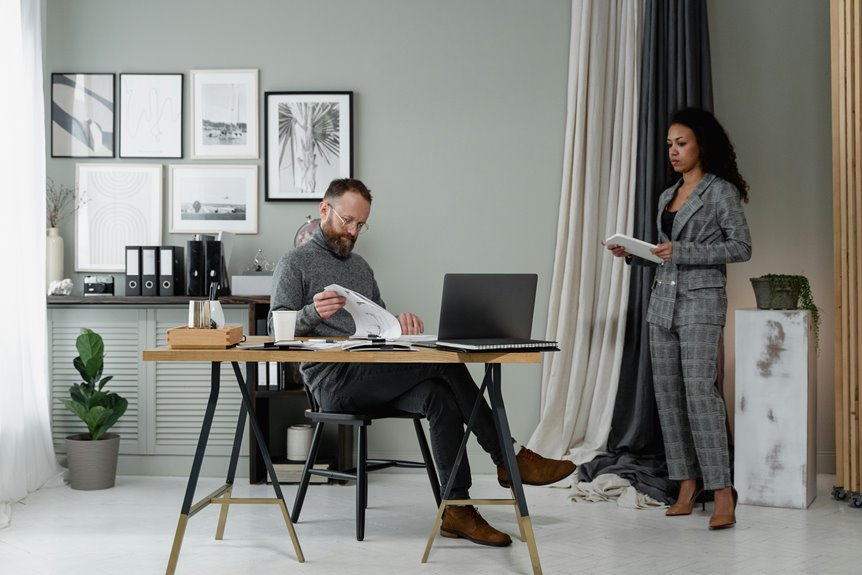
Yes, you can wear high heels at a standing desk, but be cautious. While they enhance your posture and style, they can lead to foot pain and discomfort over time. The unnatural angle of heels may disrupt your natural alignment and cause fatigue. To stay comfortable while maintaining your look, consider tips and alternatives that balance style with foot health. There are stylish options that won’t compromise comfort, which you can explore further.
Key Takeaways
- Wearing high heels at a standing desk can disrupt posture and balance, potentially leading to discomfort and fatigue.
- High heels may cause foot pain and swelling due to increased pressure on the balls of the feet.
- Opt for lower heels with a wider toe box and gel inserts to enhance comfort while standing.
- Consider stylish alternatives like loafers or supportive sneakers that provide both comfort and professionalism.
- Incorporating anti-fatigue mats can improve overall comfort when standing, regardless of the footwear choice.
Benefits of Wearing High Heels
While you might think high heels are just a fashion statement, they actually offer several benefits, especially when paired with a standing desk.
Wearing heels can enhance your posture, making you stand taller and more confident. This improved alignment helps reduce back strain, which can be an issue when you’re on your feet all day.
High heels also engage your core muscles, giving you a subtle workout as you maintain balance. They can shift your weight, promoting better circulation in your legs.
High heels not only enhance your posture but also engage your core, subtly toning muscles while promoting circulation in your legs.
Additionally, the sleek look of heels can elevate your professional appearance, making a positive impression on colleagues and clients alike.
Potential Drawbacks of High Heels at a Standing Desk
While high heels can elevate your style at a standing desk, they also come with some serious drawbacks.
You might experience foot pain, struggle with posture and balance, and face increased fatigue and discomfort throughout the day.
It’s important to weigh these potential issues before slipping into those fashionable shoes.
Foot Pain Concerns
Although wearing high heels can elevate your style, doing so at a standing desk can lead to significant foot pain.
The elevated position forces your feet into an unnatural angle, increasing pressure on the balls of your feet and potentially causing discomfort. You might notice aching arches or even sharp pain after a few hours.
High heels can also restrict blood flow, leading to swelling and fatigue. If you’re on your feet all day, the added strain from heels can turn a productive workday into a painful experience.
Consider switching to more supportive footwear or alternating between heels and comfortable shoes to keep your feet happy and healthy while you work at your standing desk.
Posture and Balance Issues
Wearing high heels at a standing desk can disrupt your posture and balance, making it harder to maintain a natural alignment. High heels shift your weight forward, forcing you to lean back to compensate. This can cause strain on your lower back and neck, leading to discomfort over time.
Additionally, the elevated position of your heels may create instability, increasing your risk of wobbling or losing your balance. You might find it challenging to stand still or shift your weight comfortably. This instability can also distract you from your work, as you focus on maintaining balance instead of your tasks.
Ultimately, while high heels may elevate your style, they can compromise your posture and overall stability at a standing desk.
Fatigue and Discomfort Risks
High heels can lead to significant fatigue and discomfort when you’re standing at a desk for extended periods. The elevated position of heels forces your body into unnatural postures, putting strain on your feet and legs. This can result in aching arches, swollen feet, or even back pain.
| Issue | Impact |
|---|---|
| Foot Pain | Discomfort while standing |
| Leg Fatigue | Reduced stamina |
| Back Strain | Increased discomfort |
Wearing high heels might boost your confidence, but the toll it takes on your body can overshadow that. If you choose to wear heels at your standing desk, consider comfortable alternatives or limit their wear to shorter durations.
Tips for Comfortably Wearing High Heels While Standing
When you’re maneuvering a busy workday at a standing desk, finding comfort in high heels can be a challenge.
Start by choosing heels that have a wider toe box and a lower height, ideally under three inches. This helps distribute your weight more evenly and reduces pressure on your feet.
Consider using gel inserts for extra cushioning, which can make a noticeable difference.
Take regular breaks to shift your weight and stretch your legs; this will help manage fatigue.
Rotate your shoes throughout the week to give your feet a rest from the same pair.
Finally, focus on your posture—keep your shoulders back and your weight centered to promote comfort while standing.
Footwear Alternatives That Combine Style and Comfort
If high heels prove too uncomfortable for long periods at your standing desk, there are plenty of stylish alternatives that don’t compromise on comfort.
Consider chic loafers or ballet flats, which offer elegance without sacrificing support. Ankle boots with low, chunky heels can also elevate your look while providing stability.
Chic loafers and ballet flats provide elegance and support, while ankle boots with chunky heels offer both style and stability.
Sneakers have come a long way regarding style, so opt for sleek, fashionable designs that keep your feet happy. Mules are another trendy choice, combining ease of wear with a polished appearance.
Don’t forget about supportive sandals during warmer months; they can be both stylish and comfortable.
With these options, you’ll maintain your professional appearance while ensuring your feet feel great throughout your workday.
Importance of Foot Health and Ergonomics
Maintaining foot health is essential, especially when you’re standing for long periods at a desk. Poor foot health can lead to discomfort, fatigue, and even long-term issues like plantar fasciitis. It’s vital to prioritize ergonomics to support your feet effectively. Proper footwear, floor mats, and foot positioning are key factors in maintaining comfort while you work.
| Footwear Type | Benefits |
|---|---|
| Sneakers | Cushioning and support |
| Flats | Breathable and flexible |
| Low Heels | Slight elevation without strain |
| Orthopedic Shoes | Designed for foot health |
| Insoles | Enhanced arch support |
Personalizing Your Standing Desk Experience
Personalizing your standing desk experience is all about finding what works best for you.
Start by choosing appropriate footwear that balances comfort and style, and don’t forget to adjust your desk height for ideal ergonomics.
Choosing Appropriate Footwear
Choosing the right footwear plays an essential role in enhancing your comfort and productivity at a standing desk. You’ll want shoes that support your feet and keep you feeling good throughout the day.
Here are some tips to help you choose appropriate footwear:
- Opt for Comfort: Look for cushioned insoles and arch support to reduce fatigue.
- Consider Stability: Choose shoes with a wide base to help maintain balance while standing.
- Avoid High Heels: If you want to wear stylish shoes, consider block heels or lower options that provide better support.
- Choose Breathable Materials: Select shoes made from breathable fabrics to keep your feet cool and comfortable.
With the right footwear, you’ll feel more energized and focused at your standing desk!
Desk Height Adjustments
Wearing the right footwear is just one piece of the puzzle when it comes to creating a comfortable standing desk setup.
Desk height adjustments play an essential role in ensuring you maintain proper posture while working. Your elbows should be at a 90-degree angle when typing, and your screen should be at eye level to avoid straining your neck.
To find the ideal height, start by adjusting your desk so that your wrists remain straight while typing. Don’t hesitate to make small tweaks throughout the day; your comfort may change as you shift between sitting and standing.
A personalized setup not only boosts your productivity but also helps reduce fatigue, allowing you to focus on your tasks without discomfort.
Comfort vs. Style
While it’s important to look stylish at your standing desk, comfort shouldn’t take a back seat.
Balancing both can enhance your work experience. Here’s how to achieve that perfect mix:
- Choose the Right Footwear: Opt for shoes with good arch support. High heels can elevate your look but consider a stylish block heel for added comfort.
- Adjust Your Desk: Confirm your desk height accommodates your posture to prevent strain.
- Incorporate Anti-Fatigue Mats: These mats can provide cushioning and support, helping you stand longer without discomfort.
- Accessorize Wisely: Use chic yet functional accessories, like a comfortable standing mat or supportive insoles, to enhance both style and comfort.
Finding the right balance allows you to feel good and look great while working!
Frequently Asked Questions
Can High Heels Cause Long-Term Damage to My Feet?
Yes, high heels can cause long-term damage to your feet. They alter your foot’s natural position, leading to issues like bunions, plantar fasciitis, and joint pain. Consider wearing supportive footwear for better foot health.
How Do High Heels Affect Posture While Standing?
High heels shift your weight forward, altering your posture. You might find yourself leaning back to compensate, which can strain your lower back and neck. It’s important to be mindful of how they affect your alignment.
Are There Specific Heel Heights Recommended for Standing Desks?
When considering heel heights for standing desks, you’ll want to prioritize comfort, stability, and support. Sticking to lower heels, like one to two inches, helps maintain posture, reduces fatigue, and keeps you productive throughout the day.
Can I Wear High Heels if I Have Flat Feet?
If you have flat feet, high heels might not provide the support you need. It’s best to choose footwear with cushioning and arch support to keep your feet comfortable and prevent pain throughout the day.
Do Certain Materials in Heels Impact Comfort at a Standing Desk?
Certain materials in heels can definitely impact your comfort. Opt for softer, more flexible materials that provide cushioning. Stiffer materials might lead to discomfort, especially when you’re standing for extended periods. Comfort should always be a priority!