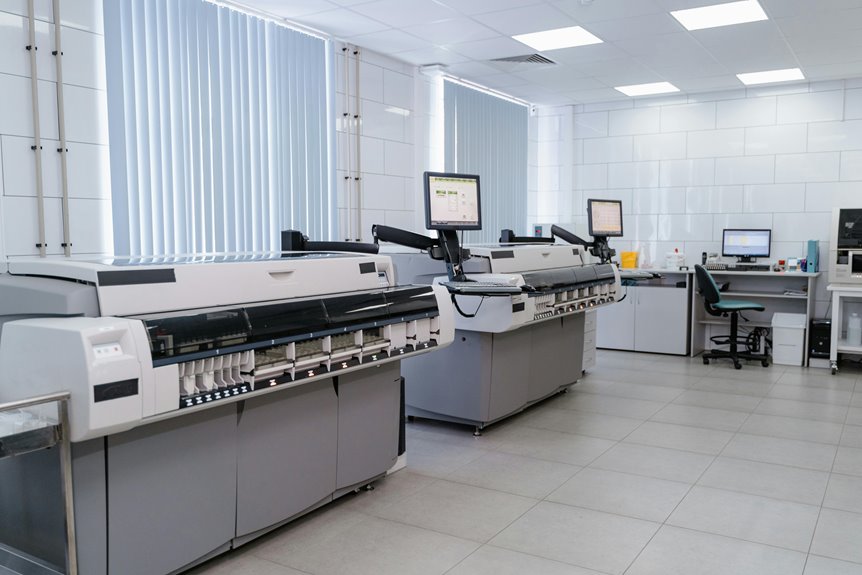
Yes, office equipment like printers and computers can pollute the air. Printers emit volatile organic compounds (VOCs), ozone, and particulate matter, while computers release harmful compounds and dust that impact indoor air quality. These emissions can lead to respiratory issues and discomfort. Additionally, office supplies and cleaning products contribute to the problem. It’s important to be aware of these pollutants to maintain a healthy workspace, and you can discover effective strategies to reduce their impact next.
Key Takeaways
- Office equipment such as printers and computers emit volatile organic compounds (VOCs), which can degrade indoor air quality and cause health issues.
- Printers release ozone and particulate matter, potentially leading to respiratory problems and allergies in office environments.
- Computers can emit VOCs and generate heat, contributing to discomfort and compromising air quality over time.
- Office supplies and cleaning products often contain harmful chemicals that further pollute the air in workspaces.
- Prolonged exposure to pollutants from office equipment can lead to serious health issues, including respiratory diseases and cardiovascular problems.
Understanding Air Pollution From Office Equipment
While you mightn’t think about it, the office equipment you use daily can contribute to air pollution. Devices like computers, copiers, and scanners may emit volatile organic compounds (VOCs) and other harmful substances.
These emissions can build up in your workspace, affecting air quality and your health. You mightn’t notice immediate effects, but long-term exposure can lead to respiratory issues and other health problems.
Emissions from office equipment can compromise air quality, leading to long-term health issues like respiratory problems.
Additionally, the energy consumed by your devices contributes to carbon emissions, impacting the environment further. Opting for energy-efficient models and maintaining your equipment can help reduce this pollution.
Understanding these factors empowers you to make informed choices, ultimately fostering a healthier workspace and contributing to a cleaner environment.
Common Pollutants Emitted by Printers
Printers, a staple in most offices, can greatly contribute to indoor air pollution. When you use your printer, it emits several common pollutants that may affect the air quality in your workspace. These include volatile organic compounds (VOCs), ozone, and particulate matter.
| Pollutant | Source | Health Effects |
|---|---|---|
| VOCs | Ink and toner | Eye, nose, throat irritation |
| Ozone | Laser printers | Respiratory issues |
| Particulate Matter | Paper dust | Allergies, asthma |
| Benzene | Ink components | Headaches, dizziness |
| Formaldehyde | Some printer materials | Skin irritation, cancer risk |
Being aware of these pollutants can help you take steps to improve your office’s air quality. Consider reducing your printer usage or opting for eco-friendly options.
The Impact of Computers on Indoor Air Quality
When you think about computers, you mightn’t consider their impact on indoor air quality.
They can emit volatile compounds, stir up dust, and generate heat, all of which can affect your workspace.
Understanding these factors is essential for maintaining a healthy environment in your office.
Emission of Volatile Compounds
As you spend hours in an office filled with computers, you mightn’t realize that these devices can emit volatile organic compounds (VOCs) that impact indoor air quality.
VOCs are chemicals released from various materials, including the plastics and coatings in your computer. When these compounds evaporate, they can contribute to headaches, fatigue, and even long-term health issues.
You may not notice the effects right away, but prolonged exposure can be harmful. To minimize VOC levels, guarantee proper ventilation in your workspace and consider using air purifiers designed to filter out these pollutants.
Being aware of these emissions can help you maintain a healthier office environment, allowing you to focus on your work without the hidden risks of poor air quality.
Dust and Particulate Matter
While you may not think about it, your computer can contribute greatly to dust and particulate matter in your office. These tiny particles can accumulate over time, affecting your indoor air quality. Dust from your keyboard, monitor, and other components can circulate, leading to respiratory issues and allergies. Understanding the sources of particulate matter can help you maintain a healthier workspace.
| Source | Particulate Matter Type | Impact Level |
|---|---|---|
| Keyboard | Dust | High |
| Monitor | Static Dust | Medium |
| Computer Fans | Particles from Components | High |
| Desk Surface | General Dust | Medium |
Regular cleaning and proper ventilation can considerably reduce the impact of these particles.
Heat Generation Effects
Computers not only contribute to dust and particulate matter, but they also generate significant heat, which can adversely affect indoor air quality.
When you’re working in an office filled with several computers, the combined heat output can raise the room’s temperature. This can lead to discomfort and decreased productivity.
High temperatures can cause HVAC systems to work harder, which might reduce their efficiency and increase the circulation of dust and allergens.
Additionally, prolonged heat exposure can degrade electronic components, releasing volatile organic compounds (VOCs) that compromise air quality.
To maintain a comfortable and healthy environment, consider using fans or improving ventilation to mitigate heat buildup, ensuring your workspace remains conducive to focus and well-being.
The Role of Office Supplies in Air Quality
Though often overlooked, office supplies greatly impact air quality in workspaces. Items like paper, ink, and certain adhesives can release volatile organic compounds (VOCs) into the air. These emissions can contribute to respiratory issues and overall discomfort. Understanding the types of materials you use is essential for maintaining a healthier environment.
Here’s a quick look at common office supplies and their potential impact:
| Office Supply | Air Quality Impact |
|---|---|
| Printer paper | Minimal, but can emit dust |
| Ink cartridges | VOCs during printing |
| Adhesive products | VOCs and irritants |
| Highlighters | VOCs from ink |
| Cleaning supplies | Harsh chemicals |
Being mindful of your choices can help you create a better atmosphere for productivity and well-being.
Recognizing Symptoms of Poor Indoor Air Quality
You might notice common air quality issues in your office that can affect your health.
If you’re experiencing respiratory symptoms like coughing or sneezing, it could be a sign of poor indoor air quality.
Ignoring these symptoms may lead to long-term health effects, so it’s essential to pay attention to your environment.
Common Air Quality Issues
When indoor air quality suffers, recognizing the symptoms can help you take action before health issues arise.
You might notice a few common air quality issues that can impact your well-being. Pay attention to the following signs:
- Unpleasant Odors: Lingering smells from office equipment or mold can indicate poor air quality.
- Increased Dust: If you find yourself dusting more often, it could mean particles are circulating in the air.
- Dryness or Irritation: Dry eyes, throat, or skin can signal that the air lacks adequate humidity.
Being aware of these symptoms empowers you to improve your workspace environment, ensuring a healthier and more productive atmosphere for you and your colleagues.
Don’t ignore these warning signs!
Identifying Respiratory Symptoms
Recognizing respiratory symptoms is essential in understanding the impact of poor indoor air quality. When you’re exposed to pollutants from office equipment, you might experience various symptoms. Pay attention to these signs; they can indicate that your workspace isn’t as healthy as it should be.
| Symptom | Description |
|---|---|
| Coughing | A persistent cough that won’t go away |
| Shortness of breath | Difficulty breathing or feeling winded |
| Irritated throat/nose | A scratchy throat or stuffy nose |
If you notice any of these symptoms, consider evaluating your indoor environment. Addressing air quality issues early can help improve your overall well-being and productivity.
Long-term Health Effects
While immediate symptoms can be alarming, the long-term health effects of poor indoor air quality often go unnoticed until they become serious.
If you’re exposed to pollutants from office equipment over time, you might experience chronic issues that impact your well-being. Pay attention to these potential long-term effects:
- Respiratory Diseases: Continuous exposure can lead to asthma or chronic bronchitis.
- Cardiovascular Problems: Pollutants can increase your risk of heart disease and hypertension.
- Neurological Issues: Long-term exposure may result in cognitive decline or memory problems.
Recognizing these symptoms early can help you take action and improve your indoor air quality.
Don’t ignore the signs; your health depends on it!
Strategies for Reducing Air Pollution in Workspaces
To create a healthier workspace, you can implement several effective strategies that target air pollution.
Start by investing in energy-efficient equipment, like printers and computers, which produce fewer emissions. Regularly clean and maintain your devices to prevent dust and debris buildup that can worsen air quality.
Invest in energy-efficient equipment and maintain devices regularly to enhance air quality in your workspace.
Consider using air purifiers to filter out harmful pollutants, and open windows whenever possible to increase ventilation. Additionally, encourage your coworkers to reduce printing and opt for digital documents instead.
Incorporating more indoor plants can also improve air quality, as they naturally filter out toxins.
Finally, establishing a no-smoking policy inside the office will greatly reduce indoor air pollutants and create a more pleasant environment for everyone.
The Importance of Sustainable Office Practices
Sustainable office practices are essential not just for reducing environmental impact, but also for enhancing employee well-being and productivity.
By adopting these practices, you create a healthier workspace that benefits everyone. Here are three key strategies to implement:
- Go Paperless: Utilize digital documents to minimize paper usage. This reduces waste and clutter while streamlining workflows.
- Energy Efficiency: Choose energy-efficient equipment and encourage employees to power down devices when not in use. This cuts down on energy costs and lowers your carbon footprint.
- Eco-Friendly Supplies: Opt for recycled and sustainable office supplies. This supports a circular economy and promotes responsible consumption.
Frequently Asked Questions
Can Air Pollution From Office Equipment Affect Productivity?
Yes, air pollution from office equipment can affect your productivity. If you’re breathing in harmful particles, it can lead to fatigue, headaches, and decreased focus, ultimately impacting your work performance and overall well-being.
How Often Should Office Equipment Be Maintained for Better Air Quality?
You should maintain office equipment regularly—ideally every three to six months. Regular cleaning and servicing not only improve performance but also help guarantee a healthier workspace, reducing dust and pollutants that can affect air quality.
Are Certain Brands of Printers Less Polluting Than Others?
When choosing printers, think of it like picking fruits at a market; some brands offer cleaner, fresher options. Research shows that certain models emit fewer pollutants, so you’ll definitely breathe easier with the right choice.
Do Air Purifiers Help With Pollutants From Office Equipment?
Yes, air purifiers can help reduce pollutants from office equipment. They filter out dust, allergens, and volatile organic compounds, improving air quality. You’ll notice a fresher environment, which enhances your overall comfort and productivity.
Can Plants Improve Air Quality in Office Environments?
Having plants in your office is like inviting nature indoors. They absorb toxins and release oxygen, creating a fresher atmosphere. You’ll notice improved air quality, and it might even boost your productivity and mood!