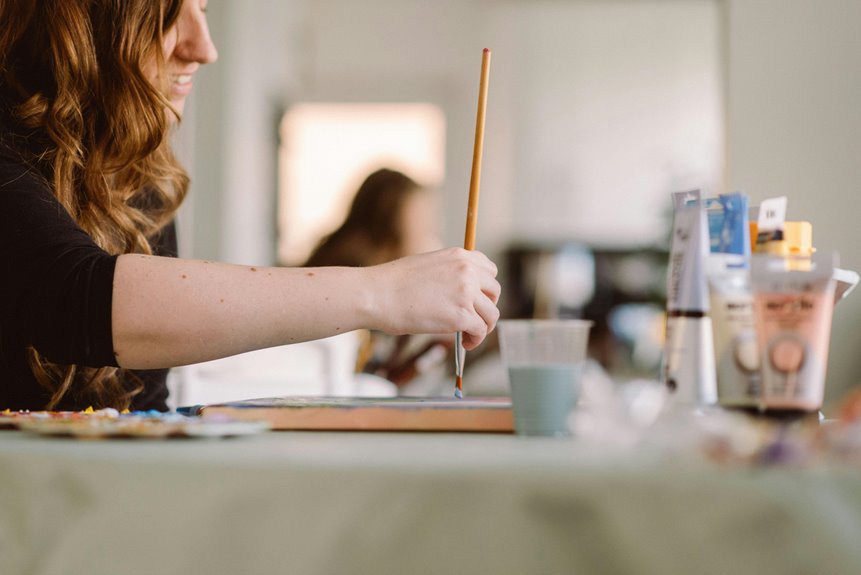
Yes, workspace art can definitely boost your creativity! Engaging visuals inspire your mind and reduce stress, making it easier to tackle tasks. Colors and themes play a key role, with vibrant hues lifting your mood and sparking motivation. Plus, art encourages innovative thinking and problem-solving skills. By adding personal touches to your workspace, you foster a more inviting atmosphere. If you’re curious about how to select the right art for your space, there’s more to discover!
Key Takeaways
- Art in workspaces fosters creativity by providing inspiring visuals that stimulate the mind and encourage innovative thinking.
- Vibrant colors in artwork can uplift mood and enhance productivity, leading to greater creative output.
- Engaging with art promotes outside-the-box thinking, improving problem-solving skills essential for creative tasks.
- A visually appealing workspace reduces stress and fosters a positive attitude, which is conducive to creativity.
- Rotating art periodically keeps the environment fresh, continually inspiring and motivating individuals to think creatively.
The Psychological Impact of Art in Workspaces
Art in workspaces can greatly influence your psychological well-being, as it creates an environment that fosters creativity and reduces stress.
When you’re surrounded by inspiring visuals, your mind opens up to new ideas and possibilities. This stimulation can lead to increased motivation and a more positive attitude towards your tasks.
Additionally, art can serve as a personal touch, making your workspace feel more inviting and less sterile. You might find that a well-placed piece of art can spark conversations and collaboration among colleagues, enhancing team dynamics.
How Colors Influence Creativity and Mood
When you walk into a workspace filled with vibrant colors, it can instantly uplift your mood and stimulate your creativity.
Colors like blue evoke calmness, helping you focus, while yellow sparks optimism and energy. You might find that red ignites passion and excitement, making it easier to tackle challenging tasks.
Colors such as blue foster focus and calm, while yellow ignites energy and optimism, enhancing your productivity.
On the other hand, softer colors like green promote balance and relaxation, encouraging a more thoughtful approach to your work. Each hue has a unique psychological effect, influencing how you feel and think.
By incorporating a variety of colors into your workspace, you create an environment that enhances your creativity and overall well-being.
The Relationship Between Art and Problem-Solving
While you mightn’t immediately connect art with problem-solving, engaging with creative processes can greatly enhance your ability to tackle challenges. When you immerse yourself in artistic activities, you’re training your brain to think outside the box.
This shift in perspective allows you to approach problems from various angles, leading to innovative solutions. Art encourages experimentation, teaching you that mistakes can lead to unexpected breakthroughs.
Additionally, creating or observing art can help reduce stress, clearing your mind for better focus. As you integrate art into your workspace, you’re not just beautifying your environment; you’re actively sharpening your problem-solving skills.
Embracing creativity opens doors to fresh ideas, making it easier to navigate complex situations in your professional life.
Case Studies: Companies That Use Art to Inspire
Many successful companies have embraced the power of creativity to inspire their teams, demonstrating how art can transform a workplace.
For instance, Google’s offices are adorned with vibrant murals and installations that spark innovation. Employees often report feeling more motivated and engaged in such an inspiring environment.
Similarly, Airbnb uses local artists to decorate their spaces, connecting employees with the community and fostering a sense of belonging.
In another example, Dropbox has incorporated art that reflects its brand values, encouraging collaboration and creativity among its teams.
Each of these companies shows that integrating art into the workplace isn’t just about aesthetics; it’s about cultivating an atmosphere that nurtures creativity and boosts overall productivity.
Tips for Choosing the Right Art for Your Workspace
Integrating art into your workspace can elevate the environment just like it does for companies like Google and Airbnb.
To choose the right pieces, start by pondering your personal taste and the vibe you want to create. Think about colors—do you prefer calming hues or vibrant tones?
Next, reflect on the themes that inspire you. Nature, abstract shapes, or motivational quotes can each spark creativity in different ways.
Don’t forget to take into account the size and placement; large pieces can serve as focal points, while smaller works can add subtle interest.
Finally, rotate your art periodically to keep the inspiration fresh.
Frequently Asked Questions
Can Specific Types of Art Hinder Creativity in Workspaces?
Certain types of art can indeed hinder creativity in workspaces. If the visuals are too distracting or evoke negative emotions, they might limit your focus and stifle your innovative thinking, affecting productivity and inspiration.
What Are the Costs Associated With Incorporating Art Into Workspaces?
Incorporating art into workspaces can involve costs like purchasing pieces, installation fees, and maintenance expenses. You’ll also need to contemplate potential disruption during installation and the impact on your team’s focus and productivity.
How Often Should Workspace Art Be Changed for Maximum Effect?
You should change workspace art every six months to keep the environment fresh and inspiring. Regular updates can stimulate your creativity, prevent visual fatigue, and maintain a dynamic atmosphere that encourages new ideas and perspectives.
Are There Art Styles That Are Universally Preferred in Work Environments?
Yes, you’ll find that abstract and nature-inspired art tends to be universally preferred in work environments. These styles promote calmness and inspiration, making them ideal for enhancing focus and creativity among diverse teams.
How Do Employees Typically Respond to New Artwork in Their Workspace?
When new artwork appears in your workspace, you often feel intrigued and energized. It sparks conversation, enhances your mood, and might even inspire creativity, making the environment more enjoyable and stimulating for everyone involved.