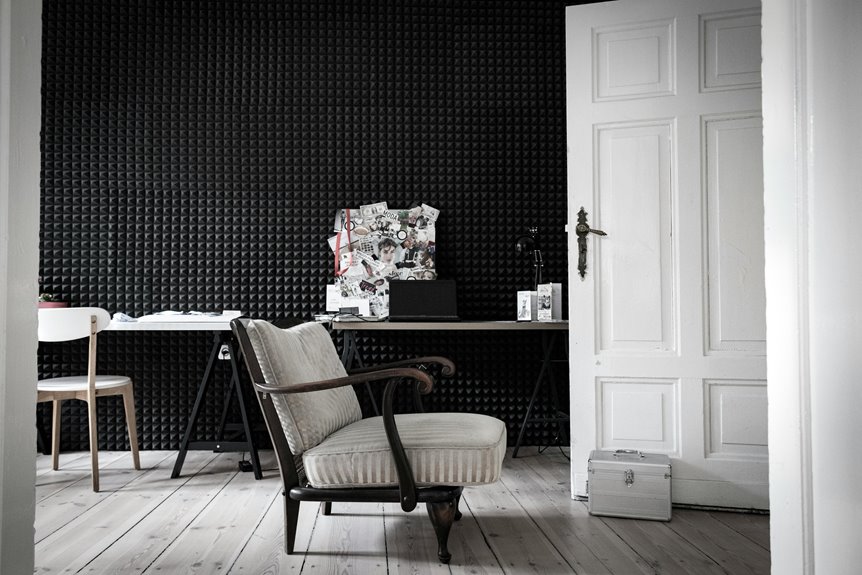
To create a quieter home office without breaking the bank, use heavy curtains to block outside noise and install weatherstripping around doors and windows to seal gaps. DIY acoustic panels can absorb sound, while repurposed rugs and carpets enhance sound absorption. Utilize bookshelves as sound barriers by filling them with dense materials. Don’t forget to add plants for a natural touch. These simple hacks can make a big difference, and there’s more you can explore to enhance your space further.
Key Takeaways
- Use heavy curtains labeled as soundproof or blackout to block external noise effectively and enhance your home office’s quietness.
- Install weatherstripping on doors and windows to seal gaps, preventing noise entry while improving energy efficiency.
- Create DIY acoustic panels using wooden frames and insulation foam, strategically placing them around your workspace for optimal sound absorption.
- Repurpose bookshelves filled with dense materials as sound barriers against shared walls, minimizing noise levels in your office.
- Incorporate rugs or carpets to absorb sound and layer different materials to enhance overall noise reduction in the space.
Use Heavy Curtains to Dampen Noise
One of the simplest and most effective ways to dampen noise in your home is by using heavy curtains.
These thick fabrics not only add style but also serve as a barrier against sound. When you hang them over windows or even interior doors, they absorb and block noise from outside, creating a quieter environment.
Heavy curtains not only enhance decor but also effectively absorb and block outside noise, fostering a serene atmosphere.
Look for curtains labeled as soundproof or blackout, as they tend to be denser and more effective. Make sure they extend beyond the window frame to cover gaps where sound might seep in.
Additionally, using a curtain rod that allows the curtains to close completely will maximize their sound-dampening capabilities.
You’ll notice a significant difference in noise levels, making your home office a more peaceful space.
Install Weatherstripping on Doors and Windows
While you mightn’t realize it, gaps around doors and windows can let in a surprising amount of noise. Installing weatherstripping is an easy and effective way to block those sound leaks.
You can find weatherstripping materials at any hardware store, and they come in various types, like adhesive foam or rubber seals. Measure the gaps around your doors and windows, then cut the weatherstripping to size. Simply peel off the backing and press it into place.
This simple project not only reduces noise but also improves energy efficiency by keeping drafts at bay. In just a short time, you’ll notice a quieter environment, making your home office a much more pleasant place to work.
Create a DIY Acoustic Panel
Creating a DIY acoustic panel can drastically improve your room’s sound quality without breaking the bank. To get started, gather materials like wooden frames, insulation foam, and fabric. Cut the foam to fit the frame, then cover it with your chosen fabric, stapling it securely. This not only enhances aesthetics but also helps absorb sound.
Once your panels are ready, strategically place them around your home office, focusing on walls where sound bounces, like corners and behind your desk.
For an even more effective setup, consider layering multiple panels. You’ll notice a significant reduction in echo and noise, creating a more productive workspace.
With just a little effort, you can enjoy a quieter and more focused environment.
Repurpose Rugs and Carpets for Sound Absorption
You can easily enhance sound absorption in your space by repurposing rugs and carpets.
Try layering different materials for maximum effectiveness and consider strategic placement in high-noise areas.
With a little creativity, you’ll create a quieter environment without breaking the bank.
Layering Techniques for Effectiveness
To enhance sound absorption in your space, consider repurposing rugs and carpets as effective layering techniques. Layering different types of textiles can notably reduce noise levels. Start by placing a thick, plush rug on the floor, then add smaller, softer rugs on top for extra cushioning. The combination traps sound waves and minimizes echo. Here’s a quick table to illustrate the layering options:
| Layer Type | Material | Sound Absorption Benefit |
|---|---|---|
| Base Layer | Thick Carpet | Reduces impact noise |
| Secondary Layer | Area Rug | Absorbs sound waves |
| Top Layer | Fabric Runner | Adds texture and softness |
| Accent Layer | Throw Rugs | Enhances style and absorbs sound |
| Wall Layer | Wall Hangings | Further reduces reverberation |
These strategies can transform your office into a quieter, more productive environment.
Strategic Placement Tips
Maximizing sound absorption goes beyond just layering materials; it also involves strategically placing those rugs and carpets throughout your space.
Start by positioning larger rugs in high-traffic areas where sound bounces off hard surfaces. This will help absorb noise where it’s most prevalent.
Consider placing smaller rugs under desks and around seating areas to further dampen sound.
Don’t forget corners; they can amplify noise, so adding a carpet there can make a big difference.
If you have wall-to-wall carpeting, try layering decorative rugs on top for added texture and sound absorption.
Finally, experiment with different placements until you find what works best for your home office. Every little adjustment can contribute to a quieter, more productive environment.
Utilize Bookshelves as Sound Barriers
You can use bookshelves as effective sound barriers by placing them strategically in your space.
To maximize their soundproofing potential, fill those shelves with books and other dense materials.
This simple hack not only enhances your decor but also helps dampen noise.
Strategic Placement Matters
While soundproofing a room might seem intimidating, strategically placing bookshelves can create effective sound barriers. Position your bookshelves against shared walls or in areas where noise seeps in from outside. This not only blocks sound but also absorbs it, reducing echo in your home office.
Consider the height and width of your shelves; taller, wider units will offer more coverage. Make sure to place them in a way that minimizes gaps, as even small openings can let sound through.
You might also try angling them in corners to create a more robust barrier. By thinking critically about where you place your bookshelves, you can enhance your office’s tranquility, making it a more focused and productive workspace.
Fill Shelves With Books
Filling your bookshelves with books can greatly enhance their soundproofing capabilities. The dense material of books absorbs sound, reducing noise levels in your home office.
When you pack your shelves tightly, you create a barrier that minimizes outside sounds, making it easier to focus on work.
Choose a mix of hardcover and paperback books for ideal sound absorption. If you’ve got gaps, consider adding decorative boxes or fabric to further dampen noise.
Positioning your shelves against walls that face busy streets or noisy areas can maximize their effectiveness as sound barriers.
Add Plants for Natural Soundproofing
Adding plants to your space can be a simple yet effective way to enhance soundproofing. They absorb sound waves, reducing noise levels and creating a more peaceful environment.
Consider placing larger plants, like rubber trees or fiddle leaf figs, in corners to help block sound. Smaller plants, such as peace lilies or snake plants, can be arranged on shelves or desks for added effect.
Not only do they improve acoustics, but they also boost air quality and add a touch of nature to your office. Make sure to choose low-maintenance varieties that thrive in your office’s lighting conditions.
With these natural sound barriers, you’ll enjoy a quieter workspace that fosters productivity and tranquility.
Incorporate Soundproofing Foam or Mats
If you’re looking for an effective way to reduce noise in your space, incorporating soundproofing foam or mats can make a significant difference.
These materials absorb sound waves, minimizing echoes and vibrations that disrupt your focus. You can easily install foam panels on walls or ceilings, or lay mats on your floor to dampen noise coming from below.
Choose high-density options for maximum effectiveness, and consider various designs to match your office aesthetic.
You don’t need to break the bank—affordable options are available online or at local stores.
With just a little effort, you’ll create a quieter, more productive environment, allowing you to concentrate better and enjoy your work-from-home experience.
Frequently Asked Questions
What Materials Are Best for DIY Acoustic Panels?
If you’re making DIY acoustic panels, you’ll want to use materials like mineral wool, foam, or fabric-covered plywood. These absorb sound effectively, helping create a quieter environment for your work or relaxation.
How Effective Are Plants at Soundproofing a Room?
Plants can help reduce noise levels, but they aren’t soundproofing solutions. Their leaves and soil absorb sound waves, providing some acoustic benefits. You’ll notice a difference, but don’t expect complete silence from them.
Can I Soundproof a Room on a Budget?
You can definitely soundproof a room on a budget. Use thick curtains, rugs, and furniture strategically. Sealing gaps and adding acoustic panels can also help reduce noise without breaking the bank. Get creative!
How Do I Choose the Right Curtains for Soundproofing?
To choose the right curtains for soundproofing, look for thick, heavy materials like velvet or polyester. Make certain they’re floor-length, and consider adding a liner for extra sound absorption. Your choice can greatly reduce noise!
Are There Any Soundproofing Techniques for Ceilings?
You can use acoustic panels or install a drop ceiling with sound-absorbing tiles. Adding insulation between joists also helps. Don’t forget to seal any gaps with caulk to minimize noise intrusion effectively.