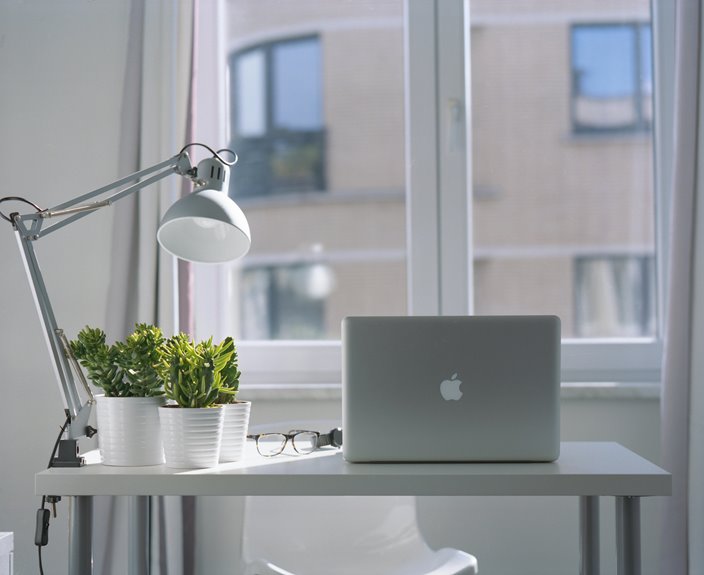
To fix tailbone pain from your chair, choose one with proper lumbar support, adjustable height, and firm cushioning. Make sure your desk allows your elbows to be at a right angle while typing and your screen is at eye level. Use supportive accessories like cushioned seat pads and lumbar pillows. Regularly check your posture and take breaks to stretch. With these adjustments, you can create a comfortable home office setup that promotes better spine health and is more enjoyable to use.
Key Takeaways
- Choose a chair with proper lumbar support to maintain the spine’s natural curve and reduce tailbone pressure.
- Use a cushioned seat pad to relieve pressure on the tailbone and enhance comfort during prolonged sitting.
- Adjust your chair height to ensure feet rest flat on the floor and knees are at a 90-degree angle.
- Keep your computer screen at eye level to avoid neck strain and maintain good posture while working.
- Take regular breaks to stand, stretch, and walk around to alleviate discomfort and improve circulation.
Understanding Tailbone Pain and Its Causes
Have you ever wondered why your tailbone hurts after long hours at your home office? Tailbone pain, or coccydynia, often arises from prolonged sitting, especially on hard surfaces.
Tailbone pain, known as coccydynia, commonly develops from sitting too long on hard surfaces.
Poor posture can exacerbate the discomfort, as slouching or leaning too far back puts extra pressure on your tailbone. If you’re not shifting your weight regularly, the constant strain can lead to soreness.
Additionally, if your chair doesn’t provide adequate support, it can contribute to your pain. Even minor injuries or repetitive stress from frequent sitting can lead to inflammation in the tailbone area.
Recognizing these causes can help you address the issue before it becomes a bigger problem and affects your productivity.
Choosing the Right Chair for Comfort
Finding the right chair can make all the difference in your home office comfort. When selecting a chair, look for one with proper lumbar support to maintain your spine’s natural curve.
A seat that’s adjustable in height allows you to align your feet flat on the floor, reducing strain on your tailbone. Consider a chair with cushioning that’s firm yet comfortable; too soft can lead to sinking, while too hard may cause discomfort.
Additionally, a chair with a breathable fabric will help regulate temperature during long work sessions. Don’t forget to test the chair’s mobility; wheels or a swivel base can enhance your range of motion, making it easier to access your workspace without straining.
Ergonomic Adjustments for Your Workspace
Choosing the right chair is just the first step in creating an ergonomic workspace.
Next, adjust your chair height so your feet rest flat on the floor, with your knees at a 90-degree angle. Position your desk so your elbows are also at a right angle when typing. Confirm your computer screen is at eye level to prevent neck strain; you shouldn’t have to look up or down.
If your workspace allows, keep your mouse and keyboard close to each other to avoid reaching. Additionally, maintain a straight back, using your chair’s lumbar support to help reduce tailbone pressure.
Regularly check your posture, and don’t forget to take breaks to stretch and move around, promoting overall comfort.
Additional Supportive Accessories
Incorporating a few essential supportive accessories can greatly enhance your home office setup. The right tools can help alleviate tailbone pain and improve your overall comfort.
Here are three must-have accessories:
- Cushioned Seat Pad: A high-quality seat cushion can provide extra support and relieve pressure on your tailbone.
- Lumbar Support Pillow: Placing a lumbar pillow behind your lower back encourages proper spine alignment, reducing discomfort.
- Footrest: A footrest can promote better circulation and help keep your legs and feet comfortable while you work.
Tips for Maintaining Good Posture While Working
While supportive accessories can greatly improve your comfort, maintaining good posture is equally important for your overall well-being while working.
Start by adjusting your chair so your feet rest flat on the floor, with your knees at a 90-degree angle. Sit back in your chair, ensuring your lower back is supported. Align your shoulders with your hips and keep your head over your spine to avoid straining your neck.
Adjust your chair for proper support: feet flat, knees at 90 degrees, and maintain a straight posture for optimal comfort.
Position your monitor at eye level, about an arm’s length away, to prevent leaning forward. Take regular breaks to stand, stretch, and walk around, allowing your body to reset.
Ultimately, stay mindful of your posture throughout the day; small adjustments can make a big difference in your comfort.
Frequently Asked Questions
Can Tailbone Pain Indicate a More Serious Medical Condition?
Yes, tailbone pain can indicate a more serious medical condition. If you’re experiencing persistent discomfort or additional symptoms, it’s best to consult a healthcare professional to rule out any underlying issues and get proper treatment.
How Long Does Tailbone Pain Typically Last?
Tailbone pain usually lasts a few days to a couple of weeks. If it persists longer, you should consult a healthcare professional to rule out any underlying issues and explore appropriate treatment options.
Are There Specific Stretches for Tailbone Pain Relief?
Yes, there are specific stretches that can help relieve tailbone pain. Try gentle seated forward bends, hip flexor stretches, and child’s pose to alleviate discomfort. Always listen to your body and consult a professional if needed.
Should I See a Doctor for Persistent Tailbone Pain?
If you’re experiencing persistent tailbone pain, it’s wise to see a doctor. They can evaluate your symptoms, rule out serious conditions, and recommend treatments to alleviate your discomfort and improve your overall well-being.
Is Ice or Heat More Effective for Tailbone Discomfort?
When dealing with tailbone discomfort, ice can reduce inflammation, while heat promotes blood flow and relaxation. Try ice first for acute pain, then switch to heat for ongoing relief. Listen to your body’s response.