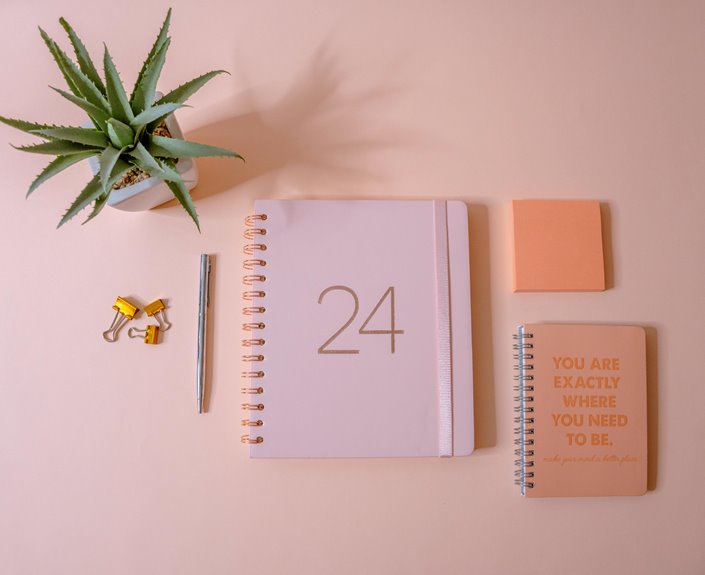
To create an inspiring workspace using color power, start by incorporating calming shades like blue and green to enhance focus, while adding energizing hues like yellow and orange to boost creativity and motivation. Balance warm and cool tones to foster a harmonious atmosphere. Use accent colors strategically through artwork and office supplies for a personal touch. Pay attention to how color affects your mood and productivity, and discover more ways to transform your workspace effectively.
Key Takeaways
- Choose bright colors like yellow and orange to energize the workspace and foster collaboration among team members.
- Incorporate calming shades of blue and green to reduce anxiety and enhance focus during tasks.
- Use accent walls for visual interest without overwhelming the space, creating a focal point for inspiration.
- Add vibrant plants or colorful office supplies to introduce natural elements and lively hues into the environment.
- Balance warm and cool tones strategically to cultivate a harmonious and inviting atmosphere for creativity and productivity.
The Psychology of Color in the Workplace
Color plays an essential role in shaping the atmosphere of your workplace, influencing mood and productivity. When you choose the right colors, you can create an environment that fosters creativity and motivation.
Bright colors like yellow and orange can energize your space, sparking enthusiasm and collaboration among your team. Conversely, cooler shades like blue and green can promote a sense of calm and focus, helping you tackle tasks with clarity.
It’s vital to reflect on how different colors resonate with you and your colleagues, as they can evoke various emotions. By strategically incorporating color into your workspace, you’ll not only enhance its aesthetic appeal but also cultivate an atmosphere that encourages engagement and innovation, ultimately driving your team’s success.
Calming Colors for Focus and Concentration
The right hues can greatly enhance your ability to focus and concentrate in the workplace. By choosing calming colors, you can create an environment that promotes mental clarity and reduces stress.
Here are three effective colors to take into account:
- Blue: Known for its soothing effect, blue can help lower anxiety levels, making it easier for you to concentrate on tasks.
- Green: This color mimics nature and provides a revitalizing ambiance, promoting balance and harmony, which can enhance your focus.
- Lavender: Soft and calming, lavender has a tranquil quality that can help you relax while maintaining alertness.
Incorporating these colors into your workspace can greatly improve your productivity and overall well-being.
Energizing Hues for Creativity and Innovation
When you want to ignite creativity and foster innovation in your workspace, incorporating energizing hues can make all the difference. Bright colors like yellow, orange, and vibrant green can stimulate your mind and encourage fresh ideas.
Yellow, for instance, evokes optimism and enthusiasm, prompting you to think outside the box. Orange blends energy and warmth, stirring up motivation and collaboration. Meanwhile, green symbolizes growth and renewal, which can inspire innovative thinking.
You can use these colors in your décor, artwork, or even office supplies. Consider painting an accent wall or adding colorful accessories to transform your environment.
Balancing Warm and Cool Tones
Finding the right balance between warm and cool tones can greatly enhance your workspace atmosphere.
By thoughtfully mixing these colors, you can create a space that feels both inviting and productive. Here are some tips to help you achieve that balance:
- Use warm tones like reds and oranges to stimulate energy and creativity.
- Incorporate cool tones such as blues and greens for a calming effect that promotes focus.
- Create harmony by pairing warm and cool colors in your decor, like warm wooden furniture against cool-toned walls.
Using Accent Colors to Enhance Motivation
Accent colors can greatly boost your motivation by creating an energizing atmosphere.
By understanding color psychology, you can choose hues that inspire creativity and focus.
Let’s explore how these vibrant touches can transform your workspace into a motivational haven.
Energizing Color Choices
While selecting colors for your workspace, you should consider how specific hues can boost your motivation and energy levels.
Accent colors can play a pivotal role in creating an inspiring environment. Here are a few energizing color choices to think about:
- Yellow: This bright hue can spark creativity and positivity, making it a great choice for brainstorming areas.
- Orange: Known for its warmth, orange encourages enthusiasm and can make you feel more engaged in your tasks.
- Green: This color promotes balance and refreshment, helping to reduce stress while keeping your energy flowing.
Color Psychology Insights
Colors have a profound impact on your emotions and productivity, and understanding color psychology can help you harness their power in your workspace.
Accent colors can be particularly effective in enhancing motivation. For instance, vibrant shades of orange or yellow can stimulate creativity and energy, making them excellent choices for brainstorming areas.
If you’re aiming for focus, consider deep blues or greens, as they promote calmness and concentration. Use these colors sparingly in your decor—think throw pillows, artwork, or an accent wall.
By strategically placing these hues, you’ll create an inspiring environment that boosts your motivation and keeps you engaged.
Color Schemes for Different Work Zones
When creating your workspace, choosing the right colors for different work zones is key to boosting productivity and relaxation.
Vibrant hues can energize your productive work zone, while softer shades can create a calming atmosphere in your relaxation area.
Let’s explore how color schemes can transform each part of your workspace for the better.
Productive Work Zone Colors
Creating an effective work zone hinges on choosing the right colors that inspire focus and productivity.
The colors you select can greatly impact your mood and efficiency. Here are three color options you might consider for a productive workspace:
- Blue: Promotes calm and concentration, ideal for tasks requiring deep thinking.
- Green: Represents balance and renewal, helping to reduce stress and enhance creativity.
- Yellow: Sparks energy and optimism, perfect for boosting motivation and stimulating ideas.
Relaxation Area Color Choices
While you focus on productivity in your work zone, it’s equally important to design a relaxation area that encourages unwinding and rejuvenation.
Soft, calming colors like light blues and greens can create a serene atmosphere, helping you to relax and recharge. You might also consider warm neutrals, which promote a cozy and inviting space.
If you’re looking for a little energy, try incorporating soft pastels or muted yellows to lift your spirits without overwhelming your senses. Balance these colors with natural elements, like plants or wood textures, to enhance the overall tranquility.
Ultimately, your relaxation area should reflect your personal taste while providing a sanctuary that fosters mindfulness and peace amidst the busyness of your work environment.
Tips for Incorporating Color Into Your Workspace
Incorporating color into your workspace can greatly boost your mood and productivity, so it’s essential to choose hues that resonate with you.
Start by identifying your preferences and the emotions you want to evoke. Here are some tips to help you incorporate color effectively:
- Accent Walls: Paint one wall a bold color to create a focal point without overwhelming the space.
- Decorative Accessories: Use colorful office supplies, cushions, or artwork to add personality and flair.
- Nature Elements: Introduce plants with vibrant leaves or flowers to bring life and natural color indoors.
Experiment with different shades, and don’t hesitate to mix and match until you find the perfect palette that inspires you every day.
Frequently Asked Questions
How Do Color Preferences Vary Among Different Cultures?
Color preferences vary widely across cultures; for instance, red symbolizes luck in China but danger in the West. By understanding these differences, you can enhance communication and foster connections with diverse audiences effectively.
Can Color Impact Productivity in Remote Work Environments?
Yes, color can greatly impact your productivity in remote work environments. Bright colors energize you, while cool tones promote calmness. Choosing the right hues can enhance your focus, creativity, and overall work performance.
What Are the Best Colors for Collaborative Spaces?
For collaborative spaces, you’ll find that blue promotes trust and communication, while green enhances creativity and calmness. Yellow adds energy, and orange encourages enthusiasm. Choose colors that align with your team’s goals and dynamics for best results.
How Often Should I Change Colors in My Workspace?
You should change colors in your workspace every few months to keep the environment fresh and inspiring. Consider seasonal themes or your mood; this helps maintain motivation and creativity, making your space feel dynamic and engaging.
Are There Colors That Should Be Avoided in Workspaces?
You should avoid overly bright colors like neon shades, as they can be distracting and overwhelming. Instead, opt for softer tones that promote focus and calmness, creating a more productive and comfortable working environment.