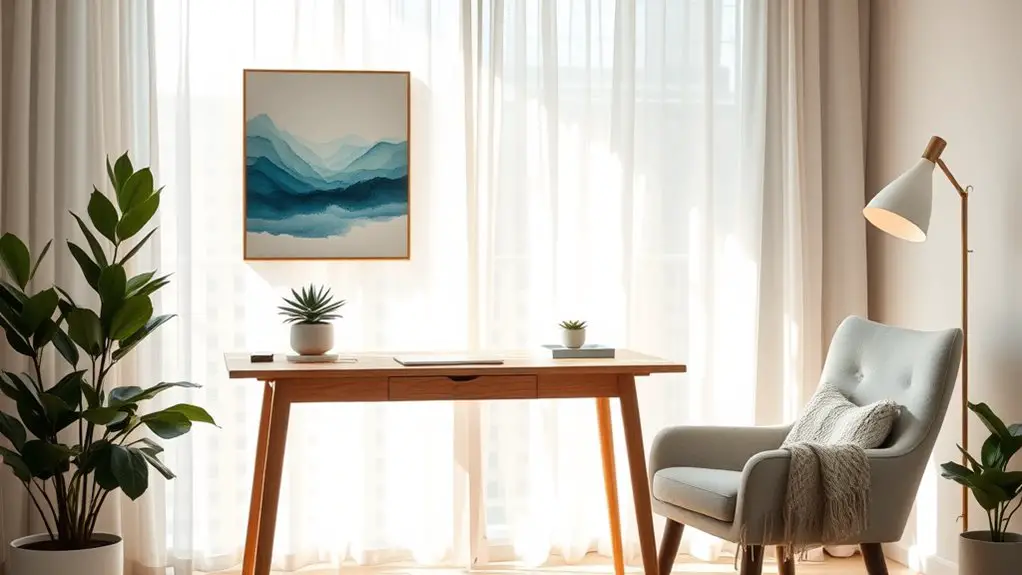
To design a stress-free workspace for anxiety relief, focus on calming colour palettes, like greens and blues, to promote relaxation. Incorporate natural elements, such as plants, to enhance air quality and reduce stress. Keep your workspace organized and clutter-free to improve focus and clarity. Maximize natural light and outdoor views to elevate mood. Don't forget about sound management and flexibility to encourage collaboration. Explore more tips that can further enhance your work environment.
Key Takeaways
- Incorporate cool colours like blue and green to promote calmness and reduce stress levels in your workspace.
- Add plants and natural elements to enhance air quality and create a soothing atmosphere.
- Maintain a clutter-free environment to improve focus and minimize anxiety.
- Maximize natural light exposure to boost mood and overall well-being while reducing stress.
- Use ergonomic furniture to enhance comfort and productivity, minimizing physical strain and stress.
Understanding the Impact of Colour on Mood

When you consider how your workspace feels, don't underestimate the power of colour. Warm colours like red and yellow can boost your energy and creativity, while cool colours such as blue and green promote calmness and relaxation. Calming colors like blue and green reduce stress levels, making them ideal choices for areas where relaxation is essential.
Individual preferences play a vital role, so think about what colours resonate with you personally. Furthermore, be aware of cultural meanings; different cultures associate colours with various emotions.
Utilizing colour strategically based on the function of your workspace can enhance productivity and well-being. For instance, opt for calming shades in rest areas and vibrant hues in creative spaces. By understanding the emotional and physiological effects of colour, you can create a workspace that nurtures a positive atmosphere and supports your mental health.
Integrating Natural Elements for a Calming Atmosphere
To create a calming workspace, think about incorporating greenery and natural materials strategically. Adding plants not only enhances air quality but also boosts your creativity and reduces stress. Using materials like wood and stone can provide warmth, making your environment feel more inviting and comfortable. By integrating natural elements, you can significantly improve your overall productivity and focus.
Incorporating Greenery Strategically
Incorporating greenery into your workspace not only enhances its aesthetic appeal but also fosters a calming atmosphere essential for productivity. Strategically placing plants at your workstation can improve cognitive function and creativity, simulating a natural environment that helps you focus. Additionally, the presence of plants in the workspace can reduce stress and anxiety, creating a more relaxed atmosphere for employees.
Consider adding greenery to common areas like lobbies and meeting rooms to create a welcoming atmosphere that encourages social interactions. Larger plants can absorb background noise, contributing to a quieter workspace. If space is limited, vertical gardens or preserved gardens offer beautiful, low-maintenance options.
Utilizing Natural Materials
Natural materials consistently create a calming atmosphere that promotes well-being in your workspace. Incorporating wood adds visual warmth, making your environment feel cozy and inviting, which can lower stress levels. The tactile nature of wood enhances comfort, while its sustainability appeals to eco-conscious individuals. Additionally, calming environments help decrease rates of burnout and improve mental health, further enhancing the benefits of using natural materials in your workspace.
Similarly, stone features evoke solidity and provide visual interest without overwhelming the space, contributing to a grounded feeling. When you introduce natural textures like wool or linen, you create a soothing sensory experience that fosters relaxation. These materials not only enhance comfort but also add aesthetic beauty, aligning with your desire for a tranquil setting.
Embracing natural materials ultimately cultivates an environment that supports mental well-being and reduces anxiety.
The Importance of Visual Clarity and Organization
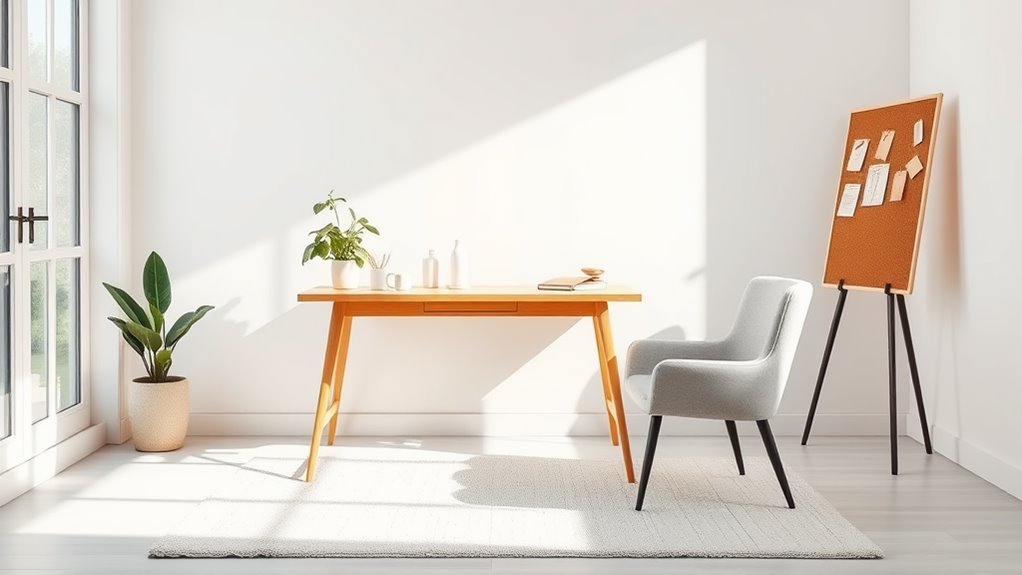
Visual clarity and organization play a crucial role in creating a stress-free workspace. A cluttered environment can overwhelm your senses, increasing stress and distracting you from tasks. By maintaining a tidy workspace, you enhance your cognitive processing and reduce anxiety. Removing visual clutter helps improve your focus and productivity, allowing you to think clearly. Organized spaces also save you time, minimizing the frustration of searching for materials. Implementing systems like labeled containers and designated storage areas fosters order and supports efficient task management. Regular decluttering sessions are essential to maintain this ideal environment. Ultimately, visual clarity and organization contribute to a calming atmosphere, promoting better mental health and job satisfaction. This minimization of distractions enhances concentration and productivity, allowing you to work more effectively.
Benefits of Biophilic Design in the Workplace
Biophilic design can transform your workspace by improving air quality, which helps you breathe easier and feel more energized. When you incorporate natural elements, you'll likely notice an enhancement in your mood and a reduction in stress symptoms.
Embracing these features not only benefits your health but also creates a more inviting and productive environment.
Improved Air Quality
Creating a workspace that feels fresh and inviting can meaningfully enhance your overall well-being, and enhanced air quality plays a crucial role in that transformation. By incorporating biophilic design elements, like plants and green walls, you can purify the air and reduce harmful pollutants. These plants absorb toxins such as benzene and formaldehyde, while also releasing oxygen, creating a healthier environment.
Additionally, active green walls improve air purification through increased plant density. Cleaner air not only boosts your immune system and regulates humidity but also increases productivity and reduces sick leave. Prioritizing improved air quality can lead to a more vibrant workspace that fosters both physical health and employee satisfaction.
Enhanced Mood Levels
Nature's calming presence in the workplace can profoundly enhance your mood levels, transforming your daily experience. Incorporating biophilic design elements, like natural light and greenery, creates a more positive environment that boosts job satisfaction and engagement.
You might even notice a 15% increase in productivity, as these elements inspire creativity and problem-solving. Comfortable, nature-inspired spaces foster collaboration among colleagues, allowing for better teamwork and innovative ideas.
Reduced Stress Symptoms
A stress-free workplace can substantially enhance your overall well-being, and incorporating natural elements plays a crucial role in achieving this. When you're surrounded by plants and natural light, your stress levels can drop markedly. Biophilic design has been shown to reduce anxiety, depression, and anger symptoms by up to 37%, 58%, and 44%, respectively.
With natural views and greenery, your cortisol levels decrease, lowering the risk of stress-related illnesses. Improved air quality from plants also contributes to healthier working conditions, enhancing mental engagement and reducing burnout. By integrating these elements, you not only boost your mood but also foster a more productive environment. Ultimately, a nature-infused workspace leads to a calmer, more focused you.
Maximizing Natural Light and Outdoor Views
There's no denying the positive impact of natural light and outdoor views on workplace wellbeing. Incorporating these elements can substantially enhance your mood, productivity, and overall health. For instance, employees near windows report 78% higher happiness, while natural light reduces eyestrain by 51%. Here's a quick overview of the benefits:
| Benefit | Impact | Statistic |
|---|---|---|
| Mood Enhancement | Influences serotonin | Improves overall mood |
| Productivity Boost | Increases output | Higher productivity |
| Stress Reduction | Acts as a buffer | Less job stress |
To maximize these benefits, position desks near windows, use light-colored materials, and manage blinds wisely. Embracing natural light and outdoor views can create a more pleasant and productive workspace.
Creating Flexible and Ergonomic Workspaces

When you create a flexible and ergonomic workspace, you're prioritizing both comfort and adaptability. Choosing ergonomic furniture and incorporating flexible design elements lets you personalize your environment for maximum productivity.
This approach not only enhances your well-being but also supports your unique work style.
Ergonomic Furniture Selection
Selecting ergonomic furniture is essential for creating a workspace that promotes comfort and productivity. Ergonomic chairs, with adjustable features like height and lumbar support, align your body for superior comfort and support your natural spinal curvature. This not only prevents discomfort but also enhances your overall well-being.
Pairing these chairs with adjustable height desks encourages better blood circulation and allows you to shift positions easily throughout the day. Incorporating ergonomic accessories like monitor risers and keyboard trays further enhances your workspace. Don't forget about lighting—natural light is ideal, while adjustable task lighting can reduce eye strain. Regular upkeep guarantees your furniture remains effective, supporting a stress-free environment where you can thrive.
Flexible Workspace Design
In today's fast-paced work environment, creating a flexible workspace design is essential for enhancing both comfort and productivity. When you have the freedom to choose where and how you work, stress levels decrease considerably. Flexible workspaces allow you to tailor your environment to fit your mood and tasks, fostering mental well-being. With access to amenities like high-speed internet and recreational areas, you can easily unwind and recharge.
Additionally, these spaces promote collaboration, improving communication and teamwork, which builds a supportive atmosphere. By adapting your work schedule to fit your personal rhythms, you achieve a better work-life balance. Overall, a well-designed flexible workspace boosts creativity, job satisfaction, and emotional resilience, making your work experience more enjoyable and productive.
Personalization Options Available
Personalizing your workspace can substantially enhance comfort and productivity. Start by adjusting your lighting to reduce eye strain and boost your mood. Invest in ergonomic furniture; it'll help maintain proper posture and alleviate physical discomfort. Customizable storage solutions can keep your area organized, minimizing clutter-induced stress. Incorporate nature elements like plants to create a calming atmosphere, and choose soft, soothing colors to promote relaxation.
Adjust your monitor height, keyboard, and mouse placement to prevent strain, and consider using adjustable desks to alternate between sitting and standing. Finally, manage noise with sound-absorbing panels or headphones, and guarantee a comfortable temperature to create an inviting, stress-free environment conducive to focus and creativity.
Fostering Social Interaction and Collaboration
While creating a stress-free workspace, prioritizing fostering social interaction and collaboration among employees is vital. When you design areas that promote casual interaction, you help reduce stress and enhance relationships.
Consider these key elements to boost collaboration:
- Communal spaces like lounges or cafes encourage informal connections.
- Team-building activities strengthen bonds and promote a supportive atmosphere.
- Open communication channels guarantee conflicts are resolved quickly, maintaining a positive work environment.
Managing Technology and Reducing Distractions
Creating a workspace that minimizes distractions and effectively manages technology is essential for maintaining productivity. Start by setting "do not disturb" modes during focused work sessions and limiting personal device usage.
Encourage specific times for checking emails, reducing the urge to constantly check your phone, which most people do about 47 times daily. Utilize task management tools like Asana or Trello to keep tasks organized and streamline your workflow.
Consider using website blockers to minimize digital distractions and schedule focused time blocks in your calendar. Finally, foster a culture that values focus by promoting open communication about distractions and regularly evaluating strategies to keep your work environment conducive to productivity.
Implementing Wellness Initiatives for Employee Support
Implementing wellness initiatives can significantly enhance employee support and overall morale in the workplace. By prioritizing mental and physical health, you create an environment where employees feel valued and engaged.
Here are some effective strategies to evaluate:
- Employee Assistance Programs (EAPs): Offer confidential counseling services to tackle personal and work-related issues.
- Work-Life Balance: Support flexible schedules, allowing employees to manage their personal and professional lives effectively.
- Mindfulness Training: Incorporate workshops that teach stress management techniques to enhance resilience.
These initiatives not only reduce absenteeism and turnover but also foster a culture of wellness that benefits everyone. When employees feel supported, they're more likely to thrive and contribute positively to the workplace.
Leadership's Role in Promoting a Stress-Free Environment
Leadership plays a pivotal role in shaping a stress-free workspace. By modeling healthy work habits, you demonstrate a balanced approach to work and life, encouraging your team to do the same. Avoid being glued to your tasks, and prioritize visible self-care. Show that taking breaks is acceptable and lead calmly under pressure to set a positive tone.
Effective communication is key; foster open dialogue and create safe feedback channels. Practice empathetic listening and clearly communicate expectations to reduce uncertainty. Recognize your team's efforts meaningfully, celebrating milestones and encouraging peer recognition to boost morale.
Promote work-life balance by supporting flexible arrangements and respecting personal time. Ultimately, foster a supportive culture that values collaboration and appreciation, creating an environment where everyone can thrive.
Frequently Asked Questions
How Can I Choose the Right Colour Scheme for My Workspace?
To choose the right colour scheme for your workspace, consider soft blues for calmness, greens for balance, and warm accents for energy. Test combinations and observe how they impact your mood and productivity.
What Types of Plants Are Best for Indoor Workspaces?
For indoor workspaces, consider snake plants, lavender, and peace lilies. They purify air, reduce stress, and enhance your mood. Succulents and spider plants are low-maintenance options that improve concentration and productivity, too.
How Often Should I Rearrange My Workspace for Optimal Productivity?
You should rearrange your workspace every few months to keep things fresh and boost productivity. Regular changes adapt to your evolving needs, enhance focus, and prevent monotony, ultimately fostering a more engaging work environment.
What Are Effective Ways to Encourage Team Bonding in the Office?
To encourage team bonding in the office, you can organize engaging activities like scavenger hunts, life map exercises, and social events. These experiences foster connections, enhance communication, and create a positive, collaborative atmosphere.
How Can I Implement a Digital Detox for My Team?
To implement a digital detox for your team, start by scheduling device-free days, creating tech-free zones, and setting clear boundaries around device usage. Encourage participation by highlighting benefits and suggesting engaging non-digital activities.