Designing a shared workspace for couples or roommates starts with evaluating your individual needs. You should choose a location with natural light, away from distractions. Define clear work zones using visual cues, like rugs or plants, to create personal and collaboration areas. Select functional, ergonomic furniture that reflects both styles. Don't forget to incorporate personal touches like inspiring decor. Establish routines for regular communication to enhance productivity. There's plenty more to explore to create your ideal workspace together!
Key Takeaways
- Conduct open discussions to understand each person's workspace preferences, including noise levels and lighting needs.
- Designate specific work zones using visual cues to create boundaries between personal and collaborative areas.
- Prioritize ergonomic and multipurpose furniture that balances comfort, functionality, and personal style for both individuals.
- Incorporate personal touches, like shared memorabilia or vision boards, to foster a motivating and personalized workspace atmosphere.
- Establish a routine for regular communication and collaboration to ensure alignment on goals and productivity throughout the workspace.
Assessing Individual Needs and Preferences
How do you determine what truly matters to each person in a shared workspace? Start by having open conversations with your roommate or partner. Ask about their preferences regarding noise levels, lighting, and space usage.
Do they thrive in a quiet environment, or do they prefer some background noise? Understanding their ideal work style helps create a harmonious atmosphere.
Understanding whether your partner prefers silence or background noise is key to fostering a harmonious workspace.
Next, consider their organizational habits. Some people need everything in its place, while others thrive in creative chaos. Discuss the type of furniture and equipment they'll need.
Finally, gather feedback regularly. As work needs evolve, so do preferences. By actively engaging in this dialogue, you'll foster a workspace that caters to both your needs, enhancing productivity and comfort for everyone involved.
Choosing the Right Location
After understanding each individual's needs and preferences, the next step is pinpointing the ideal location for your shared workspace.
Consider areas in your home that provide enough natural light and minimal distractions. Ideally, choose a space away from high-traffic zones, like the kitchen or living room, where noise and interruptions can disrupt focus.
If possible, select a room with a door to create a sense of separation from daily activities. Think about accessibility too; guarantee both you and your partner can easily reach the workspace without hassle.
Finally, assess the temperature and comfort of the area—adequate ventilation and a pleasant atmosphere can greatly enhance productivity and comfort.
Defining Work Zones and Boundaries
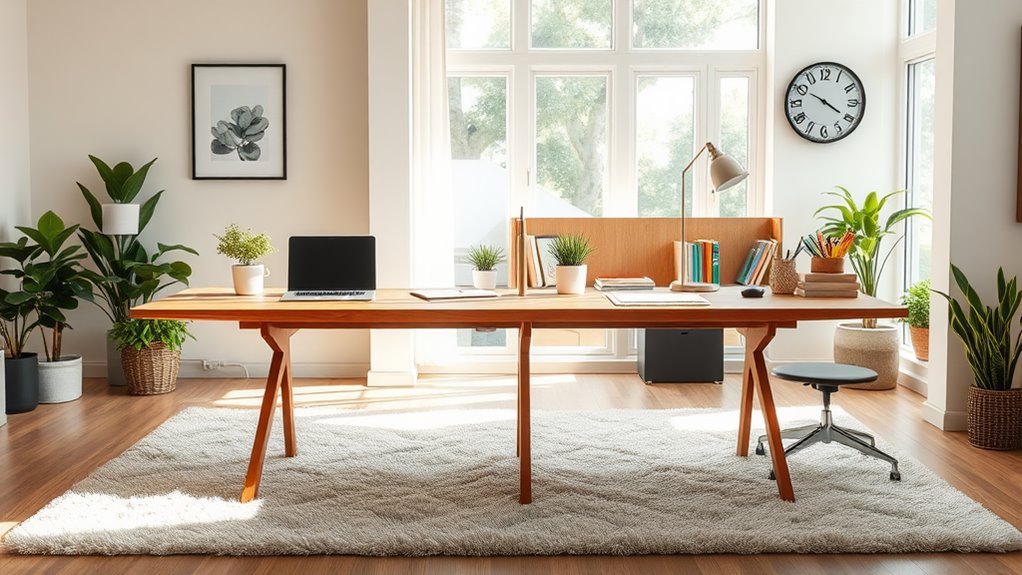
Establishing clear work zones and boundaries is essential for maintaining focus and productivity in a shared workspace. Start by designating specific areas for each person, ensuring you both have enough space to work comfortably. Use visual cues like rugs, plants, or bookcases to create distinct zones.
| Zone | Purpose | Tips |
|---|---|---|
| Personal Zone | Focused work | Keep it clutter-free |
| Collaboration Zone | Team projects/discussions | Use a whiteboard |
| Break Zone | Relaxation & recharge | Add comfy seating |
Selecting Functional and Aesthetic Furniture
When choosing furniture for your shared workspace, it's crucial to balance functionality with aesthetics, as this can considerably impact both productivity and comfort.
Look for pieces that not only serve a purpose but also complement your style. Here are three key elements to reflect on:
- Ergonomic chairs: Invest in comfortable seating that supports good posture, making long work hours more manageable.
- Multipurpose desks: Select desks with storage options or adjustable heights, allowing you to customize your workspace according to your needs.
- Stylish organizers: Use decorative storage solutions that keep your area tidy while adding a personal touch.
Incorporating Personal Touches and Inspiration
Incorporating personal touches and sources of inspiration into your shared workspace can greatly enhance your motivation and creativity.
Start by displaying items that resonate with both of you, like travel souvenirs, artwork, or photographs that evoke fond memories. You could also create a vision board together, filled with goals, quotes, and images that inspire you.
Don't forget about plants; adding greenery can boost your mood and freshen the air. Use color schemes that reflect your personalities, and consider incorporating individual desk accessories that showcase your unique styles.
Establishing a Routine for Collaboration and Communication
Creating a personalized workspace is just the beginning; now it's important to set a routine that fosters effective collaboration and communication. A consistent schedule helps you both stay aligned and boosts productivity.
Here are some tips to contemplate:
- Daily Check-Ins: Spend a few minutes each day discussing your goals and any challenges. This keeps you both informed and engaged.
- Designate Collaboration Hours: Set specific times for joint work sessions when you can brainstorm and tackle projects together without distractions.
- Utilize Communication Tools: Whether it's a shared digital calendar or messaging apps, find tools that streamline your communication and help you stay organized.
Frequently Asked Questions
How Do We Handle Noise Distractions in a Shared Workspace?
To handle noise distractions, you can use noise-canceling headphones, establish quiet hours, or designate specific areas for focused work. Open communication about your needs will also help create a more productive environment for everyone.
What if One Person Prefers a Messy Workspace While the Other Likes Neatness?
If you prefer a messy workspace while someone else likes neatness, try setting boundaries. Designate specific areas for each style and agree on cleaning schedules. Compromise helps maintain harmony and guarantees both preferences are respected.
How Can We Ensure Equal Access to Shared Resources?
To guarantee equal access to shared resources, you should set clear schedules, communicate openly about needs, and establish a system for sharing tools and materials. Regular check-ins can help maintain balance and address any issues that arise.
What Should We Do if Conflicts Arise Over Workspace Usage?
If conflicts arise over workspace usage, you need to communicate openly. Discuss your needs, set clear boundaries, and establish a schedule. Compromise is key; finding solutions together strengthens your collaboration and maintains harmony in your shared space.
Are There Any Tech Tools to Enhance Collaboration in a Shared Space?
Yes, you can use tools like Trello for task management, Google Docs for real-time collaboration, and Slack for communication. These tech solutions streamline your workflow, making it easier to work together effectively and stay organized.