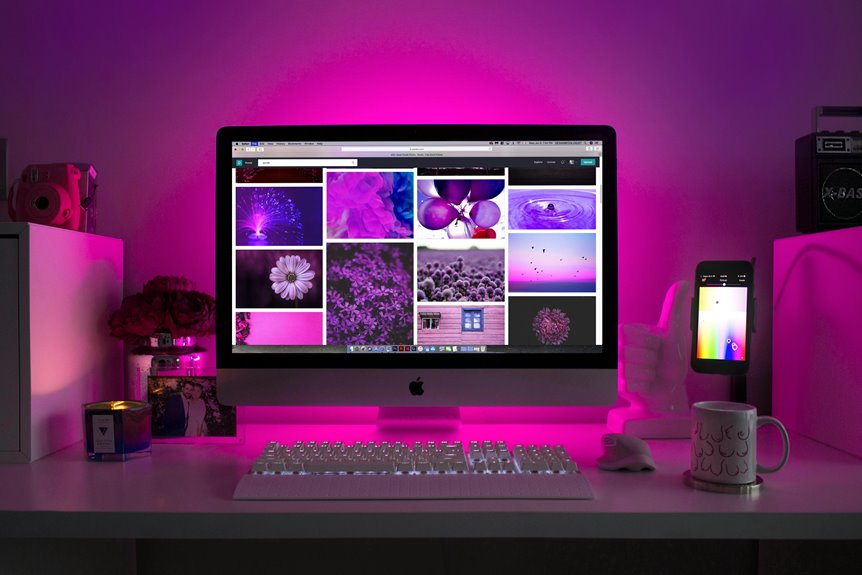
Desk placement can make or break your workspace’s functionality and your focus. When you position your desk strategically, like against a wall or near a window, it enhances your productivity and mood. Avoid clutter and guarantee easy movement to maintain a balanced flow in the room. Plus, ergonomic adjustments, like chair height and monitor level, keep you comfortable during long hours. Explore other tips and ideas to optimize your desk setup for even better results.
Key Takeaways
- Strategic desk placement enhances room flow, ensuring easy navigation and preventing obstruction of pathways.
- Positioning the desk to face the room fosters a welcoming atmosphere and encourages focus.
- Avoid clutter around the desk to maintain functionality and a clear workspace, promoting better concentration.
- Incorporating natural light near the desk improves mood, reduces fatigue, and enhances overall productivity.
- Balancing furniture sizes and heights in the room creates visual interest and supports effective movement and functionality.
Understanding the Importance of Desk Placement
When you consider how desk placement affects your workspace, it’s clear that a strategic setup can enhance productivity and comfort. Your desk’s position influences not only how you work but also how you feel throughout the day.
Placing it against a wall may create a sense of focus, while a more open space can promote creativity. Consider the flow of movement in the room; you want to avoid clutter and guarantee easy access to essential items.
Additionally, think about your workspace ergonomics. Adjusting your desk height and angle can prevent strain, keeping you comfortable during long hours.
The Impact of Natural Light on Productivity
Natural light greatly boosts productivity, as it creates a more inviting and energizing workspace.
When you position your desk near windows, you can soak in the sunlight, which helps elevate your mood and sharpen your focus.
Studies show that natural light reduces eye strain and fatigue, letting you work longer without feeling drained.
Natural light alleviates eye strain and fatigue, allowing for longer, more energized work sessions.
Plus, it encourages a healthier circadian rhythm, improving your sleep quality and overall well-being.
You’ll find that a well-lit environment fosters creativity and enhances your problem-solving skills.
To maximize these benefits, try to keep your workspace uncluttered and free from heavy curtains, allowing light to flood in.
Embracing natural light can markedly transform your work experience and productivity levels.
Creating a Balanced Room Flow
To create a balanced room flow, you need to contemplate how furniture placement affects movement and functionality. Start by arranging your desk in a way that doesn’t block pathways. Verify there’s enough space for you and others to navigate comfortably.
Position your desk to face the room, promoting a welcoming atmosphere and encouraging interaction.
Consider the size and scale of each piece in relation to the room; oversized furniture can make the space feel cramped. Use a mix of furniture heights to create visual interest and avoid monotony.
Add functional elements like shelves or storage solutions that complement your desk without overwhelming the area. A well-balanced room flow enhances productivity and makes your workspace feel inviting.
Ergonomics and Comfort in Desk Arrangement
While prioritizing ergonomics in your desk arrangement, you’ll find that comfort plays an essential role in maintaining productivity.
Start by adjusting your chair height so your feet rest flat on the ground and your knees are at a 90-degree angle. Position your monitor at eye level to reduce neck strain and make certain it’s about an arm’s length away.
Your keyboard and mouse should be close enough that your elbows remain at your sides. Use a wrist rest to avoid discomfort during long typing sessions.
Don’t forget to incorporate breaks into your routine; standing up or stretching can greatly enhance your overall comfort.
Personalization and Aesthetics: Making Your Workspace Your Own
Your workspace should reflect your personality, so consider incorporating unique decor elements that inspire you.
The colors you choose can influence your mood and productivity, making color psychology a key factor in your design.
Additionally, organizing your space functionally not only enhances aesthetics but also boosts efficiency in your daily tasks.
Unique Decor Elements
Creating a workspace that truly reflects your personality can considerably enhance both your productivity and enjoyment. Incorporating unique decor elements can transform your area into an inspiring haven. Think about adding personal touches that resonate with you.
| Element | Description |
|---|---|
| Art Prints | Choose pieces that inspire you, sparking creativity. |
| Indoor Plants | Bring life to your desk with greenery, improving mood. |
| Customized Stationery | Use personalized notebooks or pens to make tasks feel special. |
These elements not only showcase your style but also create a positive atmosphere. By making your workspace uniquely yours, you’ll feel more connected and motivated to tackle your tasks.
Color Psychology Influence
Unique decor elements set the stage for a workspace that truly resonates with your personality.
Color plays an essential role in how you feel and perform in your environment. Think about using calming blues to enhance focus or energizing yellows to spark creativity. Warm tones like oranges can foster a sense of warmth and enthusiasm, while greens promote tranquility and balance.
As you personalize your workspace, consider how these colors affect your mood and productivity. Your choices should reflect your personal style, helping you create an inviting atmosphere that encourages you to thrive.
Experiment with different shades in your decor, from wall colors to accessories, transforming your workspace into a vibrant reflection of who you are.
Functional Organization Strategies
As you endeavor to make your workspace both functional and aesthetically pleasing, effective organization strategies become essential.
Start by decluttering your desk; only keep items that inspire you or that you frequently use. Utilize drawer organizers and shelving units to maintain a tidy environment.
Personalize your space with items that reflect your personality, like photos or artwork, but keep them minimal to avoid distraction. Incorporate functional decor, such as stylish storage boxes or a beautiful planner, to enhance both organization and aesthetics.
Choose a color scheme that promotes focus and creativity, balancing your workspace’s visual appeal with functionality.
Tips for Optimizing Your Desk Setup for Focus and Efficiency
To boost your focus and efficiency, start by positioning your desk ergonomically.
Make certain your chair and monitor are at the right heights to promote comfort and reduce strain.
Next, tackle distractions by creating a clean workspace and limiting interruptions to keep your mind on the task at hand.
Ergonomic Desk Positioning
When you set up your desk for ideal productivity, you’ll not only enhance your comfort but also boost your focus and efficiency.
Start by adjusting your chair height so your feet rest flat on the floor and your knees are at a 90-degree angle. Position your monitor at eye level, about an arm’s length away, to prevent neck strain.
Your keyboard and mouse should sit close enough that your elbows remain at your sides, creating a relaxed posture. Use a wrist rest to minimize strain while typing.
Finally, keep frequently used items within arm’s reach to avoid unnecessary stretching or twisting.
Minimize Distractions Effectively
Creating a distraction-free workspace is essential for maintaining focus and enhancing productivity. Start by decluttering your desk; keep only the items you need. Use cable organizers to tame cords and reduce visual chaos.
Position your desk away from high-traffic areas in the room to minimize interruptions. If possible, face away from windows or busy streets to avoid distractions from outside.
Consider using noise-canceling headphones or soft background music to drown out disruptive sounds. Set boundaries with family or roommates during work hours to prevent interruptions.
Finally, limit digital distractions by turning off non-essential notifications on your devices. By implementing these strategies, you’ll create an environment that fosters concentration and efficiency, allowing you to work at your best.
Frequently Asked Questions
What Desk Shapes Are Best for Different Room Sizes?
When considering desk shapes, you’ll want to match them with your room size. For small spaces, compact desks work best, while larger rooms can accommodate L-shaped or U-shaped desks for enhanced functionality and comfort.
How Does Desk Placement Affect Noise Levels?
Desk placement greatly affects noise levels. If you position your desk near windows or high-traffic areas, you’ll likely experience more distractions. Choosing a quieter spot can help you maintain focus and boost productivity.
Can Desk Placement Influence Mood and Creativity?
Yes, desk placement can influence your mood and creativity. By positioning your desk near natural light or inspiring views, you’ll feel more energized and motivated, fostering a positive atmosphere that boosts your creative thinking.
What Plants Improve Desk Placement Effects on Focus?
To enhance focus at your desk, consider adding plants like snake plants or pothos. They purify the air and boost your mood, creating a more productive environment that helps you concentrate on your tasks better.
How Often Should I Change My Desk Arrangement?
You should consider changing your desk arrangement every few months. This keeps your workspace fresh and can boost your productivity. Pay attention to how you feel; if you’re stagnant, it’s time for a change!