
To effectively detach from work as a remote worker, establish a dedicated workspace and set clear work hours. Create a post-work ritual to signal the end of your day, and prioritize regular breaks to recharge. Engage in physical activity and explore hobbies to unwind. Limit work notifications, and foster social connections with colleagues. These practices will help you create a better balance. If you want more tips to enhance your unwinding routine, keep exploring!
Key Takeaways
- Establish a dedicated workspace that separates professional and personal time, minimizing distractions and enhancing focus for relaxation.
- Set clear work hours and limit notifications to maintain boundaries between work responsibilities and personal life.
- Create a consistent post-work ritual to signal the end of your workday and transition into relaxation mode.
- Incorporate regular breaks and physical activity throughout the day to refresh your mind and prevent burnout.
- Enhance social connections through team-building activities, promoting a supportive environment that encourages unwinding and camaraderie.
Establish a Dedicated Workspace
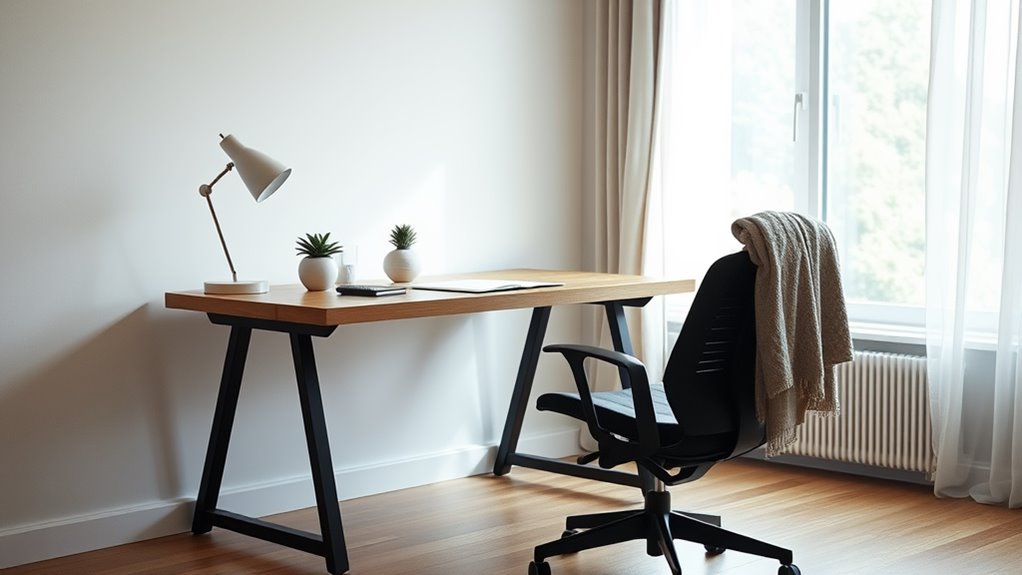
When you work remotely, having a dedicated workspace can greatly boost your productivity and help you unwind at the end of the day. Choose a spot in your home that’s quiet and free from distractions. Equip it with everything you need—your computer, supplies, and anything else that keeps you focused.
Make your workspace comfortable but not too cozy; you want to feel motivated, not sleepy. Personalize it with plants or artwork that inspires you, but keep it organized to maintain clarity.
When you step into this space, mentally prepare for work; when you leave it, you’re signaling that the workday is done. This separation helps create boundaries, allowing you to truly relax when you clock out.
Set Clear Work Hours

Although remote work offers flexibility, setting clear work hours is essential for maintaining balance and preventing burnout.
Establishing specific times to start and end your workday helps you create boundaries between work and personal life. Stick to these hours as much as possible, and communicate them to your team to manage expectations.
When your work hours are defined, you’re less likely to overextend your workday and ignore personal time. Use a calendar or planner to schedule breaks and tasks, helping you stay organized.
Create a Post-Work Ritual

After setting clear work hours, it’s important to establish a post-work ritual that signals the end of your workday. This helps you shift from work mode to relaxation mode.
Start by designating a specific activity, like going for a walk, practicing mindfulness, or enjoying a cup of tea. These actions create a boundary between work and personal time.
You might also want to change out of your work clothes to signal this shift. Consider journaling about your day, noting what went well and what you can improve.
Finally, make it consistent; the more you repeat your ritual, the stronger the association becomes. By doing this, you reinforce the idea that your workday has ended, allowing you to truly unwind.
Use Technology Wisely
To unwind effectively, you need to use technology wisely.
Set clear device boundaries and limit those pesky notifications that pull you back into work mode.
Plus, take advantage of productivity apps to streamline your tasks, so you can enjoy your downtime without distractions.
Set Device Boundaries
Setting device boundaries is essential for maintaining a healthy work-life balance, especially when your home doubles as your office. Establish specific times to check emails and respond to messages, ensuring you’re not constantly tethered to your devices. Designate a workspace that’s separate from relaxation areas to mentally distinguish between work and leisure.
| Device | Boundary Set | Purpose |
|---|---|---|
| Laptop | Shut down after hours | Prevent work spillover |
| Smartphone | Keep in another room | Reduce distractions |
| Tablet | Limit usage to work hours | Focus on tasks |
Limit Notification Distractions
While establishing device boundaries helps create a clearer separation between work and home life, managing notifications is equally important. Constant alerts can pull you back into work mode, disrupting your ability to unwind.
Start by silencing non-essential notifications—social media updates, promotional emails, and even some app alerts can wait.
Consider setting designated “do not disturb” hours on your devices, allowing you to enjoy uninterrupted personal time. You can also group notifications to receive them at specific times instead of immediately.
This way, you’ll stay informed without feeling overwhelmed. Remember, it’s about creating a peaceful environment that fosters relaxation.
Utilize Productivity Apps
Using productivity apps can greatly enhance your ability to unwind after work, as they help you manage tasks more efficiently.
By organizing your workload, you free up mental space, allowing you to relax better.
Here are three types of apps you should consider:
- Task Managers: Use apps like Todoist or Trello to keep track of your tasks. They help prioritize and break projects into manageable steps.
- Time Trackers: Apps like Toggl or Clockify allow you to monitor how you spend your time, ensuring you don’t overwork.
- Mindfulness Apps: Consider using Headspace or Calm to integrate short meditation sessions into your day, promoting relaxation and focus.
Prioritize Physical Activity
To maintain your well-being as a remote worker, it’s essential to prioritize physical activity throughout your day.
Sitting for long periods can lead to fatigue and decreased productivity, so make it a point to move regularly. Take short breaks every hour to stretch, walk around, or do a quick workout.
Incorporate activities you enjoy, like dancing or cycling, to keep it fun. If you can, schedule a daily workout session, whether it’s a jog, yoga, or a fitness class online.
This not only boosts your physical health but also enhances your mental clarity. Remember, staying active can greatly improve your mood and help you detach from work, making it easier to unwind at the end of the day.
Engage in Hobbies
After prioritizing physical activity, you’ll find that engaging in hobbies can greatly enhance your ability to unwind. Hobbies provide a creative outlet and a break from your work routine, allowing your mind to reset.
Engaging in hobbies offers a refreshing break from work, allowing your mind to reset and unwind.
Here are three hobbies you might consider diving into:
- Cooking or Baking: Experiment with new recipes or perfect your favorite dish. It’s both rewarding and delicious!
- Gardening: Tending to plants can be therapeutic. You’ll connect with nature and see the fruits of your labor grow.
- Art or Crafting: Whether it’s painting, knitting, or DIY projects, expressing yourself artistically can boost your mood and relieve stress.
Incorporating these activities into your routine can greatly improve your overall well-being.
Practice Mindfulness and Meditation
How can you find peace amidst the chaos of remote work? Practicing mindfulness and meditation can help you center your thoughts and reduce stress.
Start by setting aside just a few minutes each day to focus on your breath. Close your eyes, inhale deeply, and exhale slowly. This simple act can ground you and create a sense of calm.
You can also try guided meditation apps or videos, which provide structure and support. Incorporate mindfulness into daily tasks by being fully present, whether you’re sipping coffee or taking a walk.
Connect With Colleagues Socially
Connecting with your colleagues socially can make a big difference in your remote work experience.
Consider hosting virtual happy hours or participating in team-building activities to foster camaraderie and strengthen relationships.
These interactions can help you unwind and feel more engaged with your team.
Virtual Happy Hours
While the demands of remote work can sometimes feel isolating, virtual happy hours offer a fantastic way to reconnect with colleagues socially.
These relaxed gatherings can help you unwind and strengthen your work relationships. Here are three tips to maximize your virtual happy hour experience:
- Choose a Theme: Make it fun! Pick a theme, like a favorite cocktail or decade, to spark creativity and conversation.
- Engage in Icebreakers: Kick things off with lighthearted icebreakers. This helps everyone feel comfortable and encourages participation.
- Limit Work Talk: Set a guideline to keep the conversation focused on personal stories and interests, ensuring a genuine social experience.
Team Building Activities
To foster stronger bonds with your colleagues, engaging in team building activities can be a game changer. These activities break down barriers and create a more relaxed atmosphere, allowing you to connect beyond work tasks.
Consider virtual escape rooms, trivia games, or collaborative art projects that spark creativity and teamwork. You’ll not only have fun but also build trust and camaraderie, making daily interactions smoother.
Don’t forget about informal coffee chats or themed dress-up days—these simple ideas can lighten the mood and foster connections.
The key is to prioritize consistency; regular team-building sessions can keep relationships strong and maintain that vital sense of belonging.
Limit Work Notifications
Although you may feel pressured to stay constantly connected, limiting work notifications can greatly enhance your ability to unwind.
By reducing distractions, you create a more peaceful environment that fosters relaxation. Here are three practical ways to minimize those notifications:
- Turn off non-essential alerts: Disable notifications for apps and emails that aren’t urgent. Focus on what truly matters.
- Set specific “do not disturb” hours: Choose times when you won’t check work notifications. Communicate these hours to your team to manage expectations.
- Use “focus” modes: Many devices have settings designed to limit interruptions. Take advantage of these to create uninterrupted work and relaxation time.
Schedule Regular Breaks
Scheduling regular breaks is essential for maintaining your focus and energy throughout the day. When you take time to step away from your screen, you recharge both your mind and body. Aim for short breaks every hour to stretch, grab a snack, or simply breathe. This habit can prevent burnout and keep your productivity levels high.
You might also consider longer breaks for meals or walks, allowing you to clear your head and refocus.
Try setting a timer to remind yourself to take these breaks. By incorporating this practice into your routine, you’ll find it easier to maintain concentration and creativity.
Frequently Asked Questions
How Can I Improve My Work-Life Balance While Working Remotely?
To improve your work-life balance while working remotely, set clear boundaries for work hours, create a dedicated workspace, prioritize tasks, take regular breaks, and make time for personal activities that rejuvenate your mind and body.
What Are the Best Apps for Managing Remote Work Stress?
To manage remote work stress, try apps like Headspace for meditation, Trello for task organization, and Slack for communication. Each tool helps you stay focused, maintain clarity, and reduce anxiety during your workday.
How Do I Set Boundaries With Family During Work Hours?
To set boundaries with family during work hours, communicate your schedule clearly. Let them know when you’re unavailable, and establish designated workspaces. It’s essential to maintain focus and respect each other’s time for productivity.
What Should I Do if I Feel Isolated Working From Home?
If you feel isolated working from home, connect with colleagues through video calls, join online communities, or schedule regular chats with friends. Engaging with others can help alleviate loneliness and boost your motivation.
How Can I Stay Motivated Without In-Person Interactions?
To stay motivated without in-person interactions, set clear goals, establish a routine, and take regular breaks. Engage with online communities, celebrate small wins, and incorporate enjoyable activities into your day to maintain your enthusiasm.