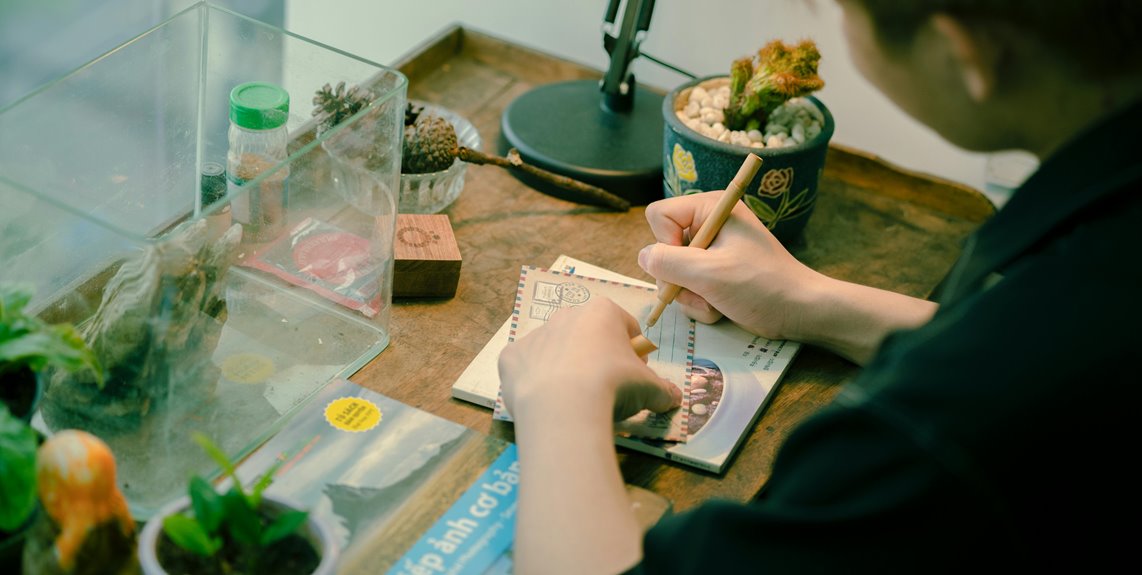
To create a DIY terrarium for your desk, start by choosing a container that matches your style and has good drainage. Select small plants that thrive in your workspace's light and humidity levels. Layer pebbles, activated charcoal, and potting soil in the container, then plant your greenery, ensuring they have enough space to grow. Finally, personalize your design with decorative elements like stones or figurines to make it uniquely yours. Discover more tips to enhance your terrarium!
Key Takeaways
- Choose a small, stylish container with good drainage to fit your desk space and aesthetics.
- Select low-maintenance plants suitable for desk lighting, like succulents or small ferns, to thrive indoors.
- Layer materials starting with pebbles for drainage, followed by potting soil and decorative elements for visual appeal.
- Position taller plants in the back and smaller ones in front for a balanced, inviting look.
- Incorporate personal touches like figurines or inspirational quotes to enhance creativity and motivation at your desk.
Choosing the Right Container
When it comes to choosing the right container for your terrarium, what should you consider? First, think about the size. A larger container allows for more plants and creativity, while a smaller one fits neatly on your desk.
Next, consider the shape: round, square, or even hanging options all create different aesthetics. Make sure the container has good drainage, especially for moisture-loving plants.
Transparency is also key—glass or clear plastic lets you enjoy the beauty of your mini ecosystem.
Finally, think about the lid. Open containers promote air circulation, while closed ones create a humid environment. Choose what suits your style and the plants you'll eventually select.
A thoughtful container sets the stage for a thriving terrarium.
Selecting Your Plants
How do you choose the right plants for your terrarium? Start by considering the size of your container. For smaller jars, opt for petite plants like air plants, moss, or tiny ferns.
If you've got a larger space, you can include succulents or dwarf varieties of tropical plants. Next, think about light conditions. Low-light plants, such as pothos or snake plants, thrive in shaded areas, while succulents need bright, indirect sunlight.
Lastly, consider humidity levels; some plants, like ferns, prefer higher humidity, while others, like cacti, do better in drier conditions. Mix and match for visual interest, but ensure your chosen plants have similar care requirements to keep your terrarium thriving and beautiful.
Gathering Essential Materials
Now that you've chosen your plants, it's time to gather the essential materials for your terrarium.
You'll need to pick a suitable container, select decorative elements, and ensure everything complements your plant choices.
Let's explore how to make the best selections for a thriving and beautiful setup.
Choosing the Container
Choosing the right container for your terrarium can significantly impact its overall aesthetic and health. Start by considering the size and shape; a clear glass container allows you to showcase your plants while letting in light. You can opt for a traditional jar, a modern vase, or even a quirky bottle—whatever fits your style!
Ensure it has an opening wide enough for easy access during maintenance.
Next, think about drainage. If your container lacks drainage holes, add a layer of small rocks at the bottom to prevent root rot.
Lastly, consider the height; taller containers give you more layering options, while shorter ones create a compact look. Ultimately, choose a container that reflects your personality and complements your workspace.
Selecting Plants Wisely
After picking the perfect container, it's time to focus on selecting plants that will thrive together in your new terrarium.
Start by considering the light conditions of your space. If it's bright, opt for succulents or cacti; for low light, choose ferns or mosses.
Next, think about the size of your container. Select smaller plants to keep the arrangement balanced and visually appealing.
Be mindful of each plant's water needs; grouping those that require similar moisture levels ensures they all flourish. Popular choices include miniature ferns, air plants, and small succulents.
Finally, avoid overcrowding—leave enough space for growth and airflow.
With careful selection, your terrarium will be a vibrant, healthy addition to your desk.
Gathering Decorative Elements
As you prepare to create your terrarium, gathering decorative elements can elevate its aesthetic appeal and make it truly unique.
Think about choosing stones, colored sand, or pebbles for the base layer, which not only provides drainage but also adds texture. You might also want to include small figurines, shells, or crystals to reflect your personality.
Consider using driftwood or dried moss to create depth and interest. You can even incorporate LED fairy lights for a magical touch.
Don't forget about the glass container itself—select one that complements your decor style, whether it's modern, rustic, or whimsical.
With these decorative elements, you'll craft a terrarium that's not just a plant display, but a stunning focal point for your desk.
Layering the Terrarium
Now that you've gathered your materials, it's time to focus on layering your terrarium.
Start with the base layer materials to create a solid foundation, and then think strategically about where to place your plants for the best visual impact.
Each layer plays a crucial role in both aesthetics and the health of your plants.
Base Layer Materials
Creating a stable environment for your plants starts with selecting the right base layer materials for your terrarium.
The base layer not only supports your plants but also plays a crucial role in drainage and air circulation.
Here are some essential materials you should consider:
- Pebbles: They provide excellent drainage, preventing your plants from sitting in water.
- Activated Charcoal: This helps filter the air and keeps your terrarium fresh and free from odors.
- Potting Soil: The foundation for your plants, it offers nutrients and support.
- Moss: A beautiful touch that retains moisture and adds a lush look.
Strategic Plant Placement
With your base layer materials in place, it's time to think about how to arrange your plants for maximum impact and health.
Start by placing taller plants at the back or center, creating height and drawing the eye. Use medium-sized plants in the middle layer, allowing them to stand out without overshadowing the taller ones.
Finally, place smaller plants towards the front to create an inviting, layered look. Consider varying leaf textures and colors to add visual interest.
Make sure to leave space between plants for air circulation and growth. Don't forget about the light requirements of each plant; be mindful of their needs to ensure they thrive together in your terrarium.
Happy arranging!
Planting Your Greenery
Get ready to bring your terrarium to life by carefully planting your greenery. Start by gently placing your chosen plants into the soil, ensuring their roots are well-covered.
Arrange them in a way that showcases their unique shapes and colors, creating a miniature landscape you can admire daily.
To enhance your planting experience, consider these tips:
- Feel the soil: It connects you to the earth and your plants.
- Choose plants with different textures: They add visual interest and depth.
- Add decorative stones: They'll give your terrarium a polished look.
- Personalize it: Incorporate small figurines or shells to make it uniquely yours.
With each careful placement, you'll feel more connected to your little green world!
Caring for Your Terrarium
After planting your greenery, the next step is ensuring your terrarium thrives.
Start by placing it in a spot with indirect sunlight; too much direct light can scorch your plants.
Watering is crucial—check the soil moisture regularly. If it feels dry, add a small amount of water, but avoid overwatering, as this can lead to mold and root rot.
Keep an eye on the humidity; if it gets too high, open the lid for a few hours to let it breathe.
Prune any dead or yellowing leaves to maintain its health and appearance.
Lastly, watch for pests. If you spot any, remove them promptly to keep your terrarium thriving and vibrant.
Enjoy your little green oasis!
Personalizing Your Design
As you dive into the world of terrariums, personalizing your design can truly make it feel like your own.
Think about what brings you joy and let that inspire your choices. You can create a mini landscape that reflects your personality and interests.
Consider these ideas:
- Unique figurines: Add tiny animals or characters to tell a story.
- Colorful stones: Use vibrant pebbles that resonate with your style.
- Personal notes: Slip in a small message or quote that inspires you.
- Seasonal elements: Change decorations with the seasons to keep it fresh.
Frequently Asked Questions
Can I Use Artificial Plants in My Terrarium?
Absolutely, you can use artificial plants in your terrarium! They won't require watering or sunlight, making maintenance a breeze. Plus, you can choose a variety of colors and styles to match your decor perfectly.
How Often Should I Replace the Soil in My Terrarium?
You should replace the soil in your terrarium every six months to a year. This helps maintain nutrients and prevents compaction. Just make sure to refresh it gently, so you don't disturb your plants too much.
Is It Safe to Use Rocks From My Garden?
Using rocks from your garden can be risky. They might harbor pests or diseases harmful to plants. It's best to clean them thoroughly or purchase garden-safe rocks to ensure your plants stay healthy and thriving.
What Types of Containers Are Not Suitable for Terrariums?
Certain containers aren't suitable for terrariums, like those made of metal or untreated wood, which can corrode or rot. Avoid anything with small openings too, as they limit airflow and can trap excessive moisture.
Can I Use a Closed Container for My Terrarium?
Yes, you can use a closed container for your terrarium. It helps maintain humidity and creates a self-sustaining environment. Just ensure the plants you choose thrive in these conditions, or they might struggle.