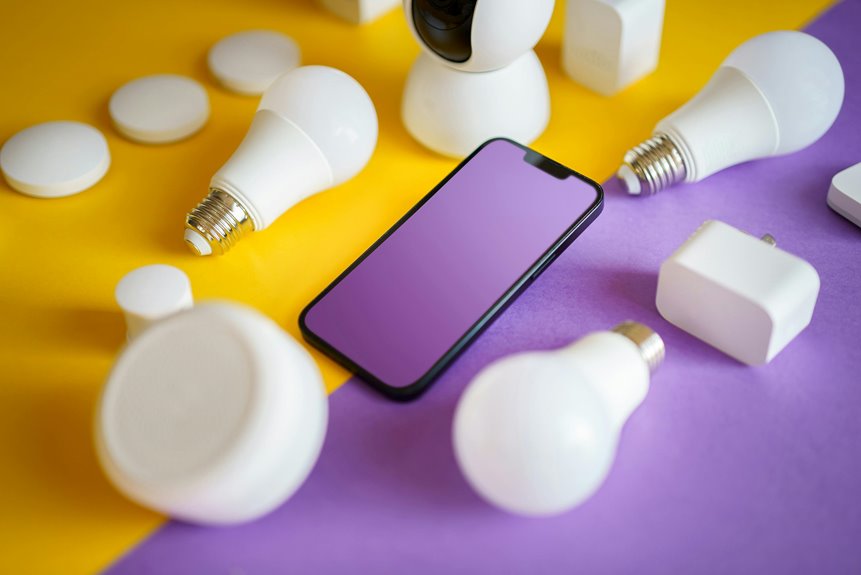
In today’s fast-paced work environment, energy-saving smart home automations can transform your office into an efficient powerhouse. By utilizing smart lighting solutions, automated thermostats, and energy-efficient appliances, you can greatly cut down on energy consumption. Imagine the impact of integrating these technologies into your daily operations. But how do you guarantee these systems work seamlessly together to maximize both comfort and sustainability? Let’s explore the possibilities.
Key Takeaways
- Implement smart lighting solutions with motion sensors to reduce energy use when rooms are unoccupied.
- Utilize automated thermostat systems to optimize temperature settings based on office schedules, saving on heating and cooling costs.
- Upgrade to ENERGY STAR-rated appliances to minimize energy consumption and improve operational efficiency in the office.
- Use energy monitoring systems to track usage patterns and identify energy hogs, allowing for informed operational choices.
- Schedule automated window treatments to control natural light, reducing reliance on artificial lighting while enhancing comfort and productivity.
Smart Lighting Solutions
While you mightn’t realize it, smart lighting solutions can greatly reduce your energy consumption and enhance your home’s ambiance.
By installing smart bulbs and fixtures, you gain control over your lighting with just a tap on your smartphone or a voice command. You can set schedules, dim lights, or even adjust brightness based on natural light throughout the day.
This flexibility not only creates the perfect atmosphere for any occasion but also helps you avoid wasting energy. With features like motion sensors, lights can automatically turn off when you leave a room, ensuring you’re never leaving lights on unnecessarily.
Investing in smart lighting not only lowers your energy bills but also elevates your living space into a more modern, functional environment.
Automated Thermostat Systems
Automated thermostat systems can transform the way you manage your home’s heating and cooling, ensuring comfort while saving energy. With smart technology, you can effortlessly control temperatures from your smartphone or set schedules that align with your routine. This means your home stays comfortable when you’re there and saves energy when you’re not.
| Feature | Benefit | Energy Savings |
|---|---|---|
| Programmable Settings | Tailors temperature to your schedule | Up to 15% savings |
| Remote Access | Adjust from anywhere | Reduces energy waste |
| Learning Algorithms | Adapts to your habits | Optimizes usage |
| Integration with Smart Devices | Seamless automation | Enhanced efficiency |
| Energy Reports | Track usage patterns | Identify savings |
Energy-Efficient Appliances
Smart home technology doesn’t stop at thermostats; energy-efficient appliances play a significant role in reducing your energy consumption. By upgrading to appliances like ENERGY STAR-rated refrigerators, washing machines, and dishwashers, you’ll not only save on your utility bills but also minimize your carbon footprint.
These devices use advanced technology to optimize energy use, ensuring you get the best performance without wasting power.
Consider smart ovens that allow you to schedule cooking times or connect with your phone to preheat remotely. You’ll find many energy-efficient appliances come with features that help track usage, so you can make informed choices about when to run them.
Investing in these appliances means a smarter, greener office that benefits you and the environment.
Smart Power Strips
Smart power strips are a game-changer for energy efficiency in your home.
They not only monitor energy usage but also provide surge protection for your devices.
Energy Monitoring Features
While you mightn’t think about it often, energy monitoring features in smart power strips can greatly reduce your electricity consumption.
These strips allow you to track the energy usage of connected devices in real time. By identifying which devices consume the most power, you can make informed decisions on usage and set schedules to cut down on waste.
With the ability to turn off idle electronics remotely, you can prevent energy drain from devices that are plugged in but not in use. Some smart power strips even provide detailed reports on energy consumption over time, helping you stay aware of your habits.
Surge Protection Benefits
When you invest in a quality smart power strip, you’re not just enhancing your energy efficiency; you’re also protecting your valuable electronics from power surges. These surges can happen unexpectedly, causing damage that may not be covered by warranties.
By using a smart power strip, you not only safeguard your devices but also gain added benefits:
- Automatic shut-off: Cuts power when devices are fully charged.
- Overload protection: Prevents overheating and potential fires.
- Child safety features: Keeps little ones safe from electrical hazards.
- USB ports: Charges multiple devices without extra adapters.
- Remote control: Manage your devices from anywhere with your smartphone.
With these advantages, smart power strips are a smart addition to your office setup.
Occupancy Sensors
Occupancy sensors play an essential role in enhancing energy efficiency within your home by automatically detecting when a room is in use.
These smart devices can turn lights on when you enter and off when you leave, ensuring you don’t waste energy. You’ll appreciate how they adapt to your routine, providing convenience and reducing electricity bills.
Installing them in areas like hallways, bathrooms, and conference rooms can maximize their impact. You won’t need to remember to switch off lights anymore, as the sensors handle that for you.
Furthermore, many modern sensors come with adjustable sensitivity settings, allowing you to customize performance based on your needs.
Embracing occupancy sensors is a simple yet effective way to create a more energy-efficient environment.
Automated Window Treatments
Automated window treatments help you control natural light in your home while boosting energy efficiency.
You can schedule adjustments based on the time of day, ensuring your space stays comfortable and well-lit.
With these smart solutions, you’ll enjoy the perfect balance of sunlight and privacy, all while saving on energy costs.
Enhance Natural Light Control
Natural light can transform a space, making it feel more inviting and reducing the need for artificial lighting. You can take control of how much natural light enters your office with automated window treatments.
By integrating smart shades or blinds, you can easily adjust them based on the time of day or weather conditions.
Here are some benefits of enhancing natural light control:
- Boosts productivity by creating a comfortable workspace.
- Reduces eye strain with ideal light levels.
- Enhances mood, promoting a positive work environment.
- Saves time with scheduled adjustments throughout the day.
- Provides privacy while still allowing light to filter in.
With these smart solutions, you’ll enjoy a brighter, more efficient office space!
Improve Energy Efficiency
By maximizing natural light control, you not only create a more inviting atmosphere but also set the stage for improved energy efficiency.
Automated window treatments can adjust to the sun’s position, reducing the need for artificial lighting and keeping your workspace cooler during hot months. When shades are programmed to lower during peak sunlight, you minimize heat gain, leading to less reliance on air conditioning.
Conversely, during colder months, opening the blinds allows sunlight to warm your office naturally. This not only cuts energy costs but also enhances your workspace’s comfort level.
With these smart solutions, you’ll see a noticeable reduction in energy consumption while maintaining a pleasant environment that boosts productivity and well-being.
Schedule Automated Adjustments
When you schedule automated adjustments for your window treatments, you can effortlessly optimize your home’s energy efficiency throughout the day.
By programming your shades or blinds to open and close at specific times, you enhance natural lighting while reducing reliance on artificial sources. This not only lowers your energy bills but also creates a comfortable atmosphere.
Consider these benefits of automated window treatments:
- Maximized natural light: Harness sunlight during the day.
- Temperature control: Keep rooms cooler in summer and warmer in winter.
- Privacy on demand: Adjust shades for privacy when needed.
- Convenience: Set schedules that fit your lifestyle.
- Smart integration: Sync with other smart devices for thorough automation.
Embrace smart scheduling for a more energy-efficient home!
Smart HVAC Controls
Smart HVAC controls revolutionize the way you manage your home’s heating and cooling systems, allowing you to maintain comfort while saving energy.
With programmable thermostats and smart sensors, you can easily adjust temperatures based on your schedule and preferences. You’ll no longer waste energy heating or cooling empty rooms. These systems learn your habits, optimizing efficiency automatically.
You can control your HVAC remotely through smartphone apps, so if you forget to adjust the temperature before leaving, you can do it with just a tap.
Plus, many smart HVAC controls provide real-time feedback, helping you track energy usage and identify savings opportunities.
Embracing these technologies not only enhances comfort but also contributes to a greener environment and lower energy bills.
Energy Monitoring Systems
Managing your home’s energy efficiency doesn’t stop with HVAC controls; energy monitoring systems take it a step further. These systems provide real-time insights into your energy consumption, helping you make informed decisions about usage.
By keeping track of when and where you’re using energy, you can identify areas for improvement and cut unnecessary costs.
Here are some benefits of energy monitoring systems:
- Identify energy hogs: Spot devices that consume excessive power.
- Set energy goals: Establish targets to reduce usage.
- Track trends: Analyze data over time to understand habits.
- Receive alerts: Get notifications about unusual spikes in consumption.
- Improve budgeting: Make smarter financial decisions based on usage patterns.
Integrating these systems can lead to significant savings!
Integration With Renewable Energy Sources
Integrating renewable energy sources into your smart home can greatly enhance your energy efficiency and sustainability efforts. By incorporating solar panels or wind turbines, you can generate your own clean energy, reducing reliance on the grid.
Smart home systems can optimize energy usage by scheduling appliances to run when renewable energy is plentiful, like during sunny or windy days. Additionally, you can monitor energy production and consumption in real-time, allowing for better management of your resources.
Frequently Asked Questions
How Much Can I Save on Energy Bills With Automation?
You can save considerably on energy bills with automation, often ranging from 10% to 30%. It depends on your current usage and the efficiency of the systems you implement. You’ll notice the difference over time.
Are Smart Home Devices Compatible With Older Office Equipment?
Yes, many smart home devices can work with older office equipment. You’ll need adapters or hubs for compatibility, but integrating them can enhance your workspace efficiency and save you time and effort in daily operations.
What Initial Investment Is Required for Smart Office Automation?
To get started with smart office automation, you’ll need to invest in compatible devices like smart lights, thermostats, and sensors. Costs vary, but budgeting around $500 to $2,000 is a good starting point for most setups.
Can I Control These Systems Remotely?
Yes, you can control these systems remotely. With the right apps and devices, you’ll manage your settings from anywhere. Just make certain your systems are compatible and connected to Wi-Fi for seamless access anytime, anywhere.
How Do I Ensure Data Privacy With Smart Devices?
To guarantee data privacy with smart devices, you should regularly update firmware, use strong passwords, enable two-factor authentication, and disable unnecessary features. Always read privacy policies and limit data sharing to what’s essential for functionality.