
Getting a job in voice-over work from your home office is entirely possible! Start by understanding the industry and the niches that interest you. Invest in essential equipment like a good microphone and set up a quiet recording space. Develop your vocal skills and create a professional demo reel to showcase your talent. Network within the voice-over community and explore various platforms for gigs. Keep learning and honing your craft to increase your chances of success in this exciting field.
Key Takeaways
- Set up a quiet, well-equipped recording space with a quality microphone and soundproofing to ensure high audio quality from home.
- Create an engaging online profile on platforms like Voices.com and Fiverr, showcasing your demo reel and unique voice style.
- Network with industry professionals through social media and online forums to discover job opportunities and build relationships.
- Regularly practice vocal skills and create a professional demo reel to highlight your range and talent for potential clients.
- Stay organized by tracking auditions and clients, and continuously update your demos while pursuing ongoing learning opportunities.
Understanding the Voice-Over Industry
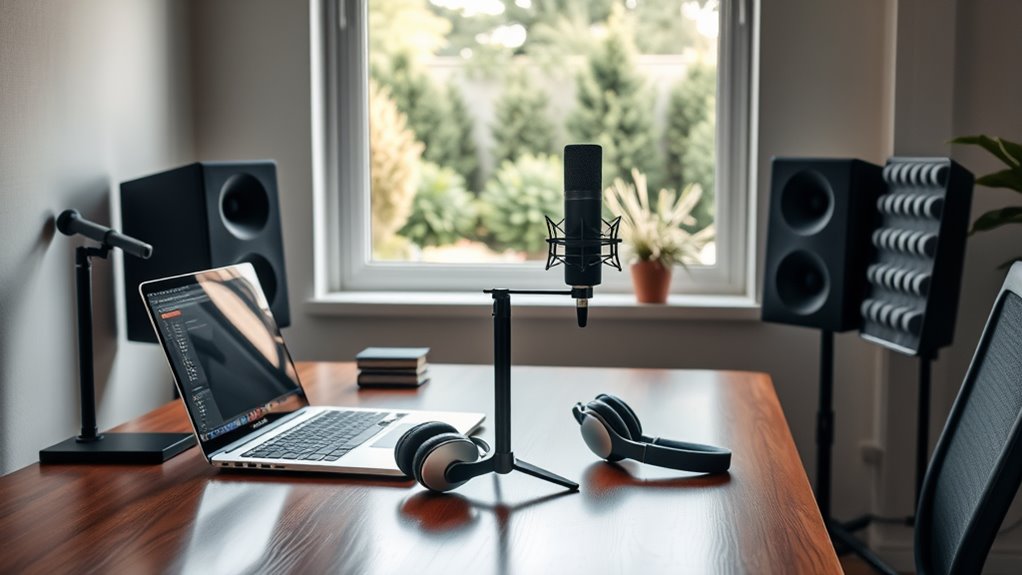
Understanding the voice-over industry can be a game changer for anyone looking to work from home. You’ll find that this field offers diverse opportunities, from commercials to animated characters and audiobooks.
By recognizing the various niches, you can better target your skills and interests. It’s essential to grasp industry terminology and trends, as this knowledge will set you apart from the competition.
Recognizing different niches in voice-over helps you align your skills with your passions, giving you a competitive edge.
Networking is crucial too; connecting with other professionals can lead to job opportunities and collaborations. Don’t underestimate the importance of ongoing training; honing your craft keeps you relevant.
As you immerse yourself in this world, remember that persistence and adaptability are key. The voice-over industry can be incredibly rewarding if you’re willing to put in the effort.
Essential Equipment for Your Home Studio

When setting up your home studio for voice-over work, choosing the right microphone is vital for capturing high-quality sound.
You’ll also need to evaluate acoustic treatment to minimize unwanted noise and echoes.
Let’s explore some essential tips to help you create the perfect recording environment.
Microphone Selection Tips
Choosing the right microphone is essential for creating high-quality voice over recordings from home. Start by considering your budget and the type of projects you’ll tackle. For beginners, a USB microphone offers simplicity and decent sound quality.
If you’re more advanced, an XLR microphone provides greater versatility and professional results.
Look for a microphone with a cardioid polar pattern, which captures your voice while minimizing background noise. Pay attention to frequency response; a range of 20Hz to 20kHz is ideal for voice work.
Don’t forget to invest in a pop filter to reduce plosive sounds. Finally, test different microphones to find one that complements your voice and suits your recording environment. This will set you up for success in your voice over career.
Acoustic Treatment Essentials
After you’ve selected the right microphone, the next step in setting up your home studio involves addressing the acoustics of your recording space.
You’ll want to minimize echoes and background noise for the best sound quality. Start with acoustic panels; these can absorb sound and reduce reflections.
Bass traps are also essential, as they target low-frequency sounds that can muddy your recordings.
Don’t forget about soundproofing your windows and doors to block outside noise.
Adding carpets or rugs can help dampen sound reflections on hard surfaces.
Finally, consider using a portable vocal booth if space allows.
With these acoustic treatment essentials, you’ll create a professional-sounding environment that enhances your voice-over work from home.
Setting Up Your Recording Space

To create a professional-sounding recording space, you need to carefully consider your environment and equipment. Start by choosing a quiet room with minimal external noise. Soft furnishings like carpets and curtains can help absorb sound, reducing echo.
Next, invest in a good-quality microphone and an audio interface for clear recordings. A pop filter can minimize plosive sounds, while headphones will help you monitor your audio.
Consider your computer setup—ensure you have reliable recording software that suits your needs.
Finally, arrange your space ergonomically. Position your microphone at mouth level and keep your equipment organized for easy access. With these elements in place, you’ll be well on your way to delivering high-quality voice-over work from home.
Developing Your Vocal Skills
To excel in voice over work, you need to focus on developing your vocal skills.
Start with vocal warm-up exercises, then practice articulation and diction techniques, and explore voice modulation strategies.
These foundational elements will enhance your voice’s quality and versatility, making you a more effective performer.
Vocal Warm-Up Exercises
While you might think vocal warm-up exercises are just for singers, they’re essential for anyone doing voice over work. These exercises help prepare your voice, ensuring it’s flexible and ready for the demands of recording.
Start with simple humming to gently engage your vocal cords, then move on to lip trills, which help loosen your lips and improve breath control. You can also practice scales to warm up your range.
Incorporating tongue twisters can further enhance your vocal agility. Set aside at least 10-15 minutes for these exercises before your recording sessions. Not only will they improve your vocal quality, but they’ll also boost your confidence, making you sound more polished and professional during your recordings.
Articulation and Diction Techniques
After warming up your voice, focusing on articulation and diction techniques can greatly enhance your delivery in voice over work. Clear pronunciation and precise enunciation are essential for engaging your audience. Practice tongue twisters, emphasizing each sound, to improve your clarity.
| Technique | Purpose | Example |
|---|---|---|
| Over-articulation | Enhances clarity | “She sells sea shells” |
| Slow Speech | Increases comprehension | “I… can… speak… slowly” |
| Vowel Placement | Improves sound quality | “Ah,” “Eh,” “Ee” |
| Consonant Emphasis | Sharpens delivery | “T” in “time” |
| Breath Control | Maintains voice steadiness | Count to ten while breathing |
Incorporating these techniques will elevate your vocal skills and make your recordings more professional.
Voice Modulation Strategies
Mastering voice modulation is essential for any aspiring voice over artist. It’s not just about what you say, but how you say it.
Start by practicing pitch variations; higher pitches can convey excitement, while lower tones often suggest seriousness. Next, work on your pacing. Speeding up during action scenes can create urgency, whereas slowing down can add drama.
Don’t forget about volume; adjusting your loudness can emphasize key points or evoke emotion. Experiment with different emotions, too, as they can alter your tone and inflection.
Recording yourself helps you identify strengths and weaknesses. Finally, always warm up your voice with exercises to guarantee flexibility.
Incorporating these strategies will enhance your vocal skills and make your performances more engaging.
Creating a Professional Demo Reel
A professional demo reel is your calling card in the voice-over industry, showcasing your range and talent to potential clients.
Start by selecting your best work—choose diverse samples that highlight different styles, tones, and character voices. Aim for a length of one to two minutes, keeping it concise yet impactful.
Use high-quality audio equipment to guarantee your recordings sound clear and polished. Consider adding a brief introduction to provide context and engage listeners.
Edit your clips smoothly, maintaining a natural flow that captivates your audience. Don’t forget to include your contact information at the end.
Once your demo is ready, share it on your website and social media to attract attention and establish your presence in the industry.
Finding Voice-Over Opportunities
How can you find voice-over opportunities that suit your skills and interests? Start by exploring online job platforms like Voices.com, Fiverr, or Upwork.
These sites offer a variety of gigs, from commercial spots to audiobooks. Create a profile showcasing your demo reel and highlight your unique voice and style.
Networking can also help you discover opportunities; join online forums and social media groups dedicated to voice-over work.
Additionally, keep an eye on local production companies, radio stations, or advertising agencies that may need voice talent.
Don’t forget to pitch your services directly to potential clients or agencies. Being proactive and persistent will greatly increase your chances of landing voice-over gigs that fit your expertise.
Networking in the Voice-Over Community
While diving into the voice-over community, you’ll quickly discover that networking is essential for building your career. Connecting with industry professionals can open doors to opportunities you mightn’t find otherwise.
Attend workshops, webinars, and industry events to meet other voice actors, directors, and producers. Don’t hesitate to reach out on social media platforms like LinkedIn and Twitter; engage in conversations and share your work.
Joining voice-over groups or forums can also help you find mentorship and support. Remember, relationships matter—collaborate with fellow artists and offer your assistance when you can.
Tips for Successful Auditions
Building a network in the voice-over community naturally leads to audition opportunities, but nailing those auditions is where your skills come into play.
First, read the script multiple times to understand the tone and emotion required. Practice your delivery to guarantee it feels natural and engaging. When recording, make sure your audio setup is professional—clear sound matters!
Don’t forget to warm up your voice beforehand; it’ll help you perform at your best. During the audition, stay relaxed and confident. Pay attention to pacing and emphasize key phrases effectively.
Finally, submit your audition promptly, and don’t dwell on it too much; focus on your next opportunity instead. Keep honing your craft and stay persistent!
Managing Your Voice-Over Business
Managing your voice-over business is essential for success in this competitive industry. To thrive, you need to stay organized. Use tools like spreadsheets or apps to track auditions, clients, and projects. Set clear goals for your income and workload, and review them regularly to adjust your strategy.
Networking is key, too. Build relationships with fellow voice actors, producers, and agents through social media and industry events. Don’t hesitate to reach out for collaboration or advice.
Invest in quality equipment and software to guarantee your recordings stand out. Regularly update your demos and portfolio to showcase your best work.
Finally, keep learning—take workshops and listen to feedback to continually refine your craft. This proactive approach will help you succeed in the voice-over world.
Frequently Asked Questions
How Do I Determine My Voice-Over Niche?
To determine your voice-over niche, listen to various styles and genres. Identify what resonates with you, consider your strengths, and analyze market demand. Experiment and refine your choices until you find your unique voice.
What Is the Average Pay for Voice-Over Work?
The average pay for voice-over work varies widely, but you can expect anywhere from $100 to $500 per project, depending on your experience and the project’s complexity. Higher rates often come with specialized skills.
Are There Online Courses for Voice-Over Training?
Yes, there are plenty of online courses for voice-over training. You can find courses that cater to all skill levels, helping you develop your techniques and build confidence in your voice-over abilities.
How Long Does It Take to Get Voice-Over Work?
It usually takes a few weeks to several months to land voice-over work, depending on your experience and networking efforts. Stay persistent, hone your skills, and actively seek opportunities to increase your chances.
Can I Work as a Voice-Over Artist Part-Time?
Absolutely, you can work as a voice-over artist part-time! Many people juggle it alongside other commitments. Just find your niche, invest in quality equipment, and start auditioning to build your portfolio and experience.