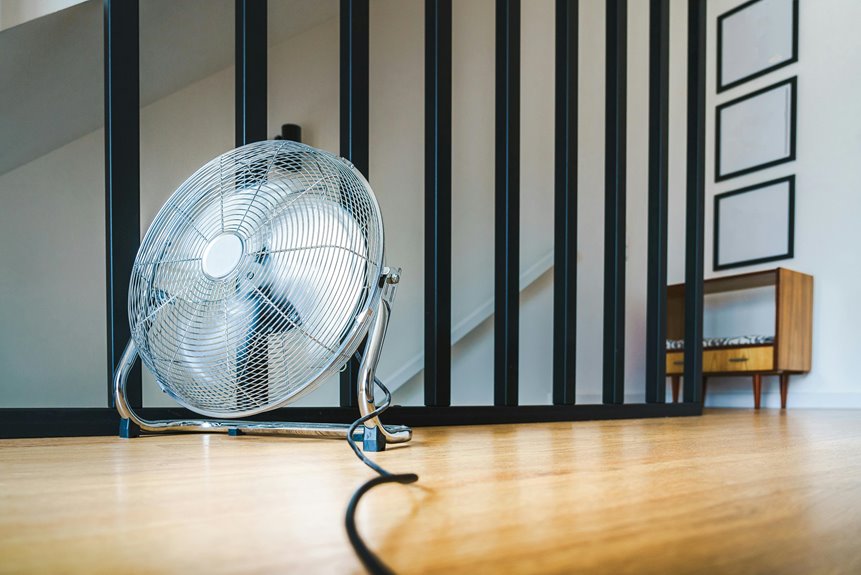
Airflow and ventilation greatly impact how you perceive temperature indoors. Adequate airflow helps cool your body by dissipating heat, while poor ventilation creates stagnant air that feels uncomfortable. High humidity can hinder sweat evaporation, making temperatures feel even hotter. By optimizing airflow, you’re likely to feel more comfortable. Understanding how these factors interplay can help you create a more pleasant indoor environment, and there are more strategies and insights to explore that can enhance your comfort further.
Key Takeaways
- Airflow enhances thermal comfort by facilitating heat dissipation, allowing the body to maintain a balance between generated heat and environmental temperature.
- Proper ventilation prevents stagnant air, which can lead to discomfort and a higher perceived temperature due to trapped heat.
- High humidity levels impede sweat evaporation, causing the air to feel heavier and increasing the perceived temperature in indoor spaces.
- Circulating air helps distribute heat evenly, reducing the occurrence of hot or cold spots that can affect overall comfort levels.
- Effective ventilation strategies, whether natural or mechanical, are essential for maintaining comfortable indoor conditions and optimizing perceived temperature.
Understanding Thermal Comfort
When you think about thermal comfort, it’s essential to recognize how factors like airflow and ventilation influence your experience in a space. Your body constantly seeks equilibrium between the heat it generates and the temperature of your environment.
When airflow is adequate, heat can dissipate more effectively, helping you feel cooler in warmer conditions. Conversely, poor ventilation can lead to stagnant air, making you feel warmer and uncomfortable.
You might also notice that humidity levels play a role in your thermal comfort, as high humidity can hinder your body’s ability to cool down through sweating.
Understanding these dynamics helps you create a more pleasant atmosphere, whether at home or in the workplace, ensuring your comfort throughout the day.
The Science of Airflow
Understanding the science of airflow is essential for maintaining comfort in any space.
You’ll see how air movement principles affect heat distribution and how humidity plays a vital role in our perception of temperature.
Air Movement Principles
Air movement plays an essential role in regulating temperature and maintaining comfort in indoor environments. You mightn’t realize it, but even a gentle breeze can markedly affect how warm or cool you feel.
When air circulates, it helps distribute heat evenly, preventing hot or cold spots. This movement enhances the evaporation of sweat from your skin, which cools your body.
The principles of airflow, like Bernoulli’s principle and the concept of convection, explain how air behaves in different conditions. For instance, warm air rises while cooler air sinks, creating a natural circulation pattern.
Understanding these principles can help you optimize ventilation systems, ensuring a more comfortable atmosphere in your space. Embracing effective airflow strategies can transform your indoor experience.
Heat Distribution Effects
Although you mightn’t notice it, the way heat distributes in a room greatly influences your comfort level. When heat rises, it can create warm pockets near the ceiling, leaving cooler air near the floor.
This uneven distribution can lead to discomfort, making you feel too hot or too cold in different areas. Proper airflow helps mitigate these temperature differences, ensuring a more consistent environment.
By strategically placing fans or adjusting vents, you can encourage even heat distribution, enhancing your overall comfort. Additionally, understanding how objects in the room absorb and release heat can further improve your comfort.
With the right airflow management, you can create a balanced atmosphere that keeps you cozy and content.
Humidity’s Role
While you may not realize it, humidity plays an essential role in how comfortable you feel in a space. High humidity levels can make the air feel heavy and sticky, impacting your overall comfort.
Here’s how humidity affects your perception of temperature:
- Sweat Evaporation: High humidity slows down the evaporation of sweat, reducing your body’s ability to cool off.
- Heat Index: When humidity rises, it elevates the heat index, making it feel hotter than the actual temperature.
- Air Quality: Excess moisture can lead to mold growth and allergens, which can further compromise your comfort and health.
How Ventilation Affects Temperature Perception
When you think about temperature, ventilation plays an essential role in how you perceive it.
Natural air movement can enhance your comfort by making you feel cooler on hot days, while humidity can greatly impact that sensation.
Understanding these factors helps you create a more pleasant indoor environment.
Natural Air Movement
Natural air movement plays an essential role in how we perceive temperature, as it can greatly enhance comfort levels in a given space.
When you experience natural airflow, it can make a noticeable difference in your comfort. Here are three ways ventilation affects your temperature perception:
- Cooling Effect: A breeze can help evaporate sweat from your skin, making you feel cooler even in warm conditions.
- Heat Distribution: Moving air helps distribute heat evenly, preventing hot or cold spots in your environment.
- Freshness: Natural air movement brings in fresh air, which can make a space feel more comfortable and less stuffy.
Humidity Influence on Comfort
Humidity greatly influences your comfort level, as it can make warm temperatures feel even hotter. When the air is humid, sweat doesn’t evaporate as effectively, preventing your body from cooling down. This can lead to feelings of discomfort and fatigue, even at moderate temperatures.
Good ventilation helps manage humidity by promoting air circulation, which aids in sweat evaporation. When airflow increases, you’re more likely to feel cooler and more comfortable.
In spaces with poor ventilation, you might experience a stifling environment that exacerbates the discomfort caused by high humidity. By ensuring adequate airflow, you can markedly improve your perceived temperature and overall comfort, especially during those hot, muggy days.
The Role of Humidity in Comfort Levels
Although you mightn’t realize it, humidity plays an essential role in your overall comfort levels. When humidity levels fluctuate, they can greatly affect how you perceive temperature.
Humidity significantly influences your comfort, impacting your perception of temperature and overall well-being.
Here are three ways humidity influences your comfort:
- Heat Index: High humidity can make hot days feel even hotter, creating a heat index that can lead to discomfort and potential heat-related health issues.
- Sweat Evaporation: When humidity is high, your sweat doesn’t evaporate as effectively, making it harder for your body to cool down.
- Respiratory Comfort: Excessive humidity can create a stuffy environment, making it difficult for you to breathe comfortably, which can lead to feelings of fatigue.
Natural vs. Mechanical Ventilation
When considering ventilation options for your space, you might wonder whether to opt for natural or mechanical systems.
Natural ventilation relies on outdoor air flowing in through windows, doors, and vents. It’s energy-efficient, reduces costs, and creates a more pleasant environment, allowing you to connect with the outdoors. However, it’s dependent on weather conditions and can be unpredictable.
On the other hand, mechanical ventilation uses fans and ducts to control airflow, providing consistent ventilation regardless of the weather. You can better regulate indoor air quality and temperature with this system, but it usually requires more energy and maintenance.
Ultimately, your choice should depend on your specific needs, climate, and budget. Each has its pros and cons; evaluate what works best for you.
The Impact of Air Movement on Skin Temperature
Air movement greatly influences your skin temperature, as it enhances the body’s natural cooling process. When air flows over your skin, it helps dissipate heat and moisture, making you feel cooler.
Air movement significantly impacts skin temperature, aiding in heat and moisture dissipation for a cooler feeling.
Here are three key ways air movement affects your skin temperature:
- Evaporation: Increased airflow accelerates the evaporation of sweat, which cools your skin more effectively.
- Heat Dissipation: Moving air carries away the warm air that clings to your skin, promoting a cooler surface temperature.
- Thermal Comfort: A gentle breeze can create a sensation of comfort, reducing the perception of heat even on warmer days.
Strategies for Optimizing Airflow in Your Home
Optimizing airflow in your home can greatly enhance comfort and energy efficiency, much like how air movement cools your skin.
Start by arranging your furniture to avoid blocking vents, ensuring air circulates freely. Use ceiling fans to create a downward airflow during warm months, and remember to reverse their direction in winter to push warm air down.
Keep windows open during cooler evenings to let fresh air in, and consider using exhaust fans in kitchens and bathrooms to remove excess heat and humidity.
Additionally, sealing any gaps around windows and doors can prevent unwanted drafts. Regularly clean your HVAC system’s filters to maintain peak performance, too.
These simple strategies can make a big difference in your home’s airflow.
Seasonal Adjustments for Improved Ventilation
To guarantee your home stays comfortable throughout the year, adjusting your ventilation strategies according to the seasons is crucial.
Here are three key adjustments you can make:
- Spring and Summer: Open windows to create cross-ventilation during cooler mornings and evenings, reducing reliance on air conditioning.
- Fall: As temperatures drop, seal windows and doors to retain heat, using exhaust fans strategically to manage moisture without letting too much warmth escape.
- Winter: Ascertain vents are unobstructed and consider using a heat recovery ventilator to balance fresh air intake with heat retention, maintaining comfort without sacrificing air quality.
Common Ventilation Systems and Their Efficiency
Understanding how your home’s ventilation system works is key to maintaining a comfortable environment year-round. Common systems include natural ventilation, where air moves freely through openings, and mechanical ventilation, which uses fans to circulate air.
You might also encounter balanced ventilation systems that supply and exhaust air simultaneously, ensuring efficiency.
Each system has its own efficiency ratings, which affect energy consumption and comfort levels. For instance, energy recovery ventilators (ERVs) can be highly efficient, recovering energy from outgoing air to condition incoming air.
Efficiency ratings of ventilation systems play a crucial role in energy consumption and overall indoor comfort.
On the other hand, traditional exhaust fans may not be as efficient, leading to energy loss. By recognizing these systems, you can make informed decisions to optimize airflow and enhance indoor comfort.
The Future of Airflow and Ventilation Technology
As you look ahead, innovative ventilation solutions are transforming how we think about airflow.
Smart airflow management systems aren’t just making spaces more comfortable; they’re also enhancing energy efficiency.
You’ll want to explore how these advancements can impact not only your environment but also your energy bills.
Innovative Ventilation Solutions
While traditional ventilation methods have served us well, the future of airflow technology is rapidly evolving with innovative solutions that promise greater efficiency and comfort.
You can expect to see advancements that greatly enhance indoor environments. Here are three key innovations transforming the landscape of ventilation:
- Energy Recovery Ventilators (ERVs): These systems exchange stale indoor air with fresh outdoor air while recovering energy, reducing heating and cooling costs.
- Hybrid Ventilation: Combining natural and mechanical ventilation, this approach optimizes airflow depending on external conditions, ensuring maximum comfort.
- Ultraviolet Light Integration: This technology kills pathogens in the air, improving indoor air quality and promoting healthier living spaces.
Embracing these innovations won’t only elevate your comfort but also contribute to a more sustainable future.
Smart Airflow Management
With the rise of smart technology, managing airflow has taken a significant leap forward, making it easier than ever to maintain ideal indoor temperatures. Smart thermostats and sensors can now learn your preferences and adjust airflow accordingly, ensuring comfort at all times.
You can control these systems remotely through your smartphone, giving you the flexibility to make adjustments even when you’re not home.
Additionally, advanced algorithms optimize ventilation based on real-time data, improving energy efficiency while reducing utility bills. Automated dampers and fans work in harmony to distribute air evenly, creating a balanced environment.
Embracing smart airflow management not only enhances comfort but also contributes to a greener future by minimizing energy waste. You’re not just living in your space; you’re optimizing it.
Frequently Asked Questions
How Does Airflow Affect Indoor Air Quality?
Airflow plays an essential role in indoor air quality. It helps dilute pollutants, removes excess moisture, and brings in fresh air. When you guarantee proper airflow, you’ll breathe easier and enjoy a healthier indoor environment.
Can Airflow Influence Energy Consumption in Buildings?
Can you imagine a building that uses less energy while keeping you comfortable? Effective airflow optimizes HVAC efficiency, reducing energy consumption. By improving circulation, you’ll enjoy a healthier environment and lower utility bills—who wouldn’t want that?
What Are the Signs of Inadequate Ventilation?
If you notice stuffy air, increased humidity, or lingering odors, your space likely suffers from inadequate ventilation. You might also experience discomfort or allergies, signaling it’s time to improve airflow for better indoor air quality.
Does Airflow Impact Allergy Symptoms Indoors?
You’d think a stuffy room would be paradise for allergies, right? But actually, good airflow reduces dust and pollen buildup, helping you breathe easier. So, keep those windows open and let fresh air work its magic!
How Can Pets Affect Home Ventilation and Airflow?
Pets can greatly affect home ventilation and airflow. Their fur and dander can clog filters, while their movement might disrupt airflow patterns. Regular cleaning and proper ventilation help maintain a healthy environment despite pet presence.