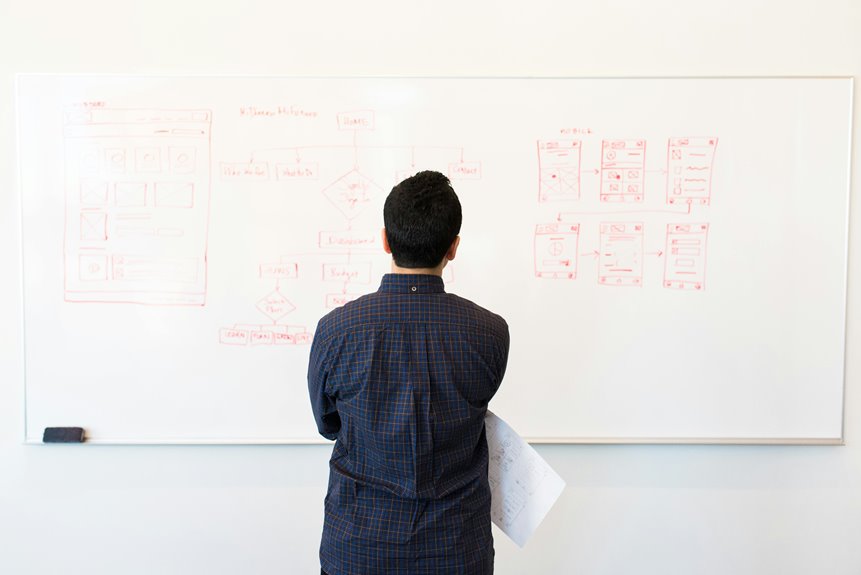
Designers use whiteboards during presentations to create dynamic, interactive environments. You can illustrate complex ideas visually, allowing clients to engage with the content. Whiteboards foster collaboration, enabling real-time contributions and feedback. By organizing thoughts through sketches and mind maps, you enhance clarity and encourage participation. This approach not only improves communication but also cultivates a sense of ownership among clients. Discover how to optimize your use of whiteboards for even better outcomes in your design process.
Key Takeaways
- Designers use whiteboards for real-time collaboration, allowing clients to contribute ideas and suggestions during presentations.
- Visual brainstorming techniques on whiteboards facilitate interactive dialogues, enhancing client engagement and investment in the design process.
- Mind maps and sketches displayed on whiteboards serve as effective visual references that support verbal communication during presentations.
- Whiteboards allow for dynamic adjustments based on audience feedback, fostering a collaborative atmosphere throughout the presentation.
- Organizing content on whiteboards helps clarify complex concepts, making presentations more accessible and easier to understand for stakeholders.
The Role of Whiteboards in the Design Process
When you think about the design process, whiteboards often emerge as essential tools that foster creativity and collaboration. They serve as blank canvases where ideas come to life. You can jot down sketches, notes, and concepts, allowing your thoughts to flow freely.
As you brainstorm, whiteboards encourage spontaneous input from your team, creating an environment ripe for innovation. You'll find that visualizing your ideas helps clarify complex concepts and facilitates discussion.
Plus, the ability to erase and modify your work instantly keeps the momentum going. Whether you're planning a project or refining a concept, whiteboards empower you to engage with your team dynamically.
Ultimately, they play a crucial role in enhancing the overall design process, making collaboration easier and more effective.
Enhancing Brainstorming Sessions With Visual Tools
Visual tools can transform your brainstorming sessions into highly productive experiences. By incorporating whiteboards, sticky notes, or digital platforms, you can capture ideas instantly and visually.
This approach not only keeps everyone engaged but also allows for dynamic collaboration. As you sketch concepts or jot down keywords, the visual element helps clarify thoughts and encourages creativity.
You'll find that ideas flow more freely when team members can see and interact with each other's contributions. Plus, the ability to organize thoughts visually aids in identifying patterns and connections you might otherwise miss.
Ultimately, using visual tools in your brainstorming sessions will foster an environment where innovation thrives, leading to more effective solutions and strategies.
Engaging Clients Through Interactive Presentations
When you engage clients with interactive presentations, visual brainstorming techniques can make a huge difference.
By incorporating real-time collaboration tools, you'll keep everyone involved and inspired.
This approach not only enhances communication but also fosters a sense of ownership among your clients.
Visual Brainstorming Techniques
Engaging clients during presentations can be a challenge, but incorporating visual brainstorming techniques transforms the experience into an interactive dialogue. You can spark creativity by using mind maps, where ideas branch out visually, helping everyone see connections and generate new thoughts.
Encourage your clients to sketch their ideas on the whiteboard; this hands-on approach makes them feel invested in the process. Utilize sticky notes for quick feedback—clients can jot down their thoughts and rearrange them as discussions evolve.
Additionally, drawing diagrams or flowcharts can clarify complex concepts, making them easier to grasp. By fostering a collaborative atmosphere, you'll not only keep your clients engaged but also cultivate a sense of ownership in the project, leading to better outcomes.
Real-Time Collaboration Tools
Utilizing real-time collaboration tools can elevate your presentations by fostering a dynamic interaction with clients. These tools, like digital whiteboards and interactive software, allow you to share ideas instantly, making the session more engaging.
You can sketch concepts, capture feedback, and adjust designs on the fly, ensuring everyone feels involved. When clients see their thoughts reflected in real time, it deepens their investment in the project.
Plus, it breaks down barriers, encouraging open dialogue and creative input. As you navigate your presentation, you can seamlessly integrate their suggestions, making the experience collaborative rather than one-sided.
Facilitating Team Collaboration and Idea Sharing
While brainstorming ideas, whiteboards become a powerful tool for facilitating team collaboration and idea sharing. They encourage everyone to contribute, ensuring that no idea goes unnoticed. When you jot down thoughts or sketch concepts, it creates a visual space where collaboration thrives. This dynamic atmosphere fosters creativity and quick decision-making.
Here's a quick overview of how whiteboards enhance teamwork:
| Benefits | Description |
|---|---|
| Visual Engagement | Helps team members visualize ideas instantly. |
| Instant Feedback | Allows for real-time comments and suggestions. |
| Organized Thoughts | Keeps ideas structured and easily accessible. |
| Inclusive Participation | Encourages everyone to share their input. |
Using a whiteboard effectively can transform your team's brainstorming sessions into productive collaborations.
Sketching Concepts and Prototyping Ideas
When you sketch concepts on a whiteboard, you unlock a powerful tool for visual brainstorming.
This process not only helps clarify your ideas but also encourages collaborative development among team members.
Visual Brainstorming Techniques
Visual brainstorming techniques, such as sketching concepts and prototyping ideas, can transform your creative process. When you grab a whiteboard marker, you unleash your imagination, making abstract thoughts tangible.
Start by quickly sketching out your ideas; don't worry about perfection. This fluidity encourages spontaneity and helps you explore multiple directions. Use simple shapes and symbols to convey complex concepts, allowing you to visualize connections between ideas.
Prototyping is equally powerful; create low-fidelity models that reflect your vision. These prototypes serve as conversation starters, inviting feedback and sparking further creativity.
Collaborative Idea Development
Building on the power of visual brainstorming, collaborative idea development takes this creativity to the next level. You and your team can sketch concepts directly on the whiteboard, allowing everyone to contribute ideas instantly. This process not only fosters engagement but also helps visualize connections between thoughts.
| Stage | Activity | Outcome |
|---|---|---|
| Ideation | Brainstorming ideas together | Diverse inputs gathered |
| Sketching | Drawing concepts collaboratively | Visual representation created |
| Feedback | Discussing and refining ideas | Enhanced clarity on concepts |
| Prototyping | Creating quick mock-ups | Tangible ideas for testing |
Organizing Thoughts and Structuring Presentations
To effectively organize your thoughts and structure your presentations, it's essential to leverage whiteboards as a dynamic tool. Start by jotting down your main ideas in a clear, visual format. This helps you see the connections between concepts and identify the flow of your presentation.
Break down each idea into smaller points, using bullet points or diagrams to illustrate relationships. You can easily rearrange these elements on the whiteboard, allowing for flexibility as you refine your structure.
Don't forget to leave space for adding notes or feedback during discussions. By using a whiteboard, you create an interactive environment that enhances both clarity and engagement, ensuring your audience grasps your message effectively.
Tips for Maximizing the Use of Whiteboards in Design Settings
While using whiteboards in design settings, you can enhance collaboration and creativity by maximizing their potential.
First, keep your whiteboard organized by using sections for different topics or phases of your project. This approach helps everyone follow along and contributes effectively.
Next, use color coding to highlight key ideas, making it easier to identify priorities at a glance.
Don't hesitate to incorporate visuals or sketches; they can communicate concepts faster than words.
Encourage team members to engage by inviting them to add their thoughts and ideas directly on the board.
Finally, regularly review and update the whiteboard as the project evolves, ensuring it remains a relevant and dynamic tool for your design process.
Frequently Asked Questions
What Types of Markers Are Best for Whiteboards?
When choosing markers for whiteboards, opt for low-odor, non-toxic dry erase markers. They're easy to wipe off, vibrant in color, and won't leave ghosting. You'll appreciate their convenience during brainstorming or presentations.
Can Whiteboards Be Used for Digital Presentations?
Absolutely, you can use whiteboards for digital presentations! By connecting to a smart device, you can project your ideas, engage your audience, and enhance collaboration. Just make sure your tech setup supports it.
How Do I Clean and Maintain a Whiteboard?
To clean and maintain your whiteboard, use a soft cloth with mild soap or a dedicated cleaner. Avoid abrasive materials, and regularly wipe it down to prevent ghosting. Ensure it's dry before using it again.
Are There Size Recommendations for Whiteboards in Design Settings?
When choosing a whiteboard for design settings, consider your space and audience. A larger board's great for team collaboration, while smaller ones suit individual brainstorming. Aim for at least 4×8 feet for effective use.
How Can I Incorporate Sticky Notes With Whiteboards?
You can incorporate sticky notes with whiteboards by organizing ideas visually. Use different colors for categories, arrange them around key points, and encourage collaboration. This method enhances engagement, making it easier to brainstorm and prioritize concepts.