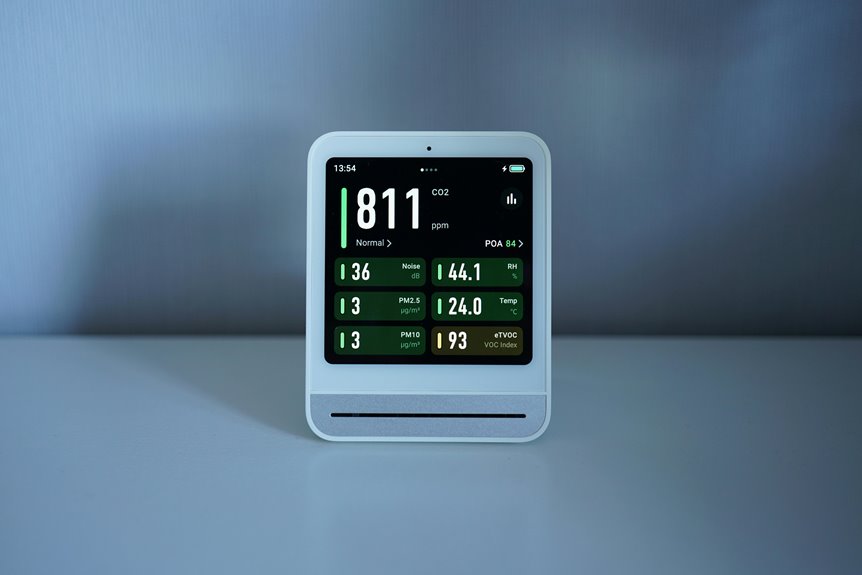
Humidity and temperature greatly impact overall air quality. High humidity can increase allergens like dust mites and promote mold growth, worsening respiratory issues. Conversely, temperature influences how pollutants disperse; warmer air traps them, while cooler air helps spread them out. Keeping humidity between 30-50% and temperatures between 68°F and 72°F creates a healthier environment. By managing these factors, you can enhance indoor air quality and comfort, and there’s more to discover about effective strategies.
Key Takeaways
- High humidity levels can increase dust mite populations and mold growth, worsening allergy symptoms and affecting indoor air quality.
- Warmer temperatures can trap pollutants, leading to poorer air quality during temperature inversions while cooler temperatures help disperse them effectively.
- Maintaining indoor humidity between 30-50% is crucial for preventing mold and controlling airborne allergens.
- Regular monitoring of temperature and humidity helps in adjusting indoor conditions to promote better air quality.
- Effective ventilation and air circulation techniques are essential for maintaining optimal humidity and temperature, thus improving overall air quality.
The Basics of Humidity and Temperature
When you think about air quality, humidity and temperature play crucial roles that can’t be overlooked.
Humidity refers to the amount of moisture in the air, while temperature indicates how hot or cold the air is. Together, they influence how pollutants and allergens behave. High humidity can make the air feel heavier, often leading to discomfort and reduced air quality.
Conversely, low humidity can dry out your respiratory system, making you more susceptible to irritants. Temperature affects air density; warmer air can hold more moisture and pollutants, affecting how they circulate.
Understanding these basics helps you appreciate how essential these factors are for maintaining clean, healthy air in your environment, ultimately impacting your well-being.
How Humidity Affects Airborne Allergens
Humidity plays an essential role in the presence of airborne allergens in your environment.
High moisture levels can lead to dust mites and mold spores thriving, while also affecting how long pollen stays viable in the air.
Understanding these connections can help you manage your indoor air quality more effectively.
Dust Mite Proliferation
As you navigate through your home, you mightn’t realize that the air you breathe can harbor millions of tiny dust mites, especially when humidity levels rise.
These microscopic creatures thrive in damp conditions, feeding on dead skin cells and multiplying rapidly. When humidity exceeds 50%, they’re more likely to flourish, leading to increased airborne allergens.
You’ll notice that high humidity can exacerbate allergy symptoms, making it harder to breathe comfortably.
To combat dust mite proliferation, consider using a dehumidifier, keeping humidity levels between 30% and 50%.
Regularly washing bedding and vacuuming with a HEPA filter can also help reduce their presence.
Mold Spore Growth
In addition to dust mites, high humidity levels can considerably contribute to mold spore growth, another common airborne allergen. When humidity exceeds 60%, mold thrives, releasing spores into the air.
These spores can trigger allergic reactions, respiratory issues, and other health problems. You might notice increased symptoms during damp weather or in poorly ventilated spaces, like basements or bathrooms.
To reduce mold growth, keep indoor humidity below 50% by using dehumidifiers and ensuring proper ventilation.
Regularly clean areas prone to moisture, such as shower curtains and window sills. By managing humidity, you not only improve air quality but also create a healthier environment for yourself and your family.
Pollen Viability Changes
When air moisture levels rise, pollen viability can change considerably, impacting how allergens affect your health.
High humidity can cause pollen grains to absorb moisture, making them heavier and less likely to remain airborne. This can lead to lower concentrations of pollen in the air, potentially providing relief for allergy sufferers.
However, excessive humidity can also encourage the release of allergenic proteins from pollen, increasing their potency. Additionally, certain plants produce more pollen in humid conditions, which can exacerbate allergy symptoms.
Monitoring humidity levels in your environment is essential, especially during peak pollen seasons, to manage your exposure to airborne allergens effectively and protect your overall well-being.
The Role of Temperature in Pollutant Dispersion
Temperature plays an essential role in how pollutants disperse in the atmosphere, influencing their concentration and movement. When temperatures rise, air tends to become less dense, causing pollutants to rise and spread more widely.
You may notice that warm air can trap pollutants near the surface, especially during temperature inversions, leading to higher concentrations and poor air quality. Conversely, cooler temperatures can help disperse these pollutants, allowing them to mix with the surrounding air more effectively.
Additionally, temperature affects chemical reactions in the atmosphere, altering pollutant formation rates. Understanding these dynamics can help you better grasp how temperature fluctuations impact air quality, making it crucial for managing exposure to harmful pollutants in your environment.
The Impact of High Humidity on Mold Growth
When humidity levels rise, you create perfect conditions for mold to thrive.
This not only leads to unsightly growth but also poses serious health risks for you and your family.
Understanding how high humidity affects mold can help you take steps to protect your indoor air quality.
Ideal Conditions for Mold
High humidity levels create the perfect environment for mold to thrive, as moisture in the air provides the essential conditions for spore germination.
When humidity exceeds 60%, mold spores find it easier to settle and grow on surfaces. You might notice mold developing in areas like bathrooms, kitchens, or basements, where moisture often accumulates.
The temperature also plays an important role; mold tends to flourish in warm conditions, typically between 77°F and 86°F.
To prevent mold growth, you should maintain indoor humidity levels below 50%. Using dehumidifiers and ensuring proper ventilation can help control moisture.
Health Risks Associated
Although you mightn’t see it, mold growth in high humidity environments can pose significant health risks. When humidity levels rise above 60%, mold spores thrive, leading to respiratory issues, allergies, and even asthma attacks.
You might experience symptoms like sneezing, coughing, or skin irritation without realizing mold is the culprit. Prolonged exposure can worsen chronic conditions and lead to serious infections, particularly for those with weakened immune systems.
It’s essential to monitor indoor humidity levels and address any leaks or dampness promptly. By keeping your living space dry and well-ventilated, you can reduce the risk of mold growth and protect your health.
Always remember that prevention is key to maintaining a safe and healthy environment.
Temperature Fluctuations and Their Effect on Air Quality
Temperature fluctuations play an essential role in shaping air quality, as they influence the behavior of pollutants and the efficiency of atmospheric processes. When temperatures rise, certain pollutants can become more volatile, leading to increased smog and ozone levels. Conversely, cooler temperatures can trap pollutants near the ground, worsening air quality.
Here’s a simple table to illustrate how temperature changes can impact air quality:
| Temperature Change | Effect on Pollutants | Air Quality Outcome |
|---|---|---|
| Increase | More volatile pollutants | Higher smog levels |
| Decrease | Trapped pollutants | Poor visibility, health risks |
| Stable | Balanced pollutants | Improved air quality |
| Rapid fluctuation | Unpredictable behavior | Increased respiratory issues |
Understanding these dynamics helps you grasp how temperature fluctuations affect the air you breathe.
Managing Humidity and Temperature for Better Indoor Air
To guarantee better indoor air quality, managing both humidity and temperature is essential. High humidity can lead to mold growth, while low humidity can cause dryness and respiratory issues.
Effective indoor air quality relies on controlling humidity and temperature to prevent mold and respiratory issues.
Here are some tips to help you maintain a comfortable indoor environment:
- Use a dehumidifier to reduce excess moisture in humid conditions.
- Adjust your thermostat to keep the temperature between 68°F and 72°F for ideal comfort.
- Ventilate your space by opening windows or using exhaust fans to circulate fresh air.
- Monitor humidity levels with a hygrometer to verify they stay between 30-50%.
Strategies for Improving Air Quality in Varying Conditions
When humidity and temperature fluctuate, adapting your air quality strategies becomes vital for maintaining a healthy indoor environment.
Start by using dehumidifiers or humidifiers to balance moisture levels, as this directly influences air quality. Keep windows closed during high pollen days and use air purifiers equipped with HEPA filters to trap allergens.
Regularly clean your HVAC system and replace filters to guarantee efficient airflow and reduce pollutants. Ventilating your space with fresh air on mild days can help dilute indoor contaminants.
Additionally, monitor indoor air quality with a reliable sensor, adjusting your strategies as needed. By staying proactive and responsive to changing conditions, you’ll create a safer, more comfortable space for yourself and your loved ones.
Frequently Asked Questions
How Does Humidity Affect Respiratory Health in Children?
Humidity can worsen respiratory health in children by increasing allergens and irritants in the air. When humidity’s high, you might notice your child coughing more or struggling to breathe, highlighting its impact on their well-being.
Can Temperature Changes Impact Indoor Air Pollution Levels?
Yes, temperature changes can impact indoor air pollution levels. When it gets warmer, pollutants can rise and spread more easily. You’ll notice greater discomfort and potential health risks if ventilation isn’t properly managed during these fluctuations.
What Is the Ideal Humidity Level for Indoor Spaces?
Picture a cozy blanket—ideal indoor humidity hovers between 30% and 50%. Keeping it within this range helps you breathe easier, reduces allergens, and creates a comfortable environment that feels just right for relaxation.
How Does Humidity Influence the Effectiveness of Air Purifiers?
Humidity influences air purifiers’ effectiveness by affecting particle size and air flow. High humidity can lead to larger particles, making it harder for purifiers to trap them, while low humidity allows for better air circulation and filtration.
Are There Specific Plants That Improve Air Quality in High Humidity?
In a jungle of air quality, certain plants thrive in high humidity, like peace lilies and spider plants. They absorb toxins and release oxygen, turning your space into a refreshing atmosphere you’ll love.