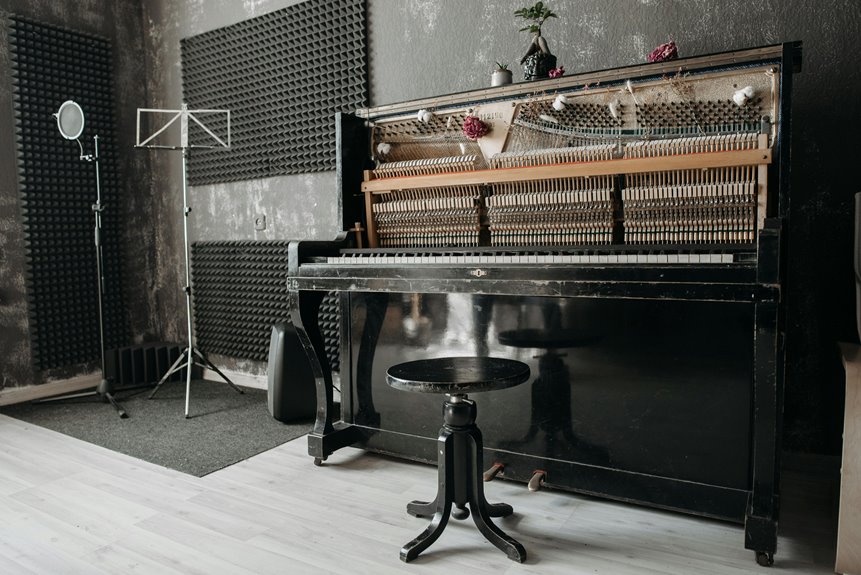
For your DIY acoustic panels, aim for a thickness of 2 to 4 inches. Thicker panels are more effective at absorbing sound energy and minimizing noise disturbances. If you’re focusing on low-frequency sounds, go for the 4-inch thickness; 2-inch panels can work well for higher frequencies. Properly placed panels can really improve your space’s acoustics. Want to know more about material options and placement strategies? Keep going for additional insights!
Key Takeaways
- Acoustic panels should ideally be 2 to 4 inches thick for effective sound absorption.
- Thicker panels (4 inches) are recommended for low-frequency sounds, while 2 inches suffice for high frequencies.
- Material choice impacts absorption; fiberglass and rock wool offer higher sound absorption than acoustic foam.
- Proper placement of panels is crucial; evaluate room acoustics for optimal positioning.
- Regular testing and adjustments can enhance panel effectiveness and improve overall acoustics.
Understanding Sound Waves and Acoustics
When you immerse yourself in the world of sound waves and acoustics, you’ll discover that these invisible forces play an essential role in how we experience sound.
Sound waves are vibrations that travel through the air, and they can bounce off surfaces, creating echoes and altering the quality of what you hear. Understanding how these waves interact with different materials helps you control sound in your space.
For instance, hard surfaces reflect sound, while soft materials absorb it, affecting clarity and volume. You’ll want to reflect on your environment, whether it’s a home studio or a living room.
The Importance of Acoustic Panel Thickness
Understanding how sound waves interact with materials leads to the realization that the thickness of acoustic panels greatly impacts their effectiveness. Thicker panels tend to absorb more sound energy, reducing echoes and improving overall sound quality in your space.
If you’re aiming to minimize noise disturbances, choosing a panel with sufficient thickness is essential. Typically, panels ranging from 2 to 4 inches are recommended for ideal absorption, especially in rooms with challenging acoustics.
You’ll notice a significant difference in how sound behaves in your environment with the right thickness. Remember, the goal is to create a balanced sound atmosphere, so don’t underestimate the importance of choosing the right thickness for your DIY acoustic panels.
Types of Sounds: High Frequencies vs. Low Frequencies
While you may not think about it, the type of sound you’re dealing with—whether high frequencies or low frequencies—can considerably influence your choice of acoustic panels.
High-frequency sounds, like those from cymbals or vocals, tend to be more directional and reflect off surfaces. To manage these, you’ll need panels that effectively absorb these sharp, piercing sounds.
High-frequency sounds, like cymbals and vocals, are directional and reflect off surfaces, necessitating effective absorption panels.
On the other hand, low-frequency sounds, such as bass notes, are more omnidirectional and require thicker materials to absorb their energy effectively. These sounds can easily bounce around, causing muddiness in your space.
Understanding the differences between these types of sounds is essential for selecting the right thickness and material for your DIY acoustic panels, ensuring a balanced and clear auditory environment.
Recommended Thickness for Different Applications
Choosing the right thickness for your DIY acoustic panels can make a significant difference in sound quality depending on your specific application.
For general use in home studios or living areas, panels that are 2 to 4 inches thick are often ideal. They effectively absorb a broad range of frequencies, improving overall acoustics.
If you’re targeting higher frequencies, such as in a vocal recording space, 2-inch panels might suffice. However, for spaces with low-frequency sounds, like bass-heavy music rooms, consider using 4-inch panels or thicker to guarantee adequate absorption.
Material Choices for DIY Acoustic Panels
When it comes to DIY acoustic panels, the materials you select play an essential role in their effectiveness. You’ll want to choose materials that absorb sound well while being easy to work with. Common choices include fiberglass, rock wool, and acoustic foam, each offering different benefits.
| Material | Sound Absorption | Cost |
|---|---|---|
| Fiberglass | High | Moderate |
| Rock Wool | Very High | Moderate |
| Acoustic Foam | Moderate | Low |
Consider your budget and the specific sound issues you’re addressing. By selecting the right materials, you can create panels that effectively reduce unwanted noise, enhancing your space’s acoustics for better sound quality.
How to Measure Effectiveness of Acoustic Panels
To truly understand how effective your acoustic panels are, you need to look at their Noise Reduction Coefficient (NRC) rating.
This rating helps you gauge how well the panels absorb sound.
Additionally, testing sound absorption in your space can give you real-world insights into their performance.
NRC Rating Importance
Understanding the NRC (Noise Reduction Coefficient) rating is essential for anyone looking to measure the effectiveness of acoustic panels. This rating, ranging from 0 to 1, indicates how much sound a panel can absorb. A higher NRC means better sound absorption, which is vital for improving your space’s acoustics.
When you’re choosing or designing your DIY panels, keep in mind that materials with an NRC above 0.5 are generally considered effective. You’ll want to aim for panels that can reduce sound reflections, creating a more pleasant listening environment.
Testing Sound Absorption
Measuring the sound absorption of your acoustic panels is essential for determining their effectiveness in improving your space’s acoustics. You can test their performance using a simple setup: place a speaker at a fixed distance, play white noise, and measure the sound level with a decibel meter. Record the readings with and without the panels in place to gauge their impact.
Here’s a quick reference table to help you visualize the potential benefits:
| Sound Level (dB) | With Panels | Without Panels |
|---|---|---|
| 60 | 50 | 60 |
| 70 | 55 | 70 |
| 80 | 60 | 80 |
| 90 | 65 | 90 |
This data can reveal how much noise reduction you achieve!
Placement Strategies for Maximum Sound Absorption
While you may have chosen the perfect thickness for your DIY acoustic panels, their effectiveness largely depends on where you place them.
To maximize sound absorption, consider these placement strategies:
- Corners: Place panels in room corners to reduce bass buildup.
- Reflection Points: Identify and cover early reflection points on walls and ceilings.
- Opposite Walls: Position panels directly across from each other to minimize echo.
- High Traffic Areas: Install panels in areas with the most sound activity, like near speakers.
- Height Variation: Vary the height of panels to address sound waves at different levels.
Cost vs. Effectiveness: Finding the Right Balance
When you’re choosing materials for your DIY acoustic panels, it’s vital to weigh cost against effectiveness.
You want to guarantee that your budget constraints don’t compromise the sound absorption you’re aiming for.
Finding that right balance can make all the difference in achieving the acoustic quality you desire.
Material Selection Impact
Selecting the right materials for DIY acoustic panels can greatly influence both your budget and the effectiveness of sound absorption.
You’ll want to strike a balance between cost and performance. Here are some materials to evaluate:
- Mineral wool: Excellent sound absorption, moderately priced.
- Fiberglass: Very effective, but can be more expensive.
- Foam: Affordable and lightweight, but less effective.
- Recycled denim: Eco-friendly option with good absorption, often reasonably priced.
- Wood: Aesthetic appeal and decent performance, but can be costly.
Budget Constraints Considerations
Budget constraints often play a pivotal role in your decision-making process for DIY acoustic panels, as you’ll need to balance cost with effectiveness.
When considering thickness, remember that thicker panels generally provide better sound absorption but can also be more expensive. Look for materials that give you the best soundproofing without breaking the bank.
You might choose to invest in fewer thicker panels rather than many thinner ones, maximizing effectiveness while staying within your budget.
Also, consider second-hand materials or creative alternatives that can lower costs without sacrificing quality.
Common Mistakes to Avoid in DIY Acoustic Panels
Although creating DIY acoustic panels can be a rewarding project, many enthusiasts make common mistakes that can undermine their effectiveness. Here are five pitfalls to avoid:
- Incorrect material choice: Not all materials absorb sound well; choose high-density fiberglass or mineral wool.
- Insufficient thickness: Panels need to be thick enough to effectively dampen sound; aim for at least 2 inches.
- Poor placement: Don’t just stick them anywhere; strategic placement is vital for best performance.
- Neglecting aesthetics: While function is key, don’t forget about how they’ll look in your space; consider fabric covers.
- Ignoring testing: Always test your panels’ effectiveness; make adjustments as needed for the most favorable results.
Avoid these mistakes to enhance your acoustic solutions!
Final Thoughts on Customizing Your Acoustic Solutions
When you tailor your acoustic solutions, it’s essential to ponder not just functionality but also how they fit into your overall space. You want your panels to absorb sound effectively while enhancing the aesthetics of your room.
Consider the thickness and material of your DIY panels, as these factors considerably impact performance. Don’t shy away from experimenting with different designs or colors; they can complement your decor while serving a purpose.
Remember, placement matters—strategically positioning your panels can yield better acoustic results.
Finally, take the time to evaluate your space’s unique acoustics and adjust your solutions accordingly. Customizing your acoustic panels can lead to a more enjoyable listening experience without sacrificing style.
Frequently Asked Questions
Can I Use Recycled Materials for My Acoustic Panels?
You can weave recycled materials into your acoustic panels like a tapestry of sustainability. Old blankets, cardboard, or even denim can absorb sound effectively, letting you craft a greener, quieter space without breaking the bank.
How Do I Maintain My DIY Acoustic Panels?
To maintain your DIY acoustic panels, regularly check for dust and dirt. Gently vacuum or wipe them down with a damp cloth. If they smell or get damaged, consider replacing the fabric or insulation material.
What Colors or Finishes Work Best for Acoustic Panels?
When it comes to acoustic panels, you’re in for a treat! Bold colors like deep blues or muted grays work wonders, while natural finishes can blend seamlessly with your decor, enhancing both style and sound absorption.
Can I Use Acoustic Panels Outdoors?
You can use acoustic panels outdoors, but make certain they’re weather-resistant. Regular panels won’t hold up against moisture and sunlight. Opt for outdoor-rated materials to guarantee durability and maintain their sound-absorbing properties effectively.
How Do I Know if My Panels Are Effective?
To gauge your panels’ effectiveness, listen for sound waves dancing softly instead of crashing. You’ll notice reduced echoes and clearer dialogue when they work. Trust your ears; if it sounds better, your panels are doing their job.