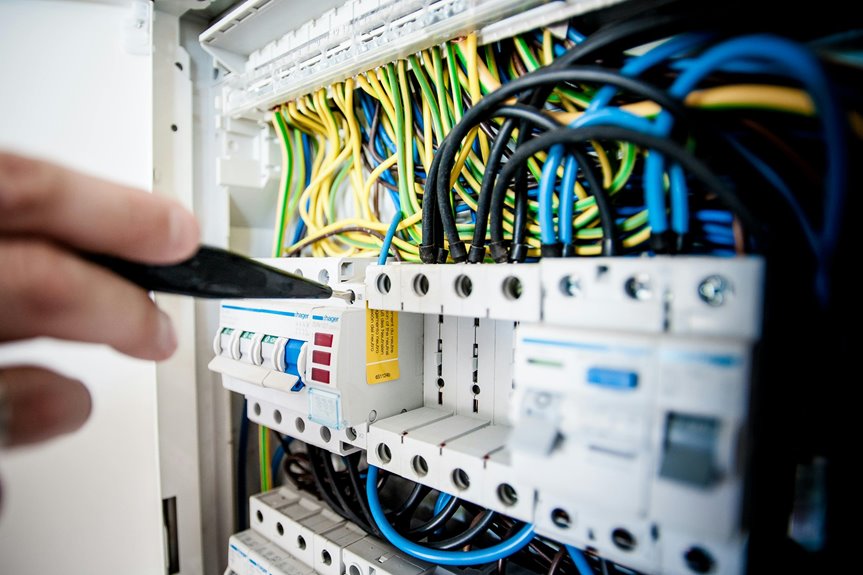
To create a cable management system that’s easy to change, start by evaluating your current setup for clutter and essential connections. Choose flexible tools like cable ties, sleeves, and adhesive clips that allow easy adjustments. Implement storage solutions such as trays or baskets for quick access. Make certain to label cables clearly for easy identification. Regular maintenance is key to guarantee everything stays organized. If you want to explore more tips, there’s plenty to learn!
Key Takeaways
- Utilize modular storage units and flexible cable clips for easy reconfiguration as device needs change.
- Implement adjustable dividers in drawers or bins to accommodate different cable lengths and types.
- Choose cable trays or baskets that allow for quick access and rearrangement of cables.
- Use color-coded labels or tags for easy identification and quick adjustments when adding or removing devices.
- Regularly assess and update your cable management system to ensure it remains functional and organized.
Assess Your Current Setup
Before diving into a cable management solution, it’s essential to assess your current setup. Take a close look at your space and identify where the cables are cluttering your environment. Notice which cables are essential and which ones can be eliminated. You might find old chargers or unused cords taking up space.
Next, consider the pathways your cables take—are they tangled or stretched across areas where they shouldn’t be? Evaluate the locations of your devices and the outlets available. This assessment will help you pinpoint problem areas and understand how to best organize your cables.
With this information, you’re setting the groundwork for a more efficient and visually appealing cable management system that suits your needs.
Choose the Right Tools and Materials
Having assessed your current setup, it’s time to gather the right tools and materials for an effective cable management system.
Having the right supplies makes a big difference in how easy it’s to manage your cables.
Having the right tools simplifies cable management, making it easier to maintain an organized workspace.
Here’s what you’ll need:
- Cable Ties: These help bundle and secure cables together, keeping them neat and organized.
- Cable Sleeves: Use these to protect and group multiple cables, reducing clutter and wear.
- Adhesive Clips: These hold cables in place on walls or desks, preventing tangles.
- Labeling Tools: Use labels to identify cables clearly; this makes changes easier in the future.
With these tools, you’ll be well on your way to a more organized and flexible cable management system.
Implement Flexible Storage Solutions
Implementing flexible storage solutions is essential for keeping your cable management system tidy and efficient. Start by using cable trays, baskets, or raceways that allow easy access and adjustment.
Consider wall-mounted shelves or pegboards to store spare cables and accessories, making them easy to reach when needed. Use adjustable dividers in drawers or bins to separate different types of cables, ensuring you can quickly find what you’re looking for.
Opt for modular storage units that can grow or shrink based on your needs, allowing for future upgrades. Additionally, keep your setup adaptable by using cable clips or ties that can easily be repositioned as your equipment changes.
This way, you’ll maintain an organized and user-friendly cable management system.
Labeling and Identification Techniques
Once you’ve established flexible storage solutions for your cables, it’s time to focus on labeling and identification techniques. Proper labeling guarantees you can quickly identify and access the right cable when needed.
Here are some effective methods:
- Color Coding: Use different colored labels or cable ties for various cable types or functions.
- Numbering System: Assign a unique number to each cable, and keep a corresponding list for easy reference.
- Cable Tags: Write the cable’s purpose or device it connects to on a durable tag attached to the cable.
- Printable Labels: Create and print labels using a label maker for a professional look and easy readability.
These techniques simplify organization and help you manage your cables efficiently.
Regular Maintenance and Updates
To keep your cable management system effective, regular maintenance and updates are essential. Periodically check the cables for wear and tear, replacing any damaged ones promptly to guarantee safety and performance.
Regularly inspect and replace worn cables to ensure your cable management system remains safe and performs optimally.
Dust and debris can accumulate over time, so clean your setup to prevent interference with connections.
As technology evolves, new devices may require different cable types or arrangements. Stay proactive by reassessing your system whenever you add or remove equipment. You might need to adjust your cable routing or add new labels for clarity.
Finally, schedule a routine review—perhaps every six months—to guarantee everything remains organized and functional. Regular maintenance not only prolongs the life of your setup but also makes future changes simpler and more efficient.
Frequently Asked Questions
What Types of Cables Require Specific Management Solutions?
Certain cables, like power cords, HDMI, and Ethernet, need specific management solutions. You’ll want to use cable ties for power cords, sleeves for HDMI, and clips for Ethernet to keep everything organized and accessible.
How Can I Prevent Tangling in My Cable Setup?
To prevent tangling in your cable setup, use Velcro straps to bundle cables, label each one for easy identification, and route them along walls or furniture to keep them organized and out of the way.
Are There Any Eco-Friendly Materials for Cable Management?
Yes, you can use eco-friendly materials like bamboo cable organizers, recycled fabric sleeves, or biodegradable cable ties. These options reduce waste and help you maintain a tidy setup while being gentle on the environment.
How Often Should I Reassess My Cable Management System?
Think of your cable management like a garden; it needs regular tending. Reassess your system every few months or when you add new devices, ensuring it remains functional, organized, and visually pleasing in your space.
Can I Use Decorative Items for Cable Management?
Absolutely, you can use decorative items for cable management! Consider stylish baskets, clips, or even decorative boxes. They’ll not only keep cables organized but also enhance your space’s aesthetics, making it visually appealing and functional.