
To create a kid-friendly workspace without chaos, assess your space and set up a designated area that's quiet and well-lit. Incorporate adjustable furniture and creative storage solutions to keep supplies organized and within reach. Establish clear boundaries with specific work hours, using visual cues to signal focus time. Encourage kids to personalize their space while ensuring comfort and safety. With these essentials, you'll foster creativity and productivity, and there's more to explore for an optimized setup!
Key Takeaways
- Designate a quiet, clutter-free workspace with comfortable seating and good lighting to enhance focus and creativity.
- Incorporate adjustable furniture and colorful, engaging designs that resonate with children to encourage their involvement.
- Utilize creative storage solutions like labeled bins and vertical shelves to keep supplies organized and easily accessible.
- Establish clear boundaries and a flexible schedule for work and play, ensuring children understand focus periods.
- Personalize the workspace with kids' artwork and themed decor to create an engaging environment that sparks creativity while ensuring safety.
Assess Your Space
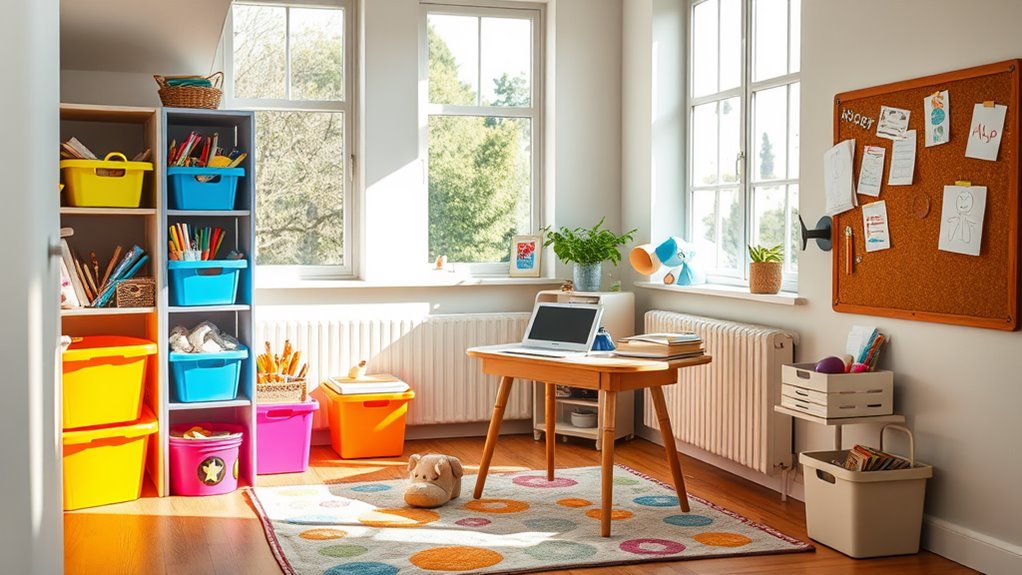
How can you create a kid-friendly workspace that sparks creativity and focus? Start by evaluating your space. Look around and identify areas that can be transformed into a productive zone.
Consider lighting; natural light boosts mood and concentration, so position the workspace near a window if possible. Next, review existing furniture. You'll want comfortable seating and a sturdy table at the right height for your child.
Declutter the area, removing distractions that could stifle creativity. Incorporate a few inspiring decor elements, like colorful artwork or motivational quotes, to energize the environment.
Finally, make sure that supplies are easily accessible yet organized. By thoughtfully evaluating your space, you'll set the stage for creativity and focus in your kid's workspace.
Set Up a Designated Work Area
To create a kid-friendly workspace, start by choosing the right location that's quiet and free from distractions.
Once you've found the perfect spot, organize essential supplies within reach to keep everything orderly and accessible.
This setup not only fosters focus but also encourages creativity and productivity.
Choose the Right Location
Creating a designated work area is essential for fostering productivity and focus, especially when kids are involved.
Choose a location that's quiet and free from distractions. Ideally, set up your workspace in a room where you can close the door, allowing for specific work hours. If that's not possible, consider using a corner of the living room or a separate nook.
Natural light is a bonus, so position your desk near a window if you can. Make sure the area's comfortable, with adequate seating and workspace.
You'll want to avoid high-traffic areas where kids might interrupt your flow. By carefully selecting the right spot, you'll create an environment conducive to both work and play, benefiting everyone in the family.
Organize Essential Supplies
A well-organized workspace can drastically improve your efficiency and focus. Start by designating a specific area for your child's work, free from distractions.
Gather essential supplies—like pencils, paper, scissors, and markers—and store them in labeled bins or drawers. This way, your child knows exactly where to find what they need.
Encourage them to keep their workspace tidy by regularly checking in and cleaning up. Use a wall calendar or a bulletin board to display important dates and reminders.
Make it a fun routine; let your child personalize their space with stickers or artwork. By maintaining an organized environment, you're setting them up for success and helping to cultivate good habits that last a lifetime.
Incorporate Kid-Friendly Furniture
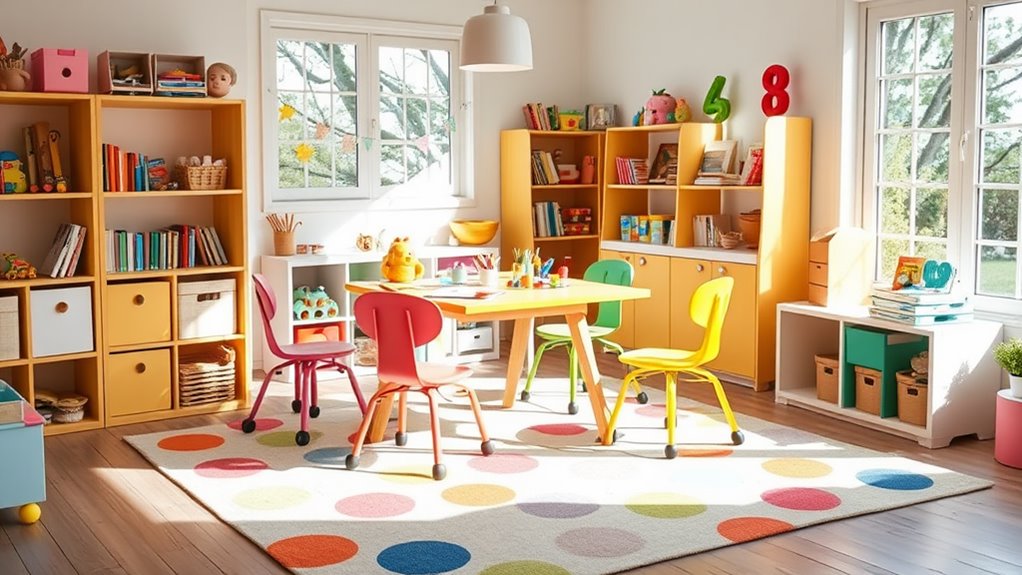
Incorporating kid-friendly furniture can transform a workspace into a welcoming and functional environment for children. Choosing the right pieces not only enhances comfort but also encourages creativity and focus. Here's a quick guide to help you select the best furniture elements:
| Furniture Type | Benefits | Key Features |
|---|---|---|
| Adjustable Desks | Grows with your child | Height customization |
| Colorful Chairs | Engages and motivates | Fun designs |
| Soft Seating | Provides relaxation space | Cushioned, inviting |
| Playful Storage Units | Organizes supplies creatively | Bright colors, easy access |
With these options, you can create a space that's not just functional but also inspiring for your little ones. Don't forget to involve them in the selection process!
Organize With Creative Storage Solutions
To create a kid-friendly workspace, think about how you can organize with creative storage solutions.
You can utilize vertical space efficiently, repurpose everyday household items, and label everything clearly for easy access.
These strategies not only keep the area tidy but also encourage your kids to take ownership of their space.
Utilize Vertical Space Efficiently
While kids often need plenty of room to play and create, utilizing vertical space can transform a cluttered area into an organized haven.
Wall-mounted shelves are a fantastic way to store books, art supplies, and toys without taking up precious floor space. Consider using pegboards to hang items like scissors and markers for easy access.
You can also install hooks for backpacks and jackets, keeping them off the floor. Don't forget about clear bins or baskets that can be stacked to maximize storage.
Adding a small ladder or step stool allows kids to reach higher shelves safely. By creatively using vertical space, you'll create a functional environment that encourages creativity and minimizes chaos.
Repurpose Everyday Household Items
Finding innovative ways to organize your child's workspace can be as simple as repurposing everyday household items. Look around your home for items that can serve double duty. For example, use empty jars for storing crayons or buttons, and shoe organizers to hold art supplies.
Here's a quick table to inspire your creativity:
| Household Item | New Use | Benefits |
|---|---|---|
| Egg Carton | Store small items | Keeps things contained |
| Old Mason Jars | Organize supplies | Clear visibility |
| Plastic Bins | Sort by category | Easy access |
| Cereal Boxes | Create a magazine holder | Saves space |
| Hanging Shoe Rack | Store craft materials | Utilizes vertical space |
Get creative, and watch the chaos disappear!
Label Everything Clearly
When you label everything clearly, you create a more organized and efficient workspace for your child. Use colorful labels or fun stickers to make it engaging.
Label storage bins, drawers, and shelves to help your child know where to find and return items. This not only teaches them responsibility but also fosters independence.
Consider using different colors for categories—blue for art supplies, green for books, and red for toys. Encourage your child to participate in the labeling process; this can spark creativity and make the workspace feel personal.
Clear labels reduce frustration and create a sense of order, making it easier for your child to focus on their tasks and enjoy their workspace without chaos.
Establish Clear Boundaries
To create a productive kid-friendly workspace, you need to establish clear boundaries that define when and where work happens.
Start by setting specific hours for work and play. Communicate these times to your kids, so they understand when it's time to focus. Use visual cues, like a sign or timer, to indicate work periods.
Make sure they know that during these times, distractions should be minimized. Designate a specific area for work, free from toys and other distractions, and enforce this rule consistently.
Encourage your kids to respect these boundaries, reinforcing the idea that a structured environment leads to better productivity.
Use Fun and Engaging Decor

To create a kid-friendly workspace, you'll want to focus on bright colors and fun patterns that spark creativity.
Incorporating themed accessories and supplies can also make the space more engaging for your little ones.
These elements not only enhance the aesthetic but also inspire a love for learning and exploration.
Bright Colors and Patterns
Incorporating bright colors and playful patterns into your workspace can transform it into a vibrant, inviting environment for kids.
Choose a color palette that excites and energizes, like cheerful yellows, bold blues, or lively greens. You can paint the walls or add colorful wall decals to create an engaging backdrop.
Incorporate fun patterns through rugs, curtains, or even desk accessories. Stripes, polka dots, or whimsical animal designs can spark creativity and make the space feel lively.
Don't forget to let kids personalize their areas with colorful artwork or crafts.
Themed Accessories and Supplies
Themed accessories and supplies can bring a sense of adventure to your kid-friendly workspace. Choose a fun theme that resonates with your child's interests—be it outer space, dinosaurs, or superheroes.
Decorate the area with themed wall art, desk organizers, and colorful stationery. A space-themed lamp can spark creativity, while dinosaur-shaped pencil holders keep supplies organized.
Encourage your child to personalize their workspace with themed items like stickers, notebooks, and wall decals. This not only makes the area inviting but also helps them feel a sense of ownership.
Create a Flexible Schedule
Creating a flexible schedule can make a world of difference in balancing work and family life.
By having a routine that adapts to your family's needs, you can enhance productivity and keep chaos at bay.
Here are four tips to help you craft that schedule:
- Identify Peak Hours: Recognize when you're most productive and plan focused work sessions during those times.
- Set Breaks: Include short breaks for yourself and the kids to recharge, preventing burnout and keeping everyone engaged.
- Incorporate Family Time: Schedule regular family activities to strengthen bonds and relieve work stress.
- Review Weekly: Assess your schedule regularly to see what's working and adjust as necessary to meet changing needs.
With this approach, you'll foster a harmonious work-life balance.
Encourage Collaborative Projects
Balancing work and family life often involves engaging your kids in activities that combine learning and fun. One great way to do this is by encouraging collaborative projects.
Gather your children and brainstorm creative ideas they can work on together, like building a fort or crafting a scrapbook. These activities not only spark their imagination but also teach teamwork and problem-solving skills.
Set up a designated space in your workspace where they can lay out their materials and work side by side with you. You'll foster a sense of belonging and shared purpose, making work feel less isolated.
Plus, you'll create lasting memories while completing your tasks, turning your workspace into a vibrant hub of creativity and collaboration.
Incorporate Learning Tools and Resources
While you're working, incorporating learning tools and resources into your workspace can enhance your kids' educational experience.
Enhance your kids' educational experience by integrating learning tools and resources into your workspace while you work.
Here are some ideas to get you started:
- Educational Apps: Load tablets or computers with interactive learning apps that cover various subjects.
- Art Supplies: Provide crayons, markers, and paper to encourage creativity and expression during breaks.
- Books and Magazines: Stock a small library of age-appropriate books and magazines to inspire reading and curiosity.
- Puzzles and Games: Keep educational puzzles and games on hand to promote problem-solving skills in a fun way.
Ensure Safety and Comfort
To guarantee your kids feel safe and comfortable in their workspace, start by evaluating the environment for any potential hazards. Check for sharp objects, loose wires, or heavy items that could fall.
Make sure the furniture is child-sized to promote proper posture and prevent discomfort. Soft, cushioned seating can help enhance their comfort during study sessions.
Also, consider the lighting; natural light is ideal, but verify there's enough artificial light to reduce eye strain.
Finally, keep the temperature comfortable. A workspace that's too hot or cold can distract and disrupt focus.
Maintain a Clutter-Free Environment
Creating a clutter-free environment is essential for helping your kids focus and stay organized. A tidy space not only encourages productivity but also minimizes distractions.
Here are some effective strategies to maintain that cleanliness:
- Designate Storage: Use bins and shelves to keep supplies organized and within reach.
- Implement a Daily Clean-Up Routine: Set a specific time each day for your kids to tidy up their workspace.
- Limit Supplies: Keep only essential items on the desk to reduce visual clutter.
- Encourage Personal Responsibility: Teach your kids to take ownership of their space by putting things back after use.
Frequently Asked Questions
How Can I Minimize Distractions in a Kid-Friendly Workspace?
To minimize distractions, you can establish clear boundaries, use visual cues to signal focus time, and incorporate engaging activities. Keep the workspace organized, and encourage breaks to help maintain attention and productivity throughout the day.
What Materials Are Best for Kid-Friendly Workspace Furniture?
When choosing materials for kid-friendly workspace furniture, opt for sturdy, non-toxic options like wood or metal. Look for surfaces that are easy to clean and durable enough to withstand daily use and occasional spills.
How Do I Involve My Child in Workspace Organization?
To involve your child in organizing the workspace, ask for their input on design and layout. Let them choose colors or decorations, and assign them simple tasks, making it a fun, collaborative experience together.
Are There Specific Colors That Enhance Focus for Kids?
Certain colors can boost kids' focus. Blues and greens promote calmness, while yellows and oranges can energize. Experimenting with different shades in their workspace can help you find what keeps them engaged and productive.
How Can I Make the Workspace Appealing for Different Age Groups?
To make the workspace appealing for different age groups, you can incorporate vibrant colors, flexible furniture, and engaging decor. Tailor activities and resources to their interests, ensuring everyone feels included and inspired to explore.