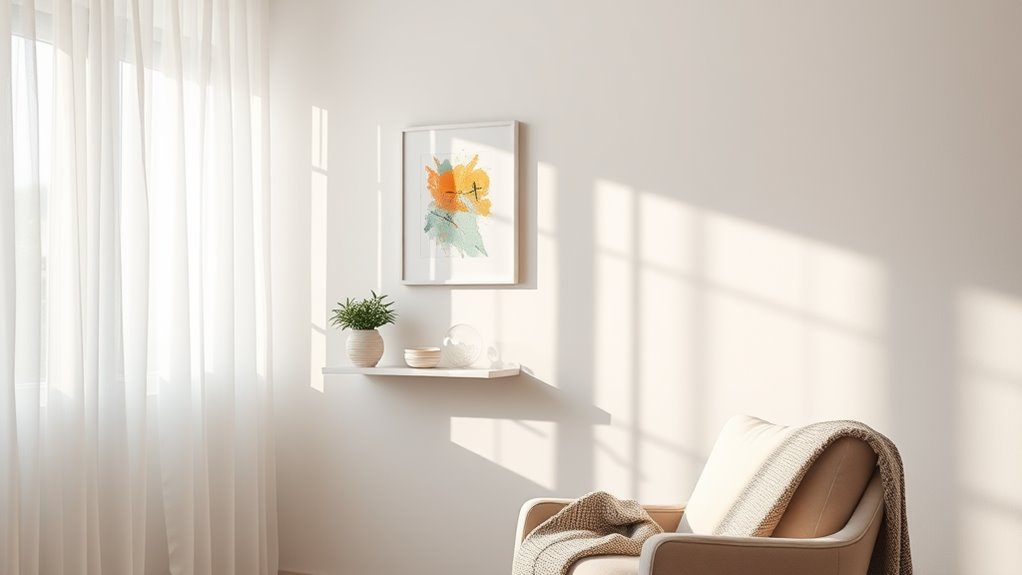
Incorporating art and personal touches without clutter starts by choosing pieces that truly resonate with you. Mix styles to create visual interest while maintaining a cohesive look with a consistent palette. Keep your displays intentional and limit the number of items you showcase. Create a gallery wall that balances and highlights meaningful pieces. Finally, explore using textiles and accessories to add warmth. Curious about more tips to enhance your space?
Key Takeaways
- Select a few meaningful art pieces that resonate with you to create a focused and personal display.
- Maintain a consistent color palette to ensure cohesion among your art and decor, avoiding visual clutter.
- Limit the number of displayed items and rotate them regularly to keep your space fresh and engaging.
- Create a gallery wall or designated area to group your art, ensuring it complements existing decor without overwhelming the space.
- Incorporate personal touches, like photographs or handmade items, alongside art to enhance emotional connection while maintaining balance.
Choosing Art That Speaks to You

How do you find art that truly resonates with you? Start by matching your art choices to your personal taste. Think about the emotions you want to evoke and how different pieces can reflect your individuality.
Consider the purpose of each room; calming artwork suits bedrooms, while vibrant pieces energize living areas. Pay attention to color harmony—choose art that complements or contrasts with your room's palette. Scale matters too; make sure your art fits the space without overwhelming it. Framed paintings typically cost at least £800 for a metre by metre size, so setting a budget before you start searching will guide your options. Finally, coordinate your artwork with existing furniture, ensuring a cohesive look that feels intentional and personal.
Mixing and Matching Styles for Visual Interest
Mixing and matching 2-3 interior design styles adds visual interest and depth. Finding art that resonates with you can be just the beginning of creating a unique space. Consider how these styles align with your home's architecture for a cohesive look. Combining vintage pieces with modern elements infuses character into your room, while contrasting simplicity with complexity creates a dynamic environment. For instance, pairing Modern with Traditional or Bohemian with Mid-Century Modern can yield striking results. Use neutral backgrounds to let your mixed styles shine without clutter. Additionally, balancing styles enhances character and reflects personal taste. Incorporate different textures and colors to enhance visual appeal. Remember, bold and contrasting pieces can serve as focal points, drawing attention and adding personality to your space.
Unexpected Places to Display Art

Art doesn't have to be confined to traditional galleries or living rooms; it can thrive in the most unexpected places.
Embracing these unconventional venues can spark creativity and transform your environment. Here are three surprising locations to display art:
- Public Toilets: Check out galleries like The Bower in London, which host fascinating feminist art events in repurposed restrooms.
- Crypts: Visit the Crypt Gallery, where contemporary art flourishes in a contemplative, historical setting. These spaces often reflect the themes of the art they host.
- Outdoor Installations: Look for vibrant murals and sculptures in urban spaces, turning city streets into dynamic art experiences.
Designing a Cohesive Gallery Wall
To design a cohesive gallery wall, start by choosing a theme—whether it's color, aesthetic, or shape. A consistent color palette unifies your pieces, while diverse art styles add depth. Repeat each style two to three times for balance. Mix frame finishes like wood and metal for added variety, and focus on balance instead of symmetry for a visually appealing arrangement.
Before hanging, create a mockup to visualize your layout. Begin with the largest piece as your anchor, spacing the others consistently. Aim for approximately 3 inches of space between each piece to avoid crowding and ensure each artwork stands out.
Consider the visual weight of each artwork and how it complements surrounding furniture, ensuring your gallery wall enhances the space without overwhelming it.
Personalizing Spaces With Textiles and Accessories

When you want to infuse personality into your space, textiles and accessories play an essential role in transforming a room. They add texture, color, and even seasonal adaptability.
Here are three ways to personalize your space with these elements:
- Layer Textures: Mix materials like silk, linen, and velvet to create depth and visual interest.
- Choose Bold Patterns: Use vibrant textiles to energize a room or soft hues for a calming vibe.
- Incorporate Unique Accessories: Select statement pieces, like custom-upholstered furniture or meaningful décor, that reflect your personal style.
Maintaining Balance to Avoid Clutter
To maintain balance and avoid clutter, focus on selecting meaningful pieces that truly resonate with you. Limit the number of items you display, allowing each piece to shine without overwhelming the space. This approach not only enhances your decor but also creates a more intentional and calming environment. Embracing minimalist decor principles can further help streamline your selections and elevate the overall aesthetic of your home.
Select Meaningful Pieces
Selecting meaningful art pieces requires a careful balance to prevent clutter while enhancing your space.
Focus on art that resonates with you personally and adds emotional depth to your environment. Consider these key factors:
- Aesthetic Appeal: Choose art that captivates with its colors and composition, guaranteeing it complements your existing decor.
- Emotional Connection: Opt for pieces that evoke feelings or tell stories, allowing your personality to shine through. Good art captures attention and transforms your space into a personal haven.
- Scale and Proportion: Confirm the artwork's size fits harmoniously within the room, balancing it with your furnishings.
Limit Displayed Items
Limiting displayed items is essential for creating a balanced and inviting space. When you reduce the number of pieces on display, it helps prevent visual overload and allows each item to shine.
By highlighting only a few carefully chosen pieces, you create focal points that draw the eye and foster appreciation. Leave breathing space around these items to cultivate a clean, modern aesthetic. Collections are personal and should reflect your individual preferences, guiding your display choices.
Consider rotating your displays regularly to keep the environment fresh and engaging. Use solutions like floating shelves, glass cabinets, or shadow boxes to organize and protect your treasures while maintaining visibility.
Integrate your collections with everyday decor for a harmonious look, ensuring your space remains functional and clutter-free.
Frequently Asked Questions
How Do I Determine the Right Size of Art for My Space?
To determine the right size of art for your space, measure your walls and furniture. Aim for art that's 2/3 to ¾ the width of the furniture or wall, and hang it at eye level.
What Is the Best Way to Care for My Artwork?
To care for your artwork, regularly check its condition, maintain stable temperature and humidity, store it properly, and avoid direct sunlight. Use acid-free materials for framing, and consider professional conservation when needed.
How Can I Incorporate Art on a Budget?
You can incorporate art on a budget by using free online resources, creating hand-painted canvases, repurposing items like old frames, and shopping thrift stores. Explore your creativity with affordable materials and unique, personal touches.
Should I Prioritize Local Artists or Well-Known Pieces?
You should prioritize local artists for authenticity and community connection, but don't overlook well-known pieces that offer quality and investment potential. Balancing both can enhance your space's uniqueness while reflecting your personal taste.
How Do I Rotate Artwork Seasonally Without Clutter?
To rotate artwork seasonally without clutter, choose a few impactful pieces that align with seasonal themes. Store off-season art, and regularly swap displays, ensuring each rotation maintains harmony and freshness in your space.