
To layer lighting for focus and comfort, mix ambient, task, and accent lighting. Start with ambient light for general brightness, then add task lighting near work areas for specific tasks like reading. Don't forget accent lighting to highlight decor or features. Use dimmer switches to control intensity and create the right mood. Also, consider color temperature—warm light promotes relaxation while cool light boosts alertness. There's more to explore about integrating natural light and personalizing your space.
Key Takeaways
- Combine ambient, task, and accent lighting to create a balanced environment that enhances focus and comfort while reducing eye strain.
- Use warm lighting (2000-3000K) for relaxation and cool lighting (3100-5000K) to boost alertness in workspaces.
- Position task lights close to work areas to provide focused brightness, minimizing shadows and distractions.
- Incorporate dimmer switches to customize light intensity, fostering a comfortable atmosphere and saving energy.
- Maximize natural light with strategically placed windows and light-colored walls to enhance brightness and create a welcoming space.
Understanding the Importance of Lighting Layers
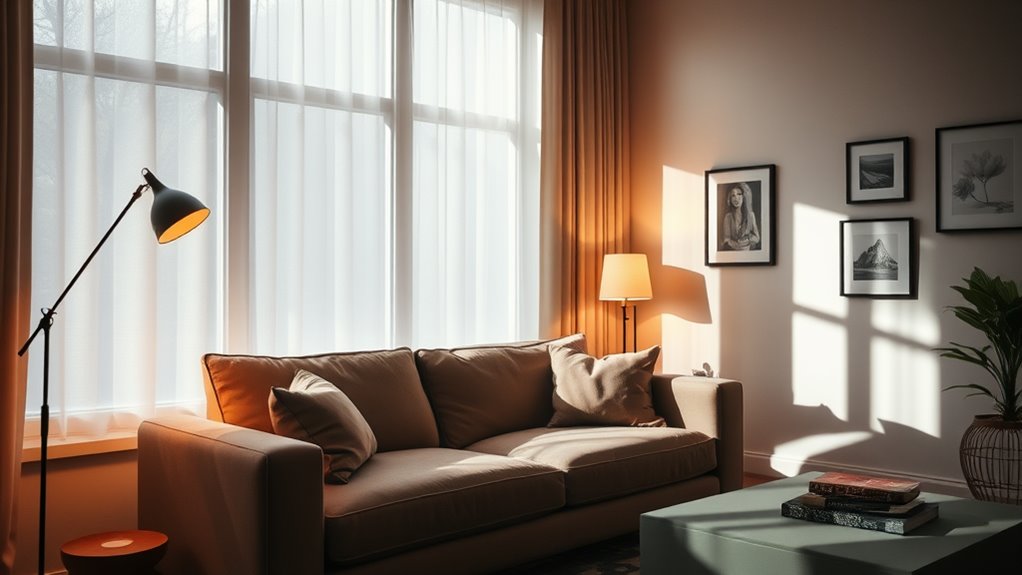
When you consider the overall design of a space, understanding the importance of lighting layers can transform how a room feels and functions.
Lighting layers offer adaptability, letting you adjust brightness based on your needs and preferences. By integrating natural light, you can minimize the reliance on artificial lighting during the day, creating a more inviting atmosphere. Flexibility and adaptability in lighting design allows you to tailor the environment to suit different activities and moods.
Lighting layers provide flexibility, allowing you to tailor brightness to your needs while embracing natural light for a welcoming environment.
Different layers cater to various activities—task lighting supports reading or working, while ambient lighting provides general illumination. With smart controls, managing these layers becomes effortless, enhancing your space's functionality.
Customizing lighting according to room functions not only boosts comfort but also enhances your overall experience, making every moment spent in that room enjoyable and efficient.
Types of Lighting: Ambient, Task, and Accent
When it comes to lighting, understanding the three main types—ambient, task, and accent—is key to creating a well-lit space. Each type serves a distinct purpose, and layering them effectively enhances both functionality and aesthetics. Ambient lighting provides overall illumination for safety and visibility, ensuring that every corner of the room is evenly lit. Let's explore how to choose the right fixtures and balance these lighting elements to meet your needs.
Understanding Lighting Definitions
Lighting plays an essential role in defining the atmosphere of a space, and understanding its three primary types—ambient, task, and accent—can transform your home. Ambient lighting provides general illumination, setting the mood with fixtures like chandeliers or recessed lights, typically casting a warm glow of 2700K to 3000K. Lower Kelvin numbers produce warm, cozy light, which is ideal for relaxation in ambient settings. Task lighting, on the other hand, offers focused brightness for activities like reading or cooking, utilizing desk lamps or under-cabinet lights with a cooler temperature of 3500K to 4500K. Finally, accent lighting highlights special features or décor using track lights or spotlights, adding depth and visual interest. Each type serves a unique purpose, enhancing both functionality and aesthetics in your living space.
Importance of Layering
Understanding the different types of lighting sets the foundation for creating a well-lit space.
Layering ambient, task, and accent lighting enhances functionality, making your environment both practical and visually appealing. This thoughtful combination can improve your mood and well-being by providing adequate lighting for various activities. Additionally, the right lighting can save energy by focusing light where it's needed most. A well-designed lighting scheme also increases property value while enhancing safety by reducing eye strain and accidents. By integrating these layers, you create a balanced atmosphere that not only meets your needs but also adds visual interest and depth to your space. Embracing layered lighting guarantees your home is comfortable and inviting, as it adds depth and dimension to otherwise dull areas.
Fixture Selection Tips
Selecting the right fixtures is essential for achieving the desired atmosphere and functionality in each room. For ambient lighting, choose ceiling lights or recessed downlights that evenly illuminate your space, considering room size for ideal coverage. Layering different types of lighting is key to ensuring that your space feels warm and inviting. Task lighting, like desk lamps and under-cabinet fixtures, should be strategically placed to minimize shadows and enhance visibility for activities like reading or cooking. Finally, accent lighting adds drama and visual interest, using spotlights or track lighting to highlight artwork or architectural features. When choosing fixtures, think about their compatibility with your decor and adjustability to meet specific needs. This thoughtful selection guarantees your lighting layers work harmoniously to create a comfortable and inviting environment.
Selecting the Right Fixtures for Each Layer
When it comes to creating a well-lit space, choosing the right fixtures for each layer is crucial. Ambient lighting, like ceiling-mounted fixtures or chandeliers, sets the overall tone. For task lighting, desk lamps and under-cabinet lights guarantee you have focused illumination where you need it most. Accent lighting, such as spotlights and wall sconces, adds depth and highlights your favorite features. Layered lighting can also enhance the ambiance of a room, allowing for adjustments based on different moods and occasions.
| Layer | Fixture Example | Purpose |
|---|---|---|
| Ambient | Ceiling Mounted Fixture | General illumination |
| Task | Desk Lamp | Focused workspace lighting |
| Accent | Spotlight | Highlight artwork |
Enhancing Ambiance With Dimmer Switches
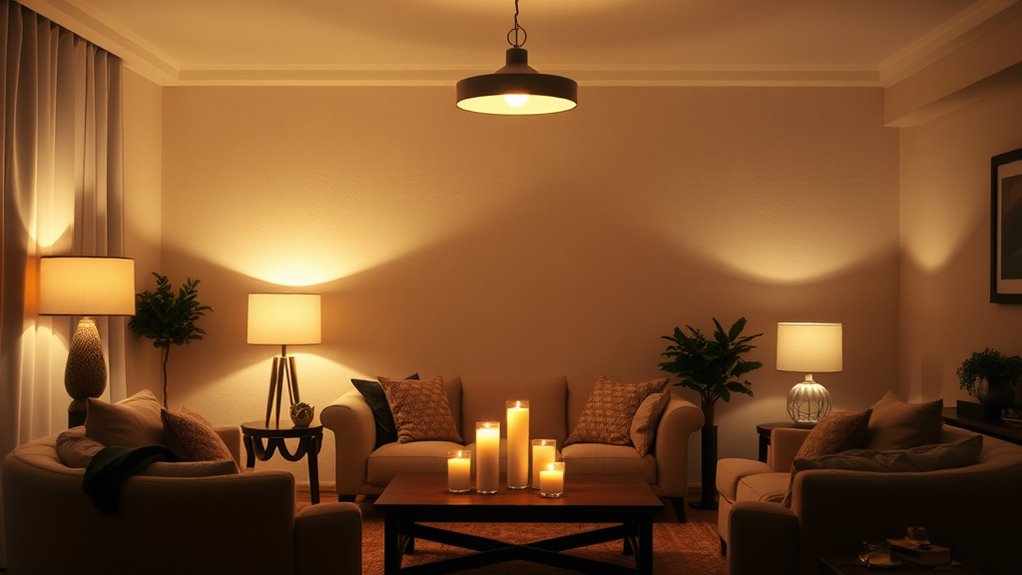
Using dimmer switches gives you the power to customize light intensity, creating the perfect atmosphere for any occasion. Whether you're hosting a lively gathering or enjoying a quiet dinner, you can easily adjust the mood with just a turn or slide. Plus, by lowering the brightness, you'll save energy and extend the life of your light bulbs. With a variety of dimmer switches available, you can find the ideal option to suit your needs and preferences.
Adjustable Light Intensity
Adjustable light intensity can transform a space, allowing you to create the perfect ambiance for any occasion.
Dimmer switches come in various types—LED, incandescent, and halogen—to match your bulb preferences. You'll find many stylish options, like Lutron dimmers offered in 27 colors, ensuring a seamless fit with your decor. Lutron LED+ Dimmers are designed to improve everyday life experiences by enhancing family activities with adjustable lighting.
Installing these dimmers is typically quick and straightforward, needing just basic tools. Plus, they've been rigorously tested for reliability, so you can trust their performance.
With smart dimming features, you can effortlessly adjust light levels to suit your mood or activity. By using dimmable bulbs, you'll also enjoy energy savings while enhancing your space's overall comfort and functionality.
Mood Setting Options
Creating the right mood in your space is effortless with dimmer switches. They let you adjust light intensity, helping you create a cozy atmosphere for relaxation or a vibrant setting for energizing activities. Dimmer switches provide control over lighting levels for various tasks, ensuring that your lighting is always suited to your needs.
With various styles available—like rotary, slide, and smart dimmers—you can choose one that fits your decor while enhancing your room's overall vibe.
Need a romantic ambiance for dinner? Dim the lights. Hosting a lively gathering? Increase brightness to energize the room.
Dimmers allow you to tailor lighting for different occasions, seamlessly shifting between moods. They enhance your living space, making it adaptable and inviting.
Energy Efficiency Benefits
Dimmer switches not only enhance the mood of your space but also contribute greatly to energy efficiency. By adjusting the brightness, you can notably lower your energy consumption and costs.
Here are some key benefits of using dimmer switches:
- Reduce Power Use: Dimmers cut the energy flowing to lights, leading to lower bills.
- Extend Bulb Lifespan: Dimming reduces filament wear, meaning fewer replacements and less waste. This is because lower intensity of electrical current extends the life of your bulbs.
- Environmental Impact: Lower energy use translates to reduced greenhouse gas emissions.
- Smart Compatibility: Many modern dimmers integrate with smart systems for effortless control.
The Role of Light Temperature in Mood Setting
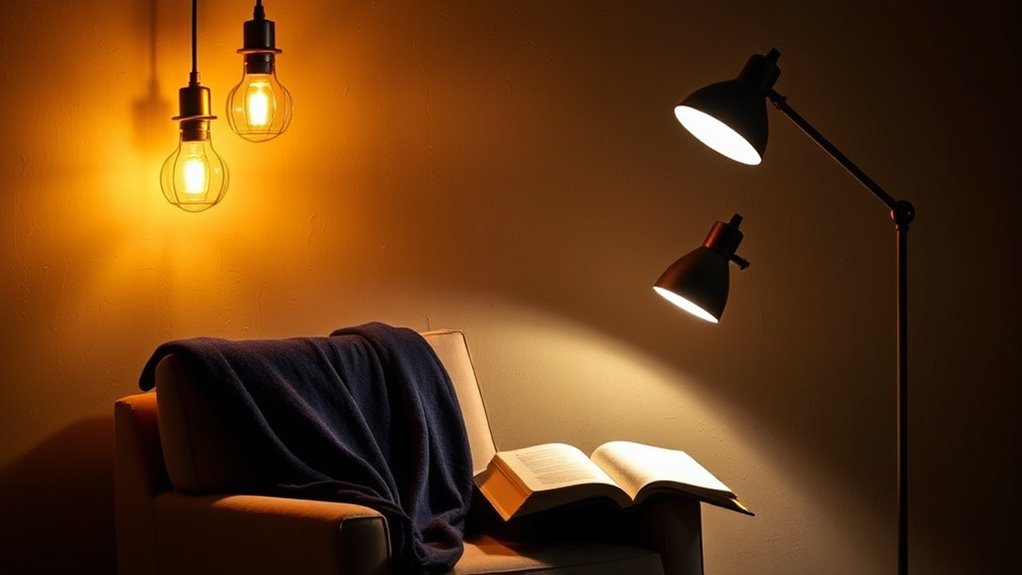
While you might not realize it, the color temperature of your lighting plays an essential role in setting the mood of a space. Warm lighting creates a cozy atmosphere, perfect for relaxation in living rooms, while cool lighting boosts focus and productivity in workspaces. Understanding these effects can help you choose the right temperature for your needs. The study indicates that color and light significantly influence mood and visual perception, with red lighting associated with increased tension and negative mood states.
| Light Temperature | Mood Effect |
|---|---|
| Warm (2000-3000K) | Comfort, relaxation |
| Cool (3100-5000K) | Focus, alertness |
| Neutral (3000-3500K) | Balance, versatility |
| Blue (5000K+) | Clarity, energy, potential anxiety |
Techniques for Effective Layering
To achieve an inviting and functional space, mastering the techniques for effective layering is essential.
Mastering effective layering techniques is crucial for creating an inviting and functional space.
By combining different lighting types, you can create depth and enhance the room's ambiance. Here are four key techniques to take into account:
- Ambient Lighting: Use ceiling fixtures or recessed lights as your base layer to establish overall brightness.
- Task Lighting: Incorporate desk lamps or under-cabinet lights to focus on specific activities like reading or cooking. Consideration of how sunlight enters can further enhance the effectiveness of task lighting during the day.
- Accent Lighting: Highlight artwork or architectural features with spotlights or picture lights to draw attention to key areas.
- Balance: Make sure light and shadows complement each other, ensuring a visually appealing and comfortable environment.
Integrating Natural Light Into Your Design
Integrating natural light into your design not only enhances the mood of your space but also boosts energy efficiency. By strategically placing south-facing windows, you can maximize sunlight throughout the day, considerably reducing your reliance on artificial lighting. Natural light improves mood, boosts vitamin D levels, and regulates sleep patterns, contributing to a healthier living environment.
Consider adding skylights or light tubes to illuminate areas far from windows, cutting down on energy costs. Smart shading systems like automated blinds help control glare while optimizing natural light. Incorporating features like atriums or courtyards allows sunlight to penetrate deeper into your home. Using light-colored walls and reflective surfaces, such as mirrors and glossy finishes, can amplify this natural light, making your space feel larger and more inviting.
Embrace these elements for a sustainable, bright environment.
Considerations for Room Size and Ceiling Types
When considering lighting for your space, room size and ceiling types play an essential role in achieving the right ambiance.
To optimize your lighting design, keep these four factors in mind:
To enhance your lighting design, consider room size, ceiling height, fixture size, and placement for optimal ambiance.
- Room Size: Larger rooms need more ambient fixtures to guarantee even illumination throughout the space. Consider calculating your minimum lighting needs based on the room's dimensions to ensure adequate brightness.
- Ceiling Height: Use dramatic fixtures like chandeliers in high-ceiling rooms, while lower ceilings benefit from flush mounts.
- Fixture Size: Choose fixtures proportional to your room dimensions; for example, a fixture's diameter in inches should match the room's length plus width in feet.
- Fixture Placement: Centering your ambient lights enhances light distribution and creates a balanced atmosphere.
Task-Specific Lighting for Enhanced Performance
After establishing a solid foundation with the right ambient lighting, it's time to focus on task-specific lighting that enhances your performance in various activities.
Task lighting provides focused illumination for tasks like reading, writing, or cooking, improving visual clarity and reducing eye strain. Consider using adjustable desk lamps or floor lamps to direct light precisely where you need it, avoiding shadows and glare. Adequate lighting for aging individuals is particularly important, as it aids in maintaining independence and prevents accidents during daily activities.
Opt for LED bulbs for their efficiency and longevity, and choose a color temperature that suits the task at hand. Proper placement is essential; position the light in front of your workspace at eye level.
Creating a Comfortable and Focused Environment
Creating a comfortable and focused environment starts with understanding how lighting influences your mood and productivity.
Layering different types of lighting can greatly enhance your space. Here are four key strategies to reflect upon:
- Combine Lighting Types: Use ambient, task, and accent lighting to create a balanced atmosphere.
- Maximize Natural Light: Position workspaces near windows to boost energy and creativity. Embrace natural elements like plants and water features can further enhance the ambiance.
- Choose the Right Colors: Incorporate shades like blue for focus or green for balance to enhance your environment.
- Personalize Your Space: Allow for individual color choices and comfortable furniture to foster a sense of control and well-being.
Frequently Asked Questions
How Can I Effectively Mix Different Lighting Styles?
To effectively mix different lighting styles, choose fixtures that share common materials or colors. Layer ambient, task, and accent lighting for depth, and limit your choices to four fixtures to maintain visual harmony and focus.
What Are the Best Materials for Lighting Fixtures?
When choosing materials for lighting fixtures, consider aluminum for heat dissipation, glass for clarity, and copper for aesthetic appeal. Stainless steel offers durability, while ceramic withstands high temperatures. Prioritize sustainability with recycled options.
How Do I Determine the Right Height for Fixtures?
To determine the right height for fixtures, consider your room type and ceiling height. Generally, aim for 7 feet clearance in living areas and 28 to 36 inches above tables for ideal functionality and comfort.
Can I Use Smart Lighting for Layered Designs?
Yes, you can definitely use smart lighting for layered designs. These systems offer customizable brightness and color temperatures, making it easy to create the perfect ambiance for any space or activity you're engaging in.
What Are Some Cost-Effective Lighting Solutions?
You can choose LED bulbs for energy efficiency, install motion sensors for automatic control, and utilize natural light to enhance your space. These cost-effective solutions not only save money but also reduce your energy consumption considerably.