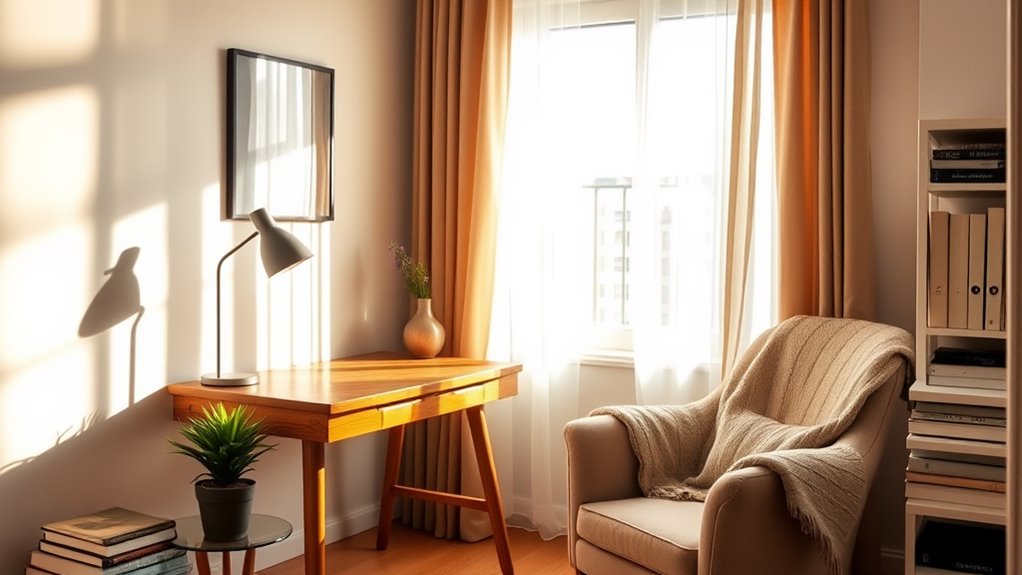
To separate work and life in a small space, create a dedicated workspace using multifunctional furniture and vertical storage to maximize efficiency. Establish clear boundaries with household members by expressing your needs and using "I" statements. Utilize physical barriers like bookshelves or plants to visually distinguish work areas from living spaces. Develop effective routines and schedules to help manage tasks. With these strategies, you'll improve your focus and well-being, enabling you to thrive in your environment. Curious about more tips?
Key Takeaways
- Designate a specific area in your small space solely for work to create a mental boundary between work and personal life.
- Use physical barriers like bookshelves or curtains to visually separate your workspace from living areas.
- Incorporate multifunctional furniture that can easily transition between work and leisure activities.
- Establish a daily routine with set work hours to reinforce the separation between work and personal time.
- Communicate your boundaries with household members to minimize interruptions during designated work hours.
Designing a Functional Workspace

When you're working in a small space, designing a functional workspace is essential for maintaining both productivity and comfort.
Maximize vertical space with wall-mounted shelves to keep your supplies organized and reduce desk clutter. Choose multifunctional furniture, like a desk with storage or an ottoman that doubles as seating. Incorporating natural light into your workspace can significantly improve mood and productivity.
Incorporate mirrors to create the illusion of a larger area, reflecting light beautifully. Optimize your lighting by mixing natural and artificial sources for a well-lit environment.
Finally, select versatile decor that adapts seamlessly between work and leisure, keeping the ambiance inviting. These strategies not only enhance your workspace but also help you feel more at ease while you tackle tasks.
Establishing Clear Boundaries With Household Members
Establishing clear boundaries with household members is essential for creating a balanced living and working environment. These boundaries protect your personal space and emotional well-being, leading to healthier interactions.
Start by clearly articulating your needs using direct language to avoid misunderstandings. Self-reflection helps you identify your limits, guiding you in setting specific boundaries. Use "I" statements to express your feelings assertively, and state consequences for any violations to guarantee everyone understands. Healthy boundaries boost self-esteem and reduce conflict, enhancing enjoyment in family dynamics.
Clearly express your needs and use "I" statements to set specific boundaries and ensure understanding among household members.
Expect some resistance initially, but stay firm in your approach. Encourage open dialogue to address concerns and reassure family members that boundaries are about self-care, not rejection.
Consistently enforce these boundaries to maintain respect and clarity in your household.
Utilizing Physical Barriers for Space Separation
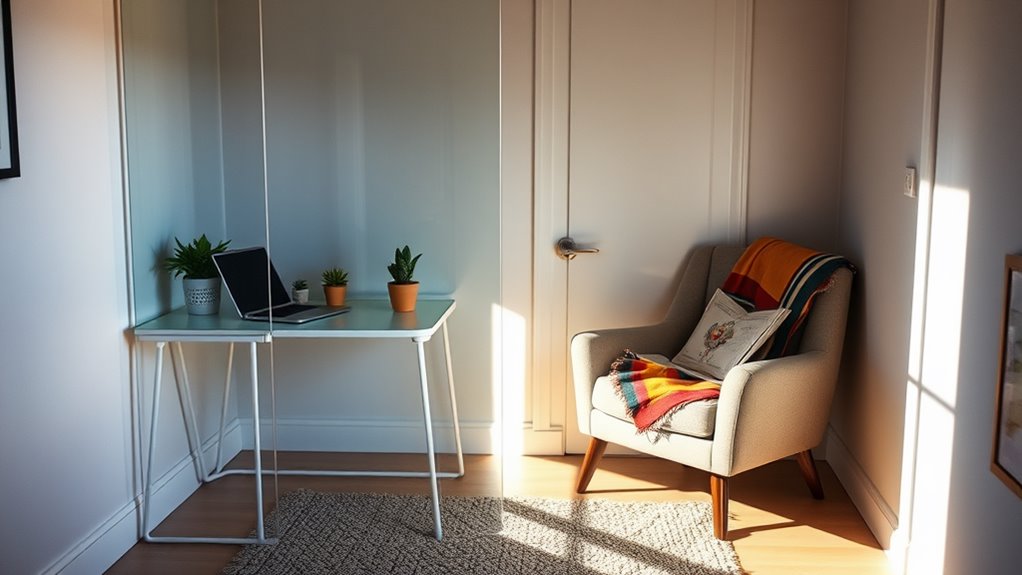
Creating a distinct separation between your work and living spaces can greatly improve your productivity and overall well-being. Utilizing physical barriers, like movable partitions or furniture arrangements, helps you define clear zones for work and relaxation.
You can use materials such as wood, fabric, or even spare furniture to create these divisions. For instance, a bookshelf can serve as a divider, while plants or curtains provide visual separation. This setup reduces distractions, enhances focus, and promotes organization. Additionally, implementing physical barriers allows you to minimize environmental distractions and improve your communication clarity in a small space.
Furthermore, temporary barriers allow for flexibility, adapting to your changing needs. Ultimately, these physical separations foster a healthier work-life balance, making your small space feel more functional and intentional.
Creating Effective Routines and Schedules
Physical barriers help define your work and living spaces, but to truly thrive in a small environment, effective routines and schedules are key. Start by outlining daily commitments, including work, meals, and breaks. Use visual aids like planners or apps to enhance engagement, and break tasks into smaller chunks to avoid overwhelm. Utilizing visual aids can help you stay organized and committed to your schedule.
Here's a simple schedule template to guide you:
| Time | Activity | Notes |
|---|---|---|
| 8:00 – 9:00 | Morning Routine | Breakfast, exercise |
| 9:00 – 12:00 | Work | Focus on high-priority tasks |
| 12:00 – 1:00 | Lunch | Take a full break |
| 1:00 – 5:00 | Work | Continue with tasks |
Incorporate flexibility and review your schedule regularly to adapt as needed.
Strategies for Maintaining Work-Life Balance

While balancing work and personal life in a small space can be challenging, implementing effective strategies can help you maintain that equilibrium.
Start by establishing realistic deadlines to reduce urgency and stress. Respect your personal time by discouraging work-related activities after hours, like emails or calls. Companies that prioritize work-life balance see improved employee engagement and satisfaction.
Create a dedicated workspace to clearly separate work from personal life. Consider using flexible work options, such as remote arrangements and customized schedules, to meet your personal needs.
Additionally, practice digital detoxes to minimize distractions and improve well-being. Encourage open communication with colleagues about workloads, fostering an environment where everyone feels comfortable discussing their challenges.
These strategies can greatly enhance your work-life balance in a compact living space.
Frequently Asked Questions
How Can I Reduce Noise in My Workspace Effectively?
To reduce noise in your workspace effectively, consider installing acoustic panels, using soundproof partitions, and rearranging furniture. Noise-cancelling headphones or white noise machines can also help create a quieter, more focused environment.
What Are Some Creative Storage Solutions for Small Spaces?
You can maximize storage in small spaces by utilizing vertical space with shelves, installing hidden compartments in furniture, and using mobile carts. Don't forget to repurpose corners and dead spaces for additional storage solutions.
How Do I Stay Motivated While Working From Home?
To stay motivated while working from home, create a dedicated workspace, stick to a structured schedule, minimize distractions, and prioritize your well-being through regular breaks, healthy routines, and engaging activities that inspire creativity.
What Plants Are Best for Improving Workspace Air Quality?
To improve your workspace air quality, consider adding snake plants, peace lilies, or rubber trees. They're low-maintenance, aesthetically pleasing, and effectively remove common pollutants, enhancing your overall mood and environment while you work.
How Can I Personalize My Workspace Without Cluttering?
To personalize your workspace without cluttering, choose a few meaningful items, like a photo or small plant. Use organizers for supplies and maintain a clean desk, allowing your personality to shine without overwhelming the space.