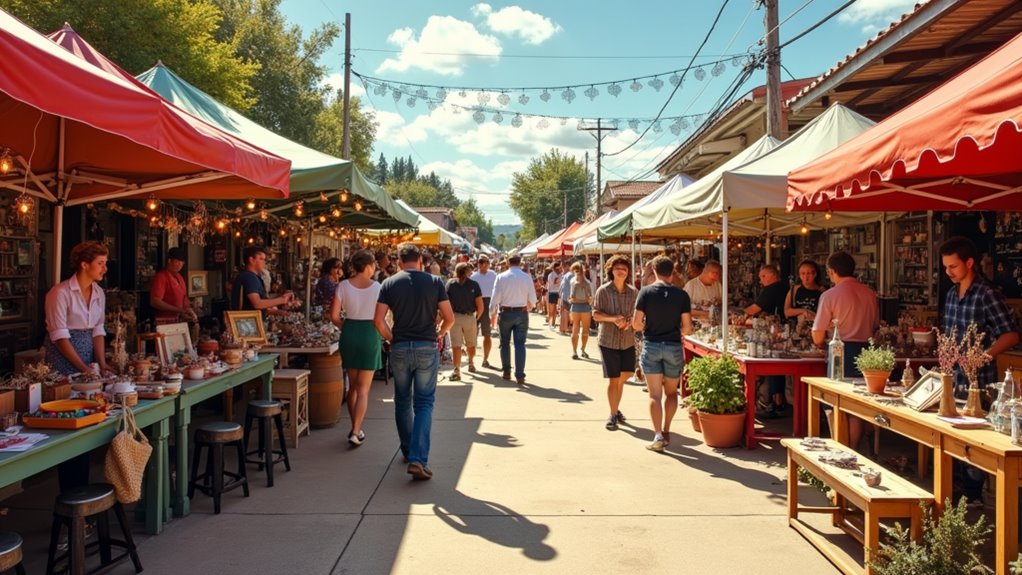
Starting a flea market business can be a rewarding venture, especially if you find the right niche and target market. You’ll need to think carefully about what unique products to offer and how to attract customers to your booth. As you navigate the ins and outs of setting up your business, you’ll encounter various challenges and opportunities that can shape your success. Let’s explore the essential steps to guarantee your venture thrives.
Key Takeaways
- Identify your niche and target market by analyzing your interests and researching local customer demographics.
- Source unique products from thrift stores, artisans, and online platforms to attract buyers.
- Set up a solid business structure, including choosing a business entity and understanding local regulations.
- Design an eye-catching booth with appealing displays and a strategic pricing strategy for profitability.
- Utilize effective marketing techniques and customer engagement strategies to build relationships and encourage repeat business.
Identifying Your Niche and Target Market
When you’re diving into the flea market business, identifying your niche and target market is essential to your success.
Start by analyzing your passions and interests; this will help you choose a niche that excites you. Think about what products you enjoy selling or using, whether it’s vintage clothing, handmade crafts, or collectibles.
Next, research your local market to understand who your potential customers are. Are they families, young adults, or collectors? Knowing this will guide your product selection and marketing strategies.
You’ll want to create a brand that resonates with your target audience. Finally, keep an eye on trends and adjust your focus as needed, ensuring you stay relevant and appealing in a competitive market.
Sourcing Unique Products
Once you’ve identified your niche and target market, it’s time to focus on sourcing unique products that will appeal to your audience.
Start by exploring local thrift stores, estate sales, and garage sales for hidden gems. You can also connect with artisans and crafters who create handmade items that fit your theme.
Explore local thrift stores, estate sales, and garage sales to uncover hidden treasures, while connecting with artisans for unique handmade items.
Don’t overlook online platforms like Etsy or eBay, where you can find one-of-a-kind pieces. Attend trade shows or flea markets to network with other vendors and discover potential suppliers.
Always prioritize quality and uniqueness, as these factors attract customers. Keep an eye on trends, but don’t be afraid to showcase quirky, eclectic items that resonate with your audience’s interests and passions.
Happy sourcing!
Setting Up Your Business Structure
As you immerse yourself in the world of flea markets, establishing a solid business structure is essential for your success.
Start by choosing a business entity that fits your needs—options include sole proprietorship, partnership, or LLC. Each has its pros and cons regarding liability and taxation.
Next, decide on a catchy business name that resonates with your target audience. Don’t forget to open a separate business bank account to keep your finances organized. This step helps track expenses and profits more effectively.
Additionally, consider creating a simple business plan outlining your goals, budget, and marketing strategies. A clear structure won’t only streamline your operations but also help you build credibility with customers and vendors.
Understanding Local Regulations and Permits
Before you set up your flea market business, you need to understand the local regulations and permits that apply to your area.
Researching local laws and obtaining the necessary permits is essential for a smooth operation.
Don’t forget to guarantee compliance with health codes to keep your customers safe and satisfied.
Research Local Laws
Understanding local regulations and permits is essential for launching your flea market business, especially since these laws can vary considerably by location.
You need to take the time to research what applies to you. Here are three key areas to focus on:
- Zoning Laws: Check if flea markets are permitted in your desired location and any restrictions that may apply.
- Sales Tax: Determine if you need to collect sales tax on your items and how to report it.
- Health and Safety Codes: Understand any health regulations that may affect your products, especially if you’re selling food or personal items.
Obtain Necessary Permits
While steering through the process of starting your flea market business, obtaining the necessary permits is essential for compliance and smooth operation.
First, check with your local government to identify what permits you need, as requirements can vary by location. You may need a business license, sales tax permit, and possibly a vendor’s permit, depending on your state or city regulations.
Contact your local chamber of commerce or city hall for specific guidelines. Don’t forget to inquire about zoning laws, as they can affect where you can operate.
Taking the time to gather these permits upfront will save you from potential fines or disruptions later on, allowing you to focus on running your flea market business successfully.
Compliance With Health Codes
To guarantee your flea market operates smoothly, you’ll need to comply with local health codes, which can vary markedly depending on your area. Ignoring these regulations can lead to fines or even closure, so it’s essential to understand what’s required.
Here are three key steps to secure compliance:
- Research Local Regulations: Check with your local health department to understand specific codes related to food handling, sanitation, and vendor requirements.
- Obtain Necessary Permits: Secure any required permits for food sales or other regulated items. This may include health permits or vendor licenses.
- Regular Inspections: Be prepared for inspections by keeping your area clean and organized. Regularly check that your vendors are following health guidelines.
Stay informed, and your flea market will thrive!
Designing an Eye-Catching Booth
When designing your booth, colorful display techniques can grab attention and draw customers in.
Think about how you can use effective layout strategies to make your products stand out and create an inviting atmosphere.
A well-organized and vibrant booth will keep shoppers engaged and encourage them to explore what you offer.
Colorful Display Techniques
Creating an eye-catching booth is essential for attracting customers at a flea market. To stand out, use vibrant colors and creative displays.
Here are three colorful display techniques you should consider:
- Bold Backdrops: Use bright tablecloths or banners that reflect your brand. A striking background can draw eyes immediately.
- Item Arrangement: Group items by color or theme. This not only looks appealing but also encourages customers to explore your offerings.
- Lighting Effects: Incorporate string lights or colorful LED lights to enhance your booth. Good lighting can make your products more inviting and highlight their features.
Implementing these techniques will help you create a booth that captures attention and keeps customers engaged.
Effective Layout Strategies
A well-thought-out layout can greatly enhance your booth’s appeal and functionality. Start by creating a clear focal point; it draws customers in.
Use tables and shelves to display your products at eye level, making them easily visible. Leave enough space for people to navigate comfortably, avoiding a cramped feel.
Consider using vertical space with banners or tiered displays to maximize your area.
Group similar items together to create a cohesive look, and use attractive signage to guide customers.
Don’t forget to keep your payment area accessible; it encourages quick purchases.
Finally, maintain a tidy booth by regularly organizing items throughout the day.
With these strategies, you’ll create an inviting and effective space that entices shoppers and boosts sales.
Pricing Your Items Competitively
Though you may have unique items to sell, pricing them competitively is essential for attracting customers at your flea market.
To find the right price, consider these three strategies:
- Research Your Competition: Check prices on similar items at other booths or online. This helps you understand the market rate and set your prices accordingly.
- Factor in Costs: Make sure you cover your expenses, including purchase costs, booth fees, and any additional overhead. Your prices should reflect these costs to maintain profitability.
- Offer Discounts: Introduce bundle deals or discounts for multiple purchases. This not only encourages sales but also makes your items more appealing to customers.
Marketing Your Flea Market Business
To successfully attract customers to your flea market business, effective marketing is essential. Start by creating eye-catching signage that highlights your unique offerings.
Utilize social media platforms to showcase your items, share behind-the-scenes content, and announce special promotions. Engage with local community groups and forums to spread the word about your market presence.
Consider hosting events or themed sales to draw in crowds. Collaborate with other vendors to cross-promote each other’s businesses, amplifying your reach.
Email newsletters can keep loyal customers informed about new arrivals and upcoming events. Don’t forget to leverage word-of-mouth; satisfied customers can be your best marketers.
With a strategic approach, you’ll build awareness and drive traffic to your flea market stall.
Building Customer Relationships and Loyalty
While attracting customers is important, building lasting relationships with them can set your flea market business apart from the competition.
Here are three effective strategies to foster loyalty:
- Engage with Customers: Take the time to chat with your customers. Ask about their interests and preferences to create a personal connection.
- Offer Loyalty Programs: Consider implementing a rewards program. Discounts or freebies for repeat visits can entice customers to return.
- Gather Feedback: Encourage customers to share their thoughts on your products. Use this feedback to improve your offerings and show that you value their opinions.
Frequently Asked Questions
How Do I Find Local Flea Market Events to Join?
To find local flea market events, check community bulletin boards, search online marketplaces, and join local social media groups. Networking with other vendors can also help you discover upcoming events and opportunities in your area.
What Are the Best Days and Times to Sell at Flea Markets?
The best days to sell at flea markets are typically weekends, especially Saturday mornings. Early birds often catch the best traffic, so set up early and be ready to greet customers as they arrive.
How Can I Improve My Negotiation Skills With Customers?
To improve your negotiation skills with customers, practice active listening, stay calm, and be confident. Use open-ended questions to understand their needs, and don’t hesitate to compromise while ensuring you maintain your value.
What Should I Do if My Items Don’T Sell?
If your items don’t sell, reassess their pricing and display. Engage customers for feedback, consider seasonal trends, or experiment with promotions. Adjusting your approach can make a significant difference in attracting buyers.
Can I Sell Food Products at Flea Markets?
Yes, you can sell food products at flea markets, but check local regulations and obtain necessary permits. Make certain your items are safe, properly packaged, and appealing to attract hungry customers looking for delicious treats.