
To style your workspace with plants without creating a mess, choose low-maintenance options like Snake Plants or Pothos that thrive in minimal care. Use vertical or hanging planters to save space and add visual interest. Mixing plant sizes and textures can enhance aesthetics while coordinating colors can harmonize with your decor. Guarantee proper drainage to avoid clutter. If you want to learn more about creative arrangements and propagation, there are plenty of tips to explore next!
Key Takeaways
- Choose low-maintenance plants like Snake Plants and ZZ Plants to minimize care and mess in your workspace.
- Utilize vertical planters or hanging options to maximize space while adding greenery without cluttering surfaces.
- Mix different plant sizes and textures to create visual interest without overwhelming the space.
- Implement color coordination techniques to harmonize plants with your workspace decor for a cohesive look.
- Opt for containers with drainage holes and monitor soil moisture to prevent spills and maintain a tidy environment.
Choosing the Right Plants for Your Workspace
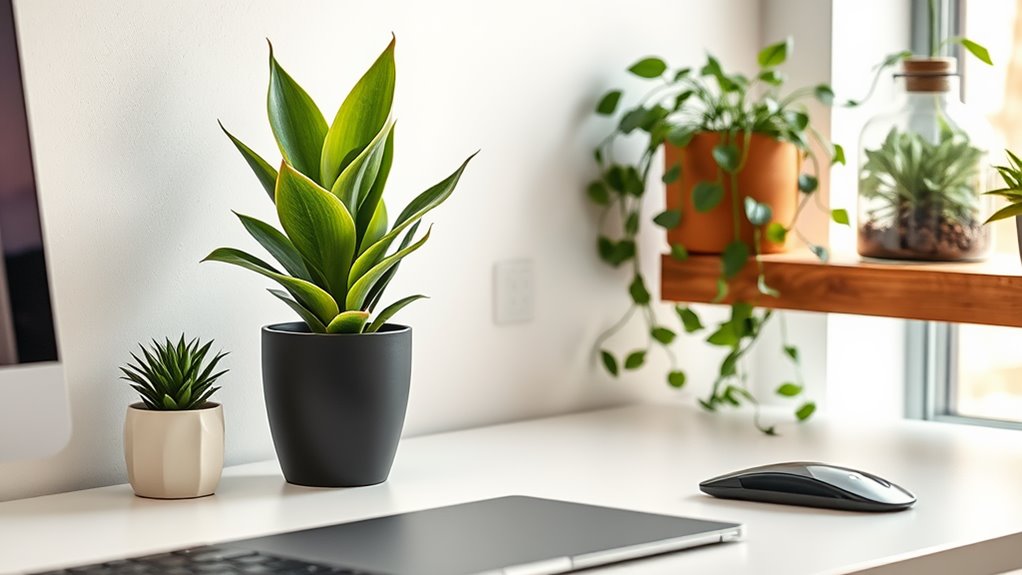
Choosing the right plants for your workspace can greatly enhance your environment and productivity.
Selecting appropriate plants for your workspace can significantly boost your atmosphere and enhance your productivity.
For small spaces, consider a Snake Plant or ZZ Plant; both thrive in low light and require minimal care. If you want versatility, Pothos works well in hanging baskets or on shelves, and the Marble Queen Pothos adds lovely variegated leaves. Compact varieties of the Snake Plant can be perfect for desks or shelves without taking up too much space.
For those bright spots, cacti or Moth Orchids can bring vibrant life to your desk. Remember, plants like the Cast Iron Plant and Spider Plant are excellent for improving air quality, too.
Select plants that suit your light conditions and maintenance preferences, and you'll create a revitalizing workspace that keeps you motivated and focused.
Budget-Friendly Plant Propagation Ideas
If you're looking to expand your plant collection without breaking the bank, budget-friendly propagation techniques are the way to go. Simple methods like stem cuttings or leaf cuttings can help you grow new plants from your favorites. Plus, sharing your successes with friends can inspire them to start their own propagation journey! This not only allows you to enjoy new greenery but also contributes to a healthier office environment by bringing more plants into your workspace.
Simple Propagation Techniques
While many people think plant propagation requires expensive tools and extensive knowledge, you can easily grow new plants using simple techniques right at home. Here are some budget-friendly methods you can try:
| Method | Best For |
|---|---|
| Stem Cuttings | Pothos, Philodendron, Spider plants |
| Leaf Cutting | Succulents, Snake plants |
| Water Propagation | Pothos, Monstera |
| Root Division | Peace Lilies, Aglaonema |
Using these techniques, you can expand your plant collection without breaking the bank. Just make sure you have sharp tools, water containers, and a clean workspace. Healthy and thriving plants are the best candidates for propagation, and with a bit of patience and care, you'll soon enjoy the satisfaction of nurturing your new plants!
Ideal Plants for Propagation
Expanding your plant collection through propagation becomes even more rewarding when you select the right plants. Consider starting with spider plants, as they're easy to propagate via leaf cuttings and thrive in low-maintenance environments. Additionally, hardy perennials like hostas can be divided and replanted in your workspace for a touch of greenery.
Philodendrons adapt well to various light conditions, making them perfect for diverse office setups. ZZ plants are ideal for high-humidity areas, while snake plants tolerate low light effortlessly. Pothos is another versatile option that grows well in different lighting.
For budget-friendly ideas, host propagation parties to engage your team while sharing cuttings from geraniums or coleus. You can also divide perennials like cone flowers, or try water propagation with devil's ivy, adding a visual touch to your workspace as you grow your collection.
Sharing Propagation Success Stories
How can sharing your propagation success stories inspire others to join the plant-loving community? When you showcase your successful stem cuttings, divisions, or layering techniques, you encourage others to try their hand at plant propagation too. Incorporating real plants into your workspace not only enhances the aesthetic but also improves your overall well-being. Share your tips on using thrifted planters or repurposing household items for budget-friendly solutions. Show how easy it's to collect seeds and grow new plants, fostering excitement and a sense of accomplishment. Hosting propagation events can also build community and allow you to share your plants with friends and family, reducing waste.
Creative Planter Solutions for Small Spaces
If you're looking to bring a touch of nature into your compact living space, creative planter solutions can make all the difference. Vertical planters mounted on walls save space while adding charm, and tiered planters allow you to showcase multiple plants without clutter. Additionally, you can use terra-cotta pots to create a vibrant display that enhances visual interest in small garden areas. Hanging planters create visual interest and free up surfaces, while railing planters turn balcony edges into lush gardens. You can even repurpose old buckets or wheelbarrows for unique planters. Lightweight materials like resin make moving your plants easier, and self-watering options reduce maintenance. Consider mini planters for tight spots or wall-mounted shelves to maximize vertical area. With these solutions, you'll enjoy greenery without overwhelming your limited space.
Enhancing Aesthetics With Plant Arrangements
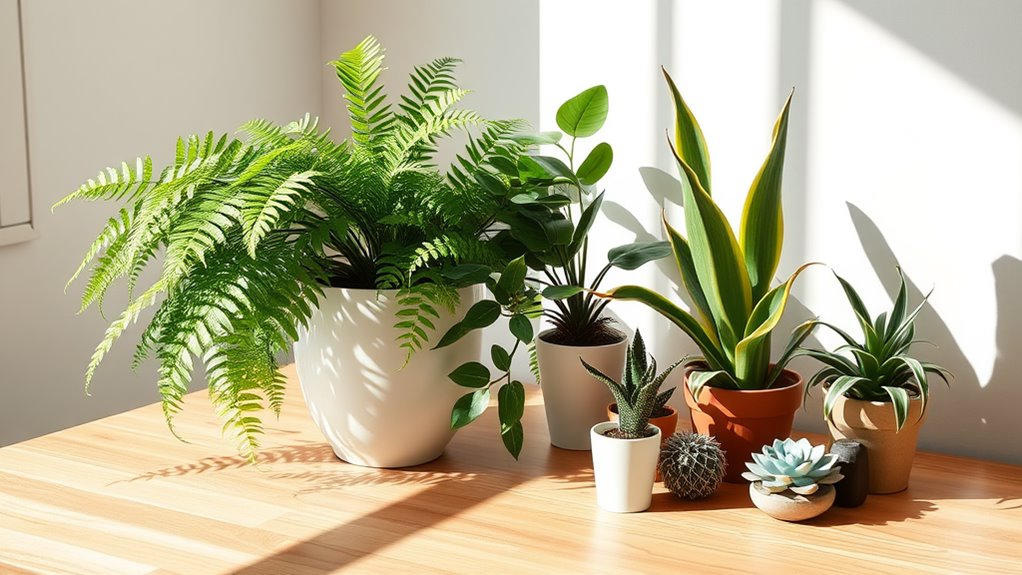
When you arrange plants in your workspace, consider mixing different sizes to create depth and interest. Use color coordination techniques to harmonize the greens with other shades in your decor, and don't forget to play with textural contrasts for added visual appeal. These simple strategies can transform your office into a vibrant and inviting space. Additionally, incorporating greenery can significantly improve air quality, contributing to a healthier and more enjoyable working environment.
Plant Size Variety
Incorporating a variety of plant sizes can greatly enhance the aesthetic appeal of your workspace. Small plants like succulents and ZZ plants fit perfectly in compact areas, adding a minimalist touch. Medium options, such as pothos and peace lilies, thrive in various lighting conditions, striking a balance in your decor. For larger spaces, floor-standing plants like palms become stunning focal points, creating a lush atmosphere. By mixing these sizes, you add visual interest and depth. Additionally, having plants in your workspace can lead to increased productivity and creativity. You can also use vertical planters or shelves to save space while showcasing your diverse collection. This combination of small, medium, and large plants brings life to your workspace, making it a more inviting place to work.
Color Coordination Techniques
Five color coordination techniques can transform your workspace with plants, enhancing both aesthetics and mood.
Start with color harmony by using complementary, analogous, or monochromatic schemes to create visual appeal. Choose warm colors like orange for energy or cool colors like blue for calmness, depending on your desired atmosphere. Utilizing the color wheel can help you develop custom color palettes that enhance your workspace.
Select plants that match your color scheme, ensuring their foliage and flowers contribute positively. Utilize neutral backgrounds for pots to make plant colors pop.
Finally, consider seasonal adaptations; changing plants with the seasons keeps your workspace fresh and visually harmonious.
Textural Contrast Elements
Textural contrast can elevate your workspace's aesthetic, making plant arrangements truly enchanting.
Start by selecting plants with coarse textures, like rhubarb or gunnera, for dramatic flair. Pair them with fine-textured ferns or grasses to create a delicate balance. Incorporate medium textures, such as hostas, to round out your arrangement. Contrasting textures in plant arrangements can create a dynamic visual appeal.
Mixing matte leaves from Russian Sage with glossy Bergenia adds visual depth. For an intriguing look, combine spiky grasses with rounded foliage, or contrast hairy plants with smooth ones.
To enhance your design, introduce vertical elements like trellises and use natural stones as hardscape accents.
The Benefits of Having Plants in Your Office
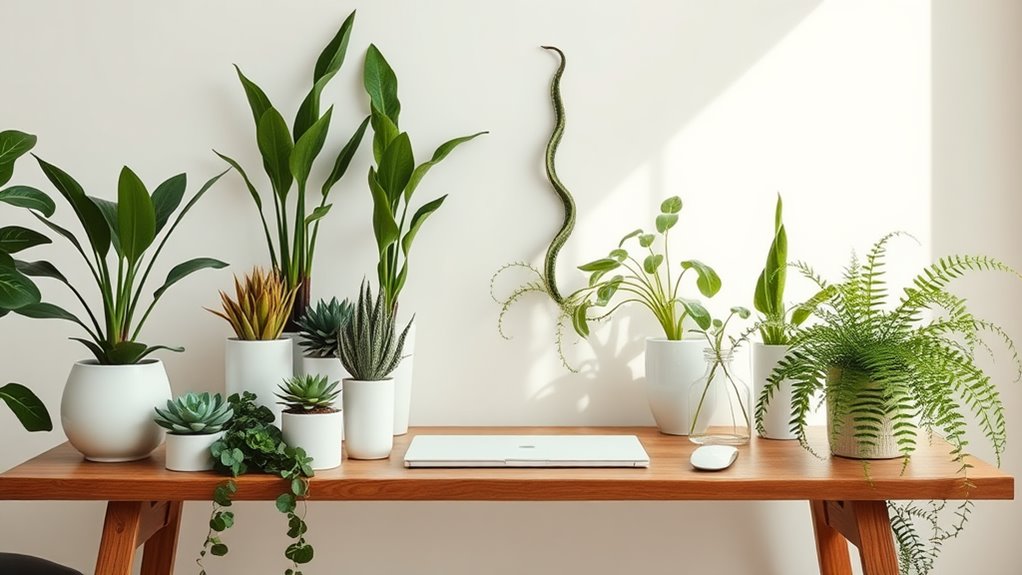
Plants can transform your office into a vibrant and inviting space, offering numerous benefits that enhance both productivity and wellbeing. By incorporating greenery, you can boost productivity by up to 15%, while also reducing stress and anxiety levels. Furthermore, enhancing productivity is not just about the immediate environment; it also leads to long-term improvements in employee performance and satisfaction.
Plants improve air quality, filtering out harmful pollutants and helping to alleviate respiratory issues. They even absorb sound, making your workspace quieter.
Additionally, the aesthetic appeal of plants creates a more welcoming atmosphere, fostering creativity and enhancing job satisfaction.
With improved health and reduced absenteeism, you'll find that a green office not only benefits you but also contributes to a positive work culture.
Embracing plants in your workspace is a simple yet powerful way to elevate your daily experience.
Low-Maintenance Care Tips for Busy Professionals
While you may love the idea of adding greenery to your workspace, finding the time for plant care can feel overwhelming.
Choose low-maintenance plants like the ZZ Plant, Snake Plant, or Pothos, as they thrive in various light conditions and tolerate neglect. Water them infrequently, allowing the soil to dry out between waterings. Additionally, many of these plants, such as the Snake Plant, are known for improving indoor air quality.
Opt for containers with drainage holes to prevent root rot, and consider using absorbent mats to catch spills. To minimize mess, select slow-growing plants like the Cast-Iron Plant or Peperomia, which require minimal pruning.
Finally, monitor humidity levels to keep your plants healthy, and enjoy the air quality improvement they bring to your busy work environment.
Utilizing Vertical Space for Plant Styling
Adding greenery to your workspace doesn't have to stop at low-maintenance options; utilizing vertical space can elevate your plant styling to new heights.
Vertical gardens work wonders in small offices, maximizing unused areas while adding a revitalizing touch. Consider ferns, bromeliads, or trailing ivies that naturally climb and thrive in various conditions. Additionally, vertical gardens can significantly improve indoor air quality, creating a healthier work environment.
Vertical gardens transform small offices by utilizing unused spaces, bringing life with climbing plants like ferns and ivies.
Mix different colors and textures for a visually appealing composition that enhances your workspace. Use modular systems, trellises, or wall-mounted planters to create depth and define spaces.
Don't forget to place plants according to their light needs. With thoughtful arrangements, vertical gardening not only beautifies your office but also improves air quality and boosts productivity, making it a win-win for your work environment.
Integrating Art and Plants for a Unique Workspace
Integrating art and plants can transform your workspace into a unique and inspiring environment.
To achieve a cohesive look, consider these strategies:
- Choose art that reflects nature, like forest or jungle themes, to complement your plants.
- Ensure visual harmony by matching the colors and textures of your artwork with your greenery. Incorporating plants can also lead to lower sickness rates, making your workspace healthier.
- Strategically place artwork near your plants to create eye-catching focal points without obstructing growth or visibility.
- Group different plant varieties to add depth, mixing textures and colors for a dynamic arrangement.
Frequently Asked Questions
What Plants Are Safe for Pets in the Office?
If you're looking for pet-safe plants for your office, consider Boston Ferns, Spider Plants, or Orchids. They're non-toxic and easy to care for, creating a safe and pleasant environment for both you and your pets.
How Often Should I Rotate My Plants for Optimal Health?
You should rotate your plants every few weeks. This helps them adapt to varying light and humidity, promotes even nutrient distribution, and prevents pests. Regular movement keeps your plants healthy and thriving, enhancing your workspace's atmosphere.
Can I Use Artificial Plants for a Low-Maintenance Option?
Absolutely, you can use artificial plants for a low-maintenance option. They require no watering or care, look vibrant year-round, and can enhance your workspace's aesthetics without the hassle of real plants.
How Do I Prevent Pests on My Office Plants?
To prevent pests on your office plants, use well-draining soil, inspect regularly for signs of infestation, and quarantine new arrivals. Also, guarantee good air circulation and avoid overwatering to maintain healthy plants.
What Are the Best Plants for Low-Light Office Environments?
For low-light office environments, you'll love the Snake Plant, ZZ Plant, and Pothos. They thrive in dim conditions, require minimal care, and enhance air quality, making your workspace healthier and more inviting.