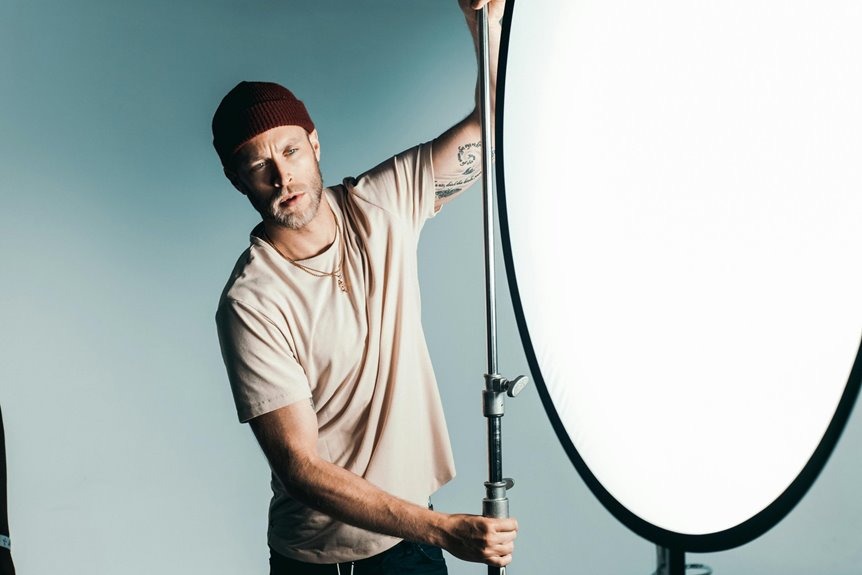
You can create your own inexpensive softbox alternatives using simple items. A white bed sheet or shower curtain can diffuse light beautifully. Try repurposing a white foam board for bouncing light or construct a DIY softbox with cardboard and diffuser material. Reflectors made from poster board or aluminum foil can enhance your lighting, too. By experimenting with these solutions, you’ll elevate your photography without breaking the bank. There are even more creative options to explore!
Key Takeaways
- A white bed sheet can effectively diffuse light, softening harsh shadows for a more even illumination in photography.
- A shower curtain, especially sheer, creates soft lighting that enhances subject features and reduces shadows.
- White foam board can be used as a reflector, bouncing light back onto subjects to fill in shadows.
- A DIY softbox can be made with cardboard and white fabric or tissue paper to diffuse light cost-effectively.
- Portable LED lights are affordable alternatives, providing adjustable brightness and energy efficiency for various photography needs.
Use a White Bed Sheet as a Diffuser
Have you ever considered using a white bed sheet as a diffuser? It’s a simple yet effective solution for softening harsh light in your photography or videography.
Instead of investing in expensive equipment, grab a clean white sheet and stretch it across a frame or hang it in front of your light source. This technique helps to scatter light evenly, reducing shadows and creating a more flattering effect on your subjects.
You can easily adjust the distance between the sheet and your light to control the softness of the illumination. Plus, it’s portable and easy to set up, making it perfect for on-the-go shoots.
With this budget-friendly option, you’ll elevate your lighting game without breaking the bank!
Utilize a Shower Curtain for Soft Lighting
A shower curtain can be a fantastic tool for achieving soft lighting in your photos.
You’ll want to choose the right material and color to enhance your images, and placement is key for ideal results.
Let’s explore how to make the most of this budget-friendly option.
Benefits of Soft Lighting
When you want to achieve that dreamy, soft lighting in your photos, utilizing a shower curtain can be a game changer. Soft lighting reduces harsh shadows and creates a flattering glow, enhancing your subject’s features.
It adds a warm, inviting ambiance to your images, making them feel more professional. You’ll notice that colors appear more vibrant and skin tones look more natural, which is essential for portrait photography.
Additionally, soft lighting helps to minimize imperfections, giving your photos a polished look. By diffusing the light, a shower curtain creates an even distribution, allowing you to experiment with different angles and setups.
Ultimately, this simple trick can elevate your photography without breaking the bank.
Choosing the Right Curtain
To achieve that soft lighting effect effectively, selecting the right shower curtain is important.
Look for a sheer or semi-sheer material, as these will diffuse light better than thick or opaque fabrics. White or light-colored curtains work best because they reflect more light, creating a soft, even glow.
If you want to add a pop of color, opt for pastel shades that won’t overpower the light. Check for texture too; a softly textured curtain can add a bit of character without sacrificing softness.
Avoid heavily patterned designs, as they can create unwanted shadows. Finally, make sure it’s large enough to cover your light source adequately, ensuring you get the best diffusion possible for your project.
Placement for Best Results
Proper placement of your shower curtain can make all the difference in achieving that perfect soft lighting. Start by positioning the curtain between your light source and your subject. This diffusion will soften harsh shadows and create a more flattering light.
Experiment with distance; the closer the curtain is to the light, the softer the illumination. You can also angle the curtain to reflect light for an even more diffused effect.
If you’re shooting indoors, try placing the curtain near a window to maximize natural light. Remember to adjust the height and width of your setup based on your shooting environment.
With the right placement, your shower curtain can transform any scene into a beautifully lit masterpiece.
Repurpose a White Foam Board
Although professional softboxes can be pricey, repurposing a white foam board offers a cost-effective alternative for diffusing light in your photography setup. This simple tool can help soften harsh light and create a more flattering effect on your subjects.
Position the foam board opposite your light source to bounce the light back onto your subject, filling in shadows and creating a more even illumination. You can also place it at an angle to achieve different lighting effects.
Additionally, the lightweight nature of foam board makes it easy to move around and adjust as needed, allowing you to experiment with various setups. With this affordable solution, you can elevate your photography without breaking the bank.
Try a DIY Softbox With Cardboard
If you want to create a softbox on a budget, using cardboard is a fantastic option. This DIY project can help you diffuse light effectively without breaking the bank.
Here’s what you’ll need to create your softbox:
- Cardboard: Use large, flat pieces to form the structure.
- White Fabric or Tissue Paper: This will act as the diffuser to soften the light.
- Tape or Glue: Secure all parts together for stability.
- Light Source: An LED light or lamp will fit perfectly inside your softbox.
Simply cut the cardboard to your desired shape, attach the diffuser material, and place your light source inside.
Cut your cardboard into the desired shape, add the diffuser, and insert your light source for a perfect softbox.
You’ll have a functional softbox ready to elevate your photography. Enjoy your new creation!
Employ a Reflector for Enhanced Light
After you’ve crafted your DIY softbox, consider enhancing your lighting setup by employing a reflector. Reflectors bounce light back onto your subject, softening shadows and creating a more balanced illumination.
You don’t need fancy equipment; a simple piece of white poster board, aluminum foil, or even a mirror can work wonders. Position the reflector opposite your light source, angling it to capture and redirect the light where it’s needed most.
Experiment with different distances and angles to find the best effect. You’ll notice how a reflector can create a more dynamic look and elevate your photos or videos without breaking the bank. This simple addition can make a significant difference in your final result.
Hang a White T-Shirt for Diffusion
A simple white T-shirt can be a surprisingly effective tool for diffusing light in your photography or videography setup. By hanging it in front of your light source, you can soften harsh shadows and create a more even illumination.
Here’s how to make the most of it:
- Choose the Right Location: Hang the T-shirt in a spot where it can catch the light effectively.
- Adjust Distance: Experiment with how far the T-shirt is from the light source to control the diffusion level.
- Secure It Well: Confirm it’s tightly fastened to avoid any movement that could disrupt the light.
- Combine with Other Techniques: Use it alongside reflectors for enhanced lighting effects.
This budget-friendly option can elevate your lighting game!
Experiment With Natural Light Sources
Using a white T-shirt to diffuse light can be a great starting point, but don’t overlook the power of natural light sources. Sunlight can be your best friend when it comes to photography.
Try shooting during golden hour—shortly after sunrise or before sunset—when the light is soft and warm. Position your subject near a window to take advantage of the gentle illumination it provides. If it’s too harsh, use sheer curtains to soften the rays.
You can also experiment with reflectors, like a piece of white cardboard, to bounce light back onto your subject. Embrace the unpredictability of natural light; it can create stunning, dynamic effects that give your photos a unique character.
Invest in Portable LED Lights
While natural light can be magical, investing in portable LED lights can greatly enhance your photography experience.
These lights provide consistent illumination, allowing you to shoot anytime, anywhere. Here are four reasons to contemplate adding them to your gear:
- Versatility: You can adjust brightness and color temperature to fit any scene.
- Portability: Lightweight and compact, they fit easily in your bag, making them perfect for on-the-go shoots.
- Energy Efficiency: LED lights consume less power than traditional bulbs, saving you money in the long run.
- Affordability: Many options are available at budget-friendly prices, making it easy to find one that suits your needs.
With portable LED lights, you’ll elevate your photography without breaking the bank!
Frequently Asked Questions
How Do I Position These Alternatives for Best Results?
To get the best results, position your alternatives at a 45-degree angle from your subject. Experiment with distances and heights, adjusting until you achieve the desired softness and shadows for your lighting setup.
Can I Use Colored Fabrics for Creative Lighting Effects?
Studies show that using colored fabrics can enhance mood and creativity by up to 70%. Try draping vibrant materials in front of your light source; you’ll create stunning, unique effects in your photography!
What Are the Best Light Sources for These Alternatives?
For your alternatives, consider using LED lights, desk lamps, or even natural sunlight. Each source can create unique effects, so experiment with positioning and diffusion materials to achieve the desired look in your photography.
How Do I Clean DIY Diffusers Without Damage?
How do you keep your DIY diffusers clean without risking damage? Start by gently dusting them with a microfiber cloth, then use a damp cloth with mild soap. Avoid abrasive materials that could scratch the surface.
Are There Any Safety Concerns With Homemade Lighting Setups?
Yes, there are safety concerns with homemade lighting setups. You should guarantee proper ventilation, avoid overheating, and use safe materials. Always check for electrical hazards and never leave your setup unattended during use.