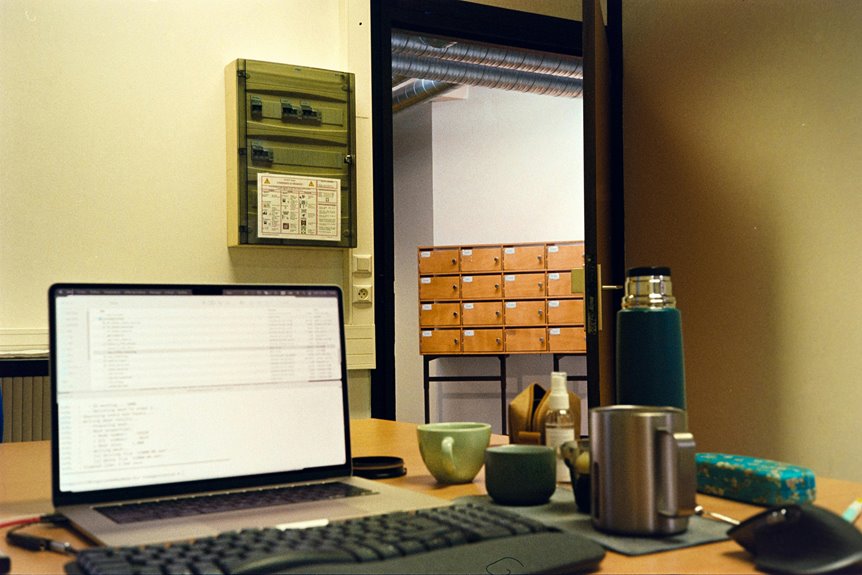
Your computer desk base is essential for a productive home office. It should prioritize ergonomic design, allowing you to maintain a natural posture. Choose a desk that fits your space, provides enough legroom, and complements your style with the right materials. Incorporating effective storage solutions keeps your area organized and clutter-free. Flexibility and adjustability in your desk can adapt to your needs. If you want to enhance your workspace even more, there’s plenty more to explore.
Key Takeaways
- Ensure your desk height is adjustable to promote a comfortable sitting or standing posture, enhancing productivity and reducing strain.
- Verify that your desk size fits your room dimensions, allowing for adequate legroom and movement without overcrowding the space.
- Select a desk material that suits your daily activities, balancing durability and maintenance for a functional workspace.
- Incorporate effective storage solutions, like organizers and shelving, to keep your workspace clutter-free and boost efficiency.
- Opt for a flexible desk design that adapts to your changing work needs, supporting both sitting and standing positions for improved comfort.
Ergonomic Design: The Key to Comfort
When you spend hours at your computer desk, comfort becomes essential to maintaining productivity. An ergonomic design focuses on your body’s natural posture, reducing strain on your back, neck, and wrists.
Look for features like adjustable height, lumbar support, and a comfortable chair that promotes healthy seating positions. Your desk setup should allow you to keep your feet flat on the ground and your arms at a 90-degree angle.
Prioritize adjustable height, lumbar support, and a chair that fosters healthy seating for optimal comfort and productivity.
By prioritizing these elements, you can enhance your focus and minimize fatigue. Remember, an ideal workspace adapts to you, not the other way around.
Investing in an ergonomic desk can lead to better work habits and a more enjoyable home office experience, ultimately boosting your productivity and well-being.
Size and Space: Finding the Right Fit
An ergonomic desk is just one part of creating a functional workspace; the size and space you choose for your desk can greatly impact your productivity.
First, assess the dimensions of your room. A desk that’s too large can overwhelm the space, while one that’s too small may leave you cramped.
Next, think about how you’ll use the desk. If you need extra monitors or equipment, make certain there’s enough surface area.
Don’t forget about legroom; you should have space to move comfortably.
Finally, consider your chair and any additional storage you might need.
Material Matters: Choosing the Best Desk Base
Selecting the right material for your desk base can significantly influence both its durability and aesthetic appeal.
Wood offers a classic, warm look and can withstand heavy use, while metal provides a modern, sleek finish and exceptional strength.
Wood brings warmth and durability, while metal adds a contemporary touch with remarkable strength.
If you’re drawn to a minimalist style, consider glass; it gives an airy feel but may require more maintenance to keep it clean.
When making your choice, think about your workspace’s overall design and how the material will complement it.
Also, consider your daily activities—do you need something sturdy for intense work sessions, or are you after a light, portable option?
Ultimately, the right material enhances both functionality and visual harmony in your home office.
Storage Solutions: Keeping Your Workspace Organized
To maintain a productive atmosphere in your home office, effective storage solutions are essential. A clutter-free workspace helps you focus and boosts your efficiency.
Here are four storage ideas to reflect upon:
- Desk Organizers: Use drawer organizers or desktop trays to keep pens, papers, and other essentials within easy reach.
- Shelving Units: Install shelves above your desk for books, files, or decorative items, utilizing vertical space effectively.
- File Cabinets: Invest in a compact file cabinet to store important documents and reduce desktop clutter.
- Cable Management: Use cable clips or a cord box to keep wires tidy and out of sight, preventing distractions.
Implementing these storage solutions can transform your home office into a more organized and productive environment.
Flexibility and Adjustability: Adapting to Your Needs
While you may have a specific style in mind for your home office, flexibility and adjustability are key to creating a workspace that truly meets your needs.
A desk that can be easily altered in height or configuration allows you to switch between sitting and standing, enhancing comfort and productivity. Consider desks with modular components or those that can accommodate various accessories.
This adaptability lets you customize your setup based on tasks or even your mood. Don’t forget about cable management and storage solutions that can be adjusted as your needs evolve.
Frequently Asked Questions
How Does Desk Height Impact My Posture While Working?
Desk height considerably impacts your posture while working. If your desk’s too high or low, you might slouch or strain, leading to discomfort. Adjusting it properly helps maintain a healthy spine alignment and enhances your productivity.
What Are the Best Desk Accessories for Productivity?
To boost your productivity, consider accessories like a monitor stand for better eye level, an ergonomic keyboard to reduce strain, cable management solutions for organization, and a desk organizer to keep essentials within arm’s reach.
Can I Use a Standing Desk All Day?
You can use a standing desk all day, but it’s best to alternate between standing and sitting. This balance helps reduce fatigue, promotes better posture, and keeps you more energized throughout your workday.
How Do I Clean and Maintain My Desk?
To clean and maintain your desk, dust it regularly, wipe surfaces with a damp cloth, and use gentle cleaners. Organize cables and declutter items to create a neat, efficient workspace that enhances your productivity.
What Are the Signs I Need a New Desk?
If your desk wobbles, has deep scratches, or lacks adequate space for your needs, it’s time to contemplate a new one. You’ll also notice discomfort during use, signaling a need for an upgrade.