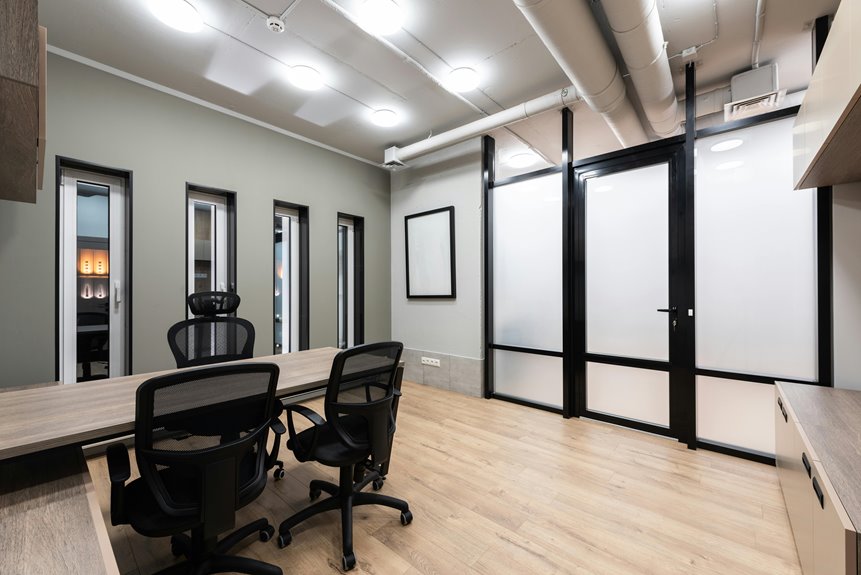
When setting up your home office, it’s essential to think about how lighting and ventilation can impact your productivity and well-being. Natural light can elevate your mood, while proper ventilation keeps the air fresh and invigorating. By strategically combining these elements, you can create a workspace that not only fosters focus but also promotes a healthier environment. So, how do you effectively integrate these components into your home office setup?
Key Takeaways
- Maximize natural light by positioning your desk near windows, enhancing mood and productivity throughout the entire home environment.
- Use artificial lighting with a color temperature of 4000K to 5000K to mimic daylight, creating a comfortable workspace.
- Incorporate multiple light sources and task lighting to reduce glare and improve overall illumination in your home office.
- Ensure proper ventilation by using exhaust fans and air purifiers to maintain fresh air and promote a healthy work environment.
- Open windows when weather permits to encourage natural airflow, enhancing focus and concentration in your home office.
The Importance of Natural Light in Your Home Office
Have you ever noticed how natural light can instantly boost your mood? When you incorporate natural light into your home office, you’re not just enhancing aesthetics; you’re also elevating your productivity.
Sunlight helps regulate your circadian rhythms, making you feel more alert and focused throughout the day. You’ll find that working in a well-lit space fosters creativity and reduces eye strain.
Sunlight enhances alertness and focus while fostering creativity and minimizing eye strain in your workspace.
Plus, it creates a warm and inviting atmosphere that can make long hours feel less intimidating. Opening curtains or blinds can invite those sunny rays in, transforming your workspace.
Don’t underestimate the power of a few well-placed windows or skylights. Embrace natural light to create a dynamic and energizing home office environment that keeps you motivated and inspired.
Choosing the Right Artificial Lighting
When it comes to creating an effective home office, choosing the right artificial lighting is essential for maintaining focus and reducing fatigue.
You’ll want to take into account several factors to guarantee your workspace is well-lit and conducive to productivity.
- Color Temperature: Opt for bulbs around 4000K to 5000K for a bright, energizing light that mimics daylight.
- Adjustable Lighting: Use dimmable fixtures or multiple light sources to tailor the brightness to your tasks and mood.
- Task Lighting: Incorporate desk lamps or under-shelf lights to illuminate specific areas without causing glare on your screen.
Positioning Your Desk for Optimal Light Exposure
To maximize your productivity and comfort, positioning your desk for ideal light exposure is essential.
Start by placing your desk near a window to harness natural light. This not only brightens your workspace but also boosts your mood.
Position your desk so that the light comes from the side; this minimizes glare on your screen and helps prevent eye strain.
If you can’t access natural light, consider using adjustable lamps that mimic daylight. Ascertain the light source is bright enough to illuminate your workspace without causing harsh shadows.
Avoid sitting directly under overhead lights, as they can create uncomfortable glare.
Understanding the Benefits of Fresh Air
While you may not realize it, fresh air plays an essential role in maintaining both your physical health and mental well-being.
Incorporating fresh air into your home office environment can lead to significant benefits. Here are three key advantages:
- Enhanced Focus: Fresh air improves oxygen levels, boosting your concentration and productivity throughout the day.
- Reduced Stress: Breathing in clean air can lower cortisol levels, helping you feel more relaxed and balanced while working.
- Improved Sleep Quality: Fresh air circulation promotes better sleep, which is vital for maintaining energy and focus during your work hours.
Effective Ventilation Solutions for Home Offices
Effective ventilation solutions are essential for creating a comfortable and productive home office, particularly since poor air quality can hinder your focus and energy levels. To improve airflow, consider installing exhaust fans or using portable air purifiers. Additionally, opening windows can help, but make sure to do it during times of low outdoor pollution. You might also explore heat recovery ventilators (HRVs) for efficient air exchange without losing indoor warmth.
Here’s a quick overview of effective ventilation options:
| Solution | Benefits | Considerations |
|---|---|---|
| Exhaust Fans | Reduces indoor humidity | May require electrical work |
| Portable Air Purifiers | Improves air quality on-demand | Needs regular filter changes |
| Open Windows | Natural airflow | Weather-dependent |
| Heat Recovery Ventilators | Energy-efficient air exchange | Higher initial investment |
Integrating Plants for Improved Air Quality
Integrating plants into your home office can substantially enhance air quality and create a more inviting workspace.
Not only do they add aesthetic appeal, but they also purify the air, helping you stay focused and energized.
Here are three great options to evaluate:
- Snake Plant: This hardy plant is known for filtering out toxins and requires minimal care.
- Pothos: With its trailing vines, it thrives in low light and can absorb indoor pollutants effectively.
- Spider Plant: A resilient choice, it’s excellent at removing carbon monoxide and can produce baby plants for propagation.
Creating a Balanced Atmosphere With Lighting and Ventilation
To create a balanced atmosphere in your home office, you need to harness natural light and manage airflow effectively.
Making the most of sunlight boosts your mood and productivity while proper ventilation keeps the air fresh and comfortable.
Let’s explore how to optimize these elements for an ideal workspace.
Natural Light Utilization
While you mightn’t realize it, harnessing natural light can greatly enhance your home office’s atmosphere.
By strategically positioning your workspace, you can boost productivity and mood. Here are three tips to make the most of natural light:
- Choose the Right Location: Set your desk near windows to maximize daylight exposure, reducing the need for artificial lighting.
- Use Reflective Surfaces: Incorporate mirrors or light-colored walls to bounce sunlight around the room, creating a brighter space.
- Adjust Window Treatments: Opt for sheer curtains that diffuse light while maintaining privacy, allowing you to enjoy the sun’s warmth without glare.
With these strategies, you’ll create a vibrant and inviting workspace that fosters creativity and focus.
Airflow Management Strategies
Creating a comfortable and productive home office goes beyond just lighting; effective airflow management plays a crucial role in your workspace’s overall atmosphere.
To enhance airflow, start by positioning your desk near windows to take advantage of natural breezes. Use fans strategically to circulate air, making sure you don’t create uncomfortable drafts.
Consider adding air purifiers to maintain air quality, which can boost focus and energy levels. You can also integrate plants that improve air quality while adding aesthetic appeal.
Keep doors and vents unobstructed, allowing air to flow freely throughout the room. Finally, regularly check and clean HVAC filters to guarantee peak performance.
With these strategies, you’ll create a balanced environment that supports productivity and well-being in your home office.
Tips for Maintaining Comfort Throughout the Day
Maintaining comfort throughout the day in your home office hinges on balancing lighting and ventilation effectively. Here are some tips to help you achieve that:
- Adjust Natural Light: Use adjustable blinds or curtains to control glare and guarantee you have consistent natural light throughout the day. This not only enhances your mood but also reduces eye strain.
- Invest in Task Lighting: Incorporate desk lamps with adjustable brightness to provide focused light for your work. This helps you maintain productivity without straining your eyes.
- Optimize Airflow: Keep windows open when possible to let fresh air circulate. If it’s too hot or cold outside, consider a fan or heater to maintain a comfortable temperature.
Frequently Asked Questions
How Does Lighting Affect Productivity in a Home Office?
Lighting greatly influences your productivity. Natural light boosts your mood and energy, while adequate artificial lighting can reduce eye strain. By optimizing your workspace lighting, you’ll enhance focus and creativity throughout your workday.
What Are the Best Plants for Improving Indoor Air Quality?
You can improve indoor air quality with plants like snake plants, peace lilies, and spider plants. They absorb toxins and release oxygen, creating a healthier environment. Adding these greens can also enhance your mood and productivity.
Can I Use Smart Lighting for Better Control?
Yes, you can use smart lighting for better control. It allows you to adjust brightness and color temperature easily, enhancing your environment. Plus, you can create schedules and automate settings to fit your daily routine.
How Often Should I Ventilate My Home Office?
Ventilating your home office is like opening a window to fresh ideas. You should ventilate daily, at least once every hour. It keeps the air crisp, enhancing focus and creativity while reducing fatigue.
What Colors Enhance Focus and Creativity in My Workspace?
To enhance focus and creativity in your workspace, consider using colors like blue for calmness, green for balance, and yellow for energy. These hues can stimulate your mind and boost productivity throughout your day.