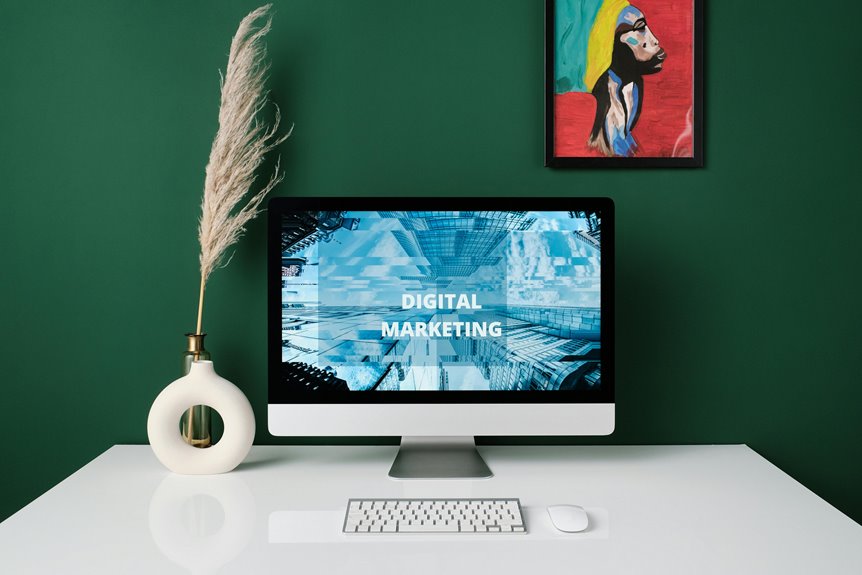
To match your office color to your unique work style, consider how different hues impact your mood and productivity. If you’re a creative thinker, vibrant yellows and bold blues can elevate energy and focus. For detail-oriented professionals, cooler colors like blue and green enhance concentration and precision. Personalizing your workspace with colors that reflect your traits can greatly boost your performance. Stick around to explore how to create a personalized office environment that fits you perfectly.
Key Takeaways
- Identify your work style traits, such as being a planner or spontaneous thinker, to determine suitable color choices for your office.
- Use calming blues and greens for detail-oriented tasks, promoting focus and clarity in your workspace.
- Bright yellows and lively oranges can inspire creativity and energy, ideal for creative thinkers and collaborative spaces.
- Incorporate soft grays or whites to minimize distractions, providing a clean backdrop for meticulous work styles.
- Personalize your office environment with colors that resonate with your personality to enhance motivation and productivity.
Understanding Your Work Style
Understanding your work style is vital, as it shapes how you approach tasks and interact with your environment. Identifying whether you’re a planner, a spontaneous thinker, or a detail-oriented perfectionist can enhance your productivity.
Reflect on how you tackle projects—do you thrive under pressure or prefer a structured schedule? Recognizing these traits helps you create a workspace that complements your natural tendencies.
Are you energized by collaboration or do you find focus in solitude? Understanding these preferences allows you to design your office for peak performance.
The Psychology of Color in the Workplace
Color plays an essential role in shaping your workplace environment, influencing mood, productivity, and even creativity. Each hue evokes specific emotional responses; for example, blue can promote calmness and focus, while yellow often sparks energy and optimism.
If you’re looking to enhance concentration, consider incorporating green, which symbolizes balance and tranquility. On the other hand, red can increase urgency and excitement, but too much might lead to stress.
It’s vital to find a balance that aligns with your work style and tasks. By understanding these psychological effects, you can choose colors that enhance your performance and create an environment that feels right for you.
Ultimately, the right colors can transform your workspace into a hub of inspiration and efficiency.
Color Palettes for Creative Thinkers
A vibrant color palette can ignite your creativity and inspire innovative thinking. By surrounding yourself with the right colors, you can stimulate your imagination and enhance your work experience. Here are some color combinations that can fuel your creative energy:
| Color | Effect | Ideal Use |
|---|---|---|
| Bright Yellow | Energizing and uplifting | Accent walls or decor |
| Bold Blue | Calming and focused | Workspaces or desks |
| Lively Orange | Invigorating and fun | Meeting areas or lounges |
These colors can help create a stimulating environment that encourages you to think outside the box. Don’t hesitate to experiment with different shades and combinations until you find the perfect palette that sparks your creativity!
Color Choices for Detail-Oriented Professionals
When you’re focused on details, the right color choices can enhance your concentration and precision. Opt for cool colors like blue and green, as they create a calming atmosphere that helps you stay focused on tasks.
These hues encourage clarity of thought and reduce distractions, making it easier to dive deep into your work.
Consider incorporating soft grays or whites as well; they provide a clean backdrop that minimizes overstimulation.
If you want to add a bit of energy, use accents of yellow or orange to stimulate creativity without overwhelming your senses.
Remember, the goal is to create a balanced, serene workspace that supports your meticulous nature while still inspiring productivity.
Your office colors should reflect your commitment to detail and excellence.
Creating a Personalized Office Environment
To create a personalized office environment that reflects your unique work style, start by considering elements that inspire and motivate you. Choose colors that resonate with your personality and enhance your productivity. For example, if you’re creative, opt for vibrant shades; if you prefer focus, go for calming tones.
Use the table below to match colors with work styles and elements:
| Work Style | Color Choice | Element |
|---|---|---|
| Detail-Oriented | Soft Blue | Organized desk space |
| Creative | Bright Yellow | Art and decor |
| Analytical | Cool Green | Tech gadgets |
| Social | Warm Red | Collaborative spaces |
Incorporate personal items that evoke positivity and motivation to complete your space.
Frequently Asked Questions
How Can I Combine Multiple Colors in My Office Design?
You can combine multiple colors by choosing a primary shade, then adding complementary tones through accents like furniture, artwork, or decor. Balance is key; use neutral colors to create harmony and avoid overwhelming the space.
What Tools Can Help Me Visualize My Office Color Scheme?
To visualize your office color scheme, try using online design tools like Canva or Adobe Color. These platforms let you experiment with palettes, ensuring your chosen colors complement each other and fit your aesthetic perfectly.
Are There Any Colors to Avoid in a Home Office?
In a home office, avoid overly bright colors like neon shades, as they can be distracting. Also, steer clear of dark colors that may create a gloomy atmosphere. Choose hues that promote focus and creativity instead.
How Often Should I Change My Office Color Scheme?
You should change your office color scheme every few years or when you feel uninspired. Fresh colors can boost creativity and motivation, so don’t hesitate to refresh your space when it starts to feel stale.
Can Lighting Affect the Perception of My Office Colors?
Yes, lighting greatly affects how you perceive office colors. Natural light can enhance vibrancy, while artificial light might dull hues. Experiment with different light sources to see how they transform your workspace’s atmosphere and color impact.