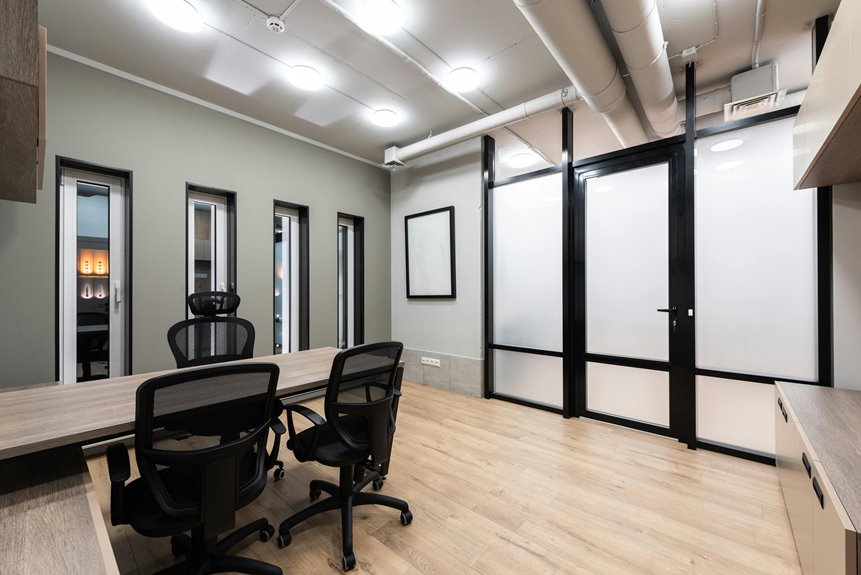
To maximize productivity with stylish office panels and cubicles, you should focus on thoughtful designs that enhance workflow and encourage collaboration. Choose materials like fabric for sound absorption or glass for an open feel while ensuring privacy. Embrace innovative trends like modular furniture and biophilic design for a fresh look. Incorporating ergonomics and technology, like adjustable chairs and built-in charging stations, can further boost comfort. Explore how these elements work together to create an inspiring workspace.
Key Takeaways
- Utilize sound-absorbing fabric panels to minimize noise distractions and enhance focus in the workspace.
- Incorporate glass panels for a modern look while allowing natural light to improve mood and energy levels.
- Choose ergonomic cubicles with adjustable furniture to promote comfortable working postures and reduce fatigue.
- Design flexible collaboration spaces with modular furniture to encourage teamwork without sacrificing privacy.
- Implement vibrant colors and textures in office panels to stimulate creativity and motivation among employees.
The Importance of Office Design in Enhancing Productivity
When you think about office design, consider how it directly impacts your productivity. A well-thought-out layout can create a more efficient workflow, reducing time spent maneuvering through clutter.
Office design significantly influences productivity by optimizing workflow and minimizing clutter.
Natural light, for example, can boost your mood and energy levels, while the right colors can enhance focus and creativity. Your workspace should encourage collaboration without sacrificing personal space.
By incorporating comfortable furniture, you can minimize distractions and promote longer, more effective work sessions. Additionally, sound-absorbing materials can help maintain a peaceful environment, allowing you to concentrate better.
Ultimately, investing time in thoughtful office design not only elevates your work experience but also enhances overall productivity, leading to greater job satisfaction and success.
Choosing the Right Materials for Office Panels and Cubicles
Selecting the right materials for office panels and cubicles can greatly influence both aesthetics and functionality in your workspace.
Here are four key materials to take into account:
- Fabric: Offers sound absorption and a variety of colors and textures, enhancing comfort and style.
- Glass: Provides an open feel and natural light while maintaining privacy; great for modern environments.
- Wood: Adds warmth and elegance, creating a more inviting atmosphere; durable and timeless.
- Metal: Guarantees sturdiness and a sleek, contemporary look; ideal for high-traffic areas.
Innovative Design Trends for Modern Workspaces
As you consider materials for office panels and cubicles, it’s also important to stay updated on innovative design trends that can transform modern workspaces.
Embrace biophilic design, which integrates natural elements, enhancing employee well-being and creativity. Modular furniture is another trend, offering flexibility and adaptability to your office layout.
Consider vibrant colors and unique textures to stimulate energy and motivation in the space. Technology integration is key; smart panels and cubicles can incorporate charging stations and soundproofing features.
Finally, think about multi-functional spaces that encourage collaboration while allowing for personal work areas. By incorporating these innovative trends, you’ll create a workspace that not only looks stylish but also boosts productivity and employee satisfaction.
Balancing Privacy and Collaboration in the Office
Finding the right balance between privacy and collaboration is essential in today’s office design.
You want spaces that offer acoustic privacy for focused work while also providing flexible collaboration areas for teamwork.
Importance of Acoustic Privacy
While fostering a collaborative environment is essential in modern offices, ensuring acoustic privacy is just as crucial. You want your team to communicate freely without distractions or overhearing sensitive conversations.
Here’s why acoustic privacy matters:
- Enhanced Focus: Reducing noise levels helps employees concentrate on their tasks, boosting overall productivity.
- Confidentiality: Protecting sensitive discussions maintains trust and professionalism within your workplace.
- Reduced Stress: A quieter environment minimizes anxiety and fatigue, leading to happier employees.
- Better Collaboration: When people feel secure in their private conversations, they’re more likely to engage and collaborate openly.
Flexible Collaboration Spaces
Creating flexible collaboration spaces is key to balancing the need for privacy with the desire for teamwork in the office. You want areas that encourage interaction while still providing spots for focused work.
Incorporating movable furniture and modular design allows your team to adapt spaces based on current projects or group sizes. Use sound-absorbing materials to minimize distractions without sacrificing openness.
By strategically placing these zones throughout your office, you’ll foster a culture of collaboration while respecting individual work preferences. Additionally, consider incorporating technology that supports remote communication, ensuring everyone stays connected.
When you prioritize flexibility, you empower your team to thrive both collaboratively and independently, ultimately enhancing overall productivity in your workspace.
Design for Team Dynamics
To foster effective team dynamics, it’s essential to strike the right balance between privacy and collaboration in your office design.
You want your space to encourage teamwork while providing areas for individuals to focus. Here are four tips to achieve this balance:
- Open Collaboration Zones: Create inviting spaces where teams can gather and share ideas freely.
- Soundproof Private Pods: Incorporate small, soundproof areas for focused work or private discussions, allowing team members to recharge.
- Flexible Layouts: Use modular furniture that adapts to different team sizes and project needs, promoting fluid collaboration.
- Transparent Dividers: Opt for stylish panels that maintain an open feel while offering some visual privacy, ensuring everyone feels comfortable.
Ergonomics: Creating Comfortable Workspaces
As you design your workspace, prioritizing ergonomics is essential for enhancing comfort and productivity.
Start by selecting an adjustable chair that supports your lower back, allowing you to maintain good posture for long hours.
Position your desk at a height where your elbows stay at a 90-degree angle while typing. Your computer monitor should be eye level, reducing neck strain and promoting better focus.
Don’t forget about your keyboard and mouse; they should be within easy reach to minimize wrist discomfort. Incorporate footrests if needed to guarantee your feet rest comfortably on the ground.
Incorporating Technology Into Office Panels and Cubicles
While designing stylish office panels and cubicles, integrating technology is key to enhancing functionality and collaboration.
By incorporating the right tech solutions, you can create a workspace that not only looks great but also boosts productivity.
Here are some ideas to take into account:
- Built-in Charging Stations: Keep devices powered without cluttering your workspace.
- Smart Glass Panels: Use these to adjust privacy levels and manage lighting easily.
- Integrated Sound Systems: Enhance focus with background music or improve conference calls.
- Wireless Connectivity: Guarantee seamless internet access for all devices throughout the office.
Case Studies: Successful Office Transformations
Integrating technology into office panels and cubicles sets the stage for impressive transformations in workplace design.
Take, for instance, a tech startup that revamped its workspace with modular panels featuring built-in screens and charging stations. Employees reported a 30% increase in collaboration and creativity.
Another example is a law firm that replaced traditional cubicles with stylish, soundproof panels, enhancing privacy and focus. Productivity surged as attorneys could concentrate better in their personalized spaces.
These case studies illustrate how investing in modern office designs not only elevates aesthetics but also boosts efficiency.
By prioritizing technology and style, you’ll create an environment where employees thrive, ultimately leading to greater success for your organization.
Embrace these transformations, and watch your workplace flourish.
Frequently Asked Questions
How Do Office Panels Affect Employee Morale and Motivation?
Office panels can greatly impact your morale and motivation. When you create a comfortable, visually appealing workspace, you feel more focused and engaged, fostering a positive atmosphere that boosts collaboration and enhances overall productivity.
Can Custom Cubicle Designs Fit Any Office Layout?
Yes, custom cubicle designs can fit any office layout. You can tailor sizes, configurations, and styles to suit your space and needs, ensuring a functional and aesthetically pleasing environment for you and your colleagues.
What Is the Average Cost of Office Panels and Cubicles?
The average cost of office panels and cubicles varies widely, typically ranging from $200 to $800 per unit. Factors like size, style, and materials influence prices, so it’s best to explore options that suit your budget.
How Often Should Office Panels and Cubicles Be Updated?
You should update office panels and cubicles every five to seven years. Regular updates keep your workspace fresh and functional, reflecting current trends and improving employee satisfaction. Don’t underestimate the impact of an inviting environment!
Are There Sustainable Options for Office Panels and Cubicles?
Yes, there are sustainable options for office panels and cubicles. You can choose materials like reclaimed wood, recycled plastics, or eco-friendly fabrics. These choices not only reduce your environmental impact but also enhance your office’s aesthetic appeal.