
Remote relocation programs are designed to help freelancers and remote workers like you move while maintaining your careers. These programs often provide financial support, community connections, and resources tailored to your needs. You’ll find various options, from government incentives to company-sponsored packages and local support networks. Choosing the right program involves considering factors like cost of living and flexibility. As you explore, you’ll uncover valuable insights and tips for a smooth shift to your new location.
Key Takeaways
- Remote relocation programs assist freelancers with financial support and resources for moving while maintaining their work flexibility.
- Benefits include cultural immersion, enhanced creativity, networking opportunities, and improved work-life balance.
- Types of programs range from government grants to company-sponsored packages and community-based support networks.
- Choosing the right program involves considering location, benefits, networking opportunities, and flexibility in arrangements.
- Preparation for relocation should include researching the new area, assessing workspace needs, and connecting with local remote workers.
Understanding Remote Relocation Programs
As you explore the world of freelancing, understanding remote relocation programs can open up exciting opportunities.
These programs are designed to help you move to different locations while continuing your work remotely. They often provide financial support, resources, and community connections to make your shift smoother.
You’ll find that various companies and governments offer these programs, each with unique incentives tailored for freelancers.
Researching the specific requirements, application processes, and benefits of each option will empower you to make informed decisions.
Benefits of Participating in Remote Relocation Programs

Participating in remote relocation programs offers numerous advantages that can enhance both your personal and professional life.
First, you’ll experience a change of scenery, which can boost your creativity and motivation. Immersing yourself in a new culture or environment can lead to fresh perspectives on work and life.
A change of scenery can ignite creativity and motivation, offering fresh perspectives on both work and life.
Additionally, these programs often provide networking opportunities with other remote workers, helping you to build valuable connections. You may also find access to resources and support tailored to freelancers, making it easier to navigate challenges.
Finally, relocating can improve your work-life balance by allowing you to choose a location that fits your lifestyle, whether it’s a bustling city or a serene beachside retreat.
Embrace the possibilities!
Types of Remote Relocation Programs Available
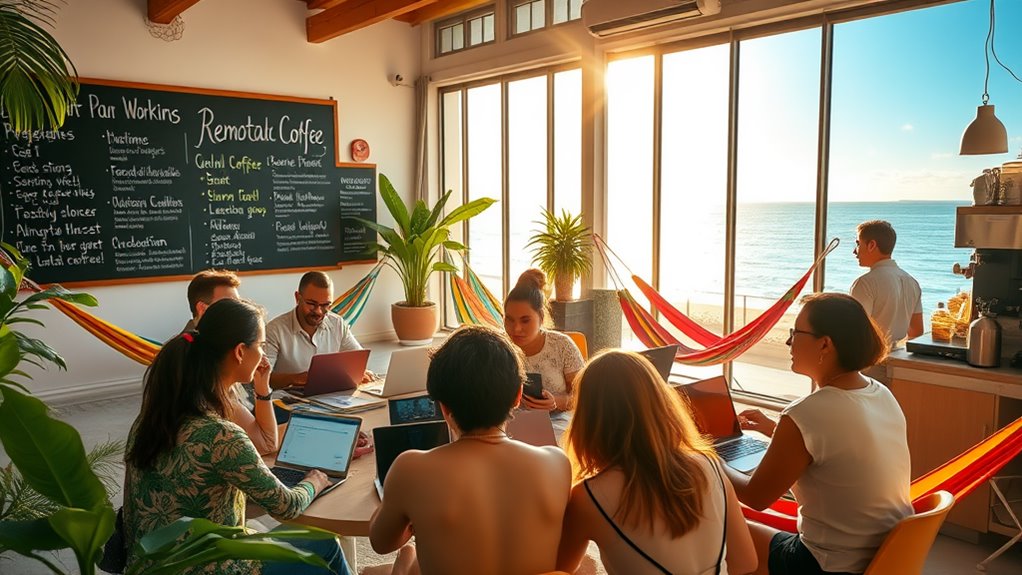
When considering a move as a freelancer, you’ll find various remote relocation programs that cater to your needs.
Government incentives and grants, company-sponsored packages, and community-based support programs can all offer unique benefits.
Let’s explore these options to see which might be the best fit for you.
Government Incentives and Grants
Many governments recognize the benefits of attracting remote workers and have launched various incentives and grants to facilitate relocation. These programs often include financial assistance for housing, tax breaks, or even cash grants to help cover moving expenses.
Some regions offer stipends for freelancers to help them integrate into the local community or cover costs like coworking spaces. Additionally, you might find programs that provide networking opportunities, mentorship, or access to local resources designed to boost your freelance career.
Researching your options can reveal unique incentives tailored to your skills and industry, making it easier for you to settle into a new environment while maintaining your work-life balance.
Don’t hesitate to apply, as these opportunities can greatly ease your adjustment.
Company-Sponsored Relocation Packages
Company-sponsored relocation packages can greatly ease your shift to a new location as a remote freelancer. Many companies offer these packages to attract talent and guarantee a smooth changeover. Typically, these packages cover expenses like travel, temporary housing, and moving costs. Some might even provide stipends for setting up your home office.
When considering a company-sponsored relocation, check if they offer assistance with visa applications or local registrations. Additionally, look for packages that include networking opportunities or onboarding support, which can help you integrate into your new environment.
Ultimately, a well-structured relocation package can provide financial relief and make your move less stressful, allowing you to focus on your work and new adventures in your chosen destination.
Community-Based Support Programs
As you commence your remote relocation journey, community-based support programs can be invaluable resources.
These initiatives often provide a network of local freelancers and remote workers, helping you connect with like-minded individuals. You’ll find mentorship opportunities, workshops, and social events tailored to your interests and skills.
Many communities also offer co-working spaces, where you can collaborate and share ideas with others in your field.
Additionally, local support groups can assist you in maneuvering challenges related to relocation, from housing to healthcare.
How to Choose the Right Program for You
Choosing the right remote relocation program can feel overwhelming, especially with so many options available.
Finding the ideal remote relocation program can be daunting with countless choices at your fingertips.
To simplify your decision, consider these key factors:
- Location: Think about where you want to live. Research the cost of living, climate, and culture.
- Community: Look for programs that offer networking opportunities and support for freelancers to connect with like-minded individuals.
- Benefits: Evaluate what each program offers—housing assistance, coworking spaces, or local discounts can make a difference.
- Flexibility: Ascertain the program allows you to tailor your experience, whether it’s the length of stay or work arrangements.
Preparing for Your Relocation: Key Considerations
Once you’ve selected the right remote relocation program, it’s time to get ready for your big move. Start by researching your new location to understand the cost of living, local culture, and available amenities.
Create a checklist of essential tasks, like arranging housing, setting up utilities, and obtaining any necessary visas. Don’t forget to reflect on your workspace needs—whether you’ll work from home or a co-working space, make sure it’s equipped for productivity.
Additionally, think about your health care options and how to transfer any prescriptions.
Finally, connect with other remote workers in the area to build a support network. Proper preparation makes your shift smoother and helps you settle in quickly, allowing you to focus on your work.
Tips for a Successful Transition to Remote Work
Shifting to remote work can be both exciting and challenging, so it’s essential to establish a solid foundation for success.
Here are some tips to help you navigate smoothly:
- Create a Dedicated Workspace: Set up a comfortable, distraction-free area that promotes productivity.
- Establish a Routine: Develop a daily schedule that includes work hours, breaks, and time for personal tasks.
- Stay Connected: Use communication tools to keep in touch with colleagues and clients, fostering collaboration and relationships.
- Set Clear Boundaries: Clearly define work hours to maintain a healthy work-life balance, preventing burnout.
Personal Stories: Successes and Challenges of Remote Relocation
While many freelancers find the freedom of remote relocation appealing, the journey often comes with a mix of triumphs and hurdles. You might relish the thrill of working from a beach in Bali, but adjusting to a different culture can be intimidating.
For instance, one freelancer shared how she struggled with language barriers but eventually forged meaningful connections with locals, enhancing her experience.
On the flip side, you may face challenges like inconsistent internet and homesickness that disrupt your workflow. Another remote worker recounted how he learned to adapt by creating a structured routine, allowing him to balance work and exploration.
Ultimately, embracing both the successes and challenges can lead to personal growth and a richer remote working experience.
Frequently Asked Questions
What Are the Costs Associated With Remote Relocation Programs?
When considering remote relocation programs, you should account for costs like travel, housing, transportation, and potential visa fees. It’s crucial to budget wisely to guarantee a smooth changeover without unexpected financial burdens.
How Long Do Remote Relocation Programs Typically Last?
Remote relocation programs usually last anywhere from a few weeks to several months. You’ll often find that the duration depends on the specific program, your needs, and the destination you choose for your relocation.
Are Families Allowed to Join Freelancers in These Programs?
Yes, families can often join freelancers in these programs, but it depends on the specific program’s policies. You should check the details to see if additional family members are permitted and any associated costs.
What Visa Requirements Exist for Remote Relocation Participants?
When considering visa requirements, you’ll need to check the specific country’s regulations. Most countries require proof of employment, financial stability, and health insurance. Researching beforehand can save you time and guarantee a smooth relocation process.
Can You Participate in Multiple Relocation Programs Simultaneously?
You can participate in multiple relocation programs simultaneously, but you’ll need to check each program’s eligibility criteria and requirements. It’s essential to guarantee that your commitments don’t conflict with one another to maximize your experience.