
To sell yourself in a remote job interview, focus on your adaptability, communication skills, and familiarity with collaboration tools. Tailor your resume to highlight your remote work experience and key skills that align with the job description. During the interview, maintain strong virtual communication by engaging with your body language and minimizing distractions. Don’t forget to follow up promptly with a thank-you note that reiterates your enthusiasm for the role and connections made. You’ll discover more essential tips to enhance your interview success.
Key Takeaways
- Highlight your adaptability and flexibility by sharing examples of overcoming challenges in remote work settings.
- Emphasize strong communication skills and familiarity with collaboration tools like Zoom and Slack.
- Showcase your time management abilities using project management tools such as Trello or Asana.
- Demonstrate self-motivation through examples of completing tasks ahead of deadlines in a remote environment.
- Reinforce your enthusiasm for the role and alignment with the company’s goals during the interview.
Understand the Remote Work Landscape
As remote work continues to reshape the job market, understanding this landscape is crucial for your success in interviews.
You’ll need to recognize the shift in company cultures and the skills that are now in demand. Flexibility, adaptability, and strong communication are essential traits employers seek in remote candidates.
Familiarize yourself with the tools and technologies companies use for collaboration—these can include project management software, video conferencing platforms, and cloud-based storage. Being knowledgeable about these tools shows you’re prepared for the remote work environment.
Additionally, understand the importance of work-life balance and how it can affect productivity. Your awareness of these factors won’t only enhance your interview performance but also demonstrate that you’re ready to thrive in a remote setting.
Tailor Your Resume for Remote Positions
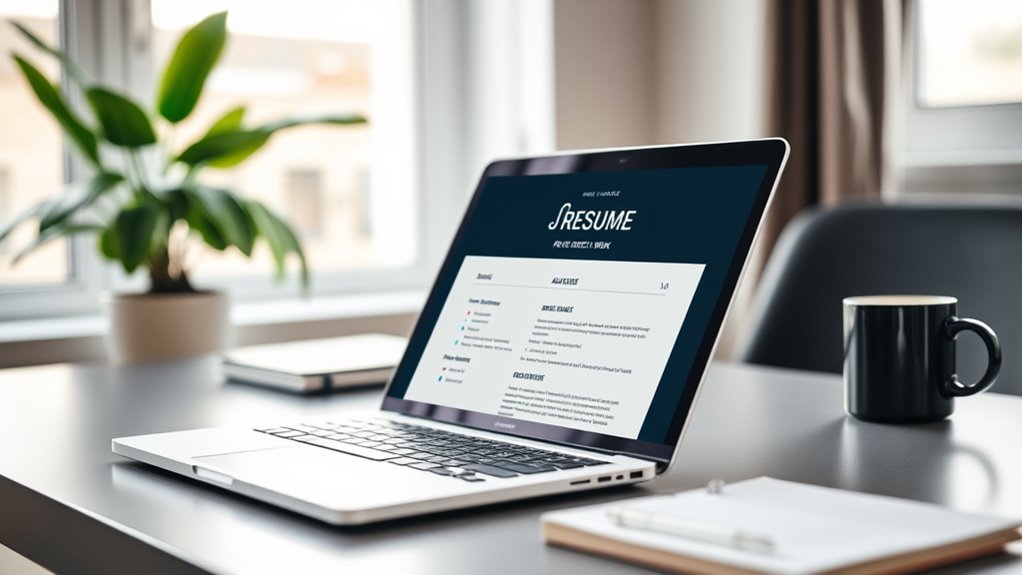
With the rise of remote work, tailoring your resume specifically for remote positions can greatly boost your chances of standing out. Focus on showcasing skills that highlight your ability to work independently and communicate effectively. Use keywords from the job description to align your experiences with the employer’s needs.
| Section | Tips | Examples |
|---|---|---|
| Contact Information | Use a professional email | [email protected] |
| Summary | Highlight remote work experience | “Remote project manager” |
| Skills | Emphasize communication tools | Slack, Zoom, Trello |
| Experience | Detail remote job roles | “Managed teams virtually” |
| Education | Include relevant certifications | “Remote Work Certification” |
This approach will help recruiters see you’re a perfect fit for their remote team.
Master the Art of Virtual Communication

In a virtual interview, your communication style can make or break your chances.
You need to be aware of your body language, use a clear vocal tone, and create an engaging presence on screen.
Master these skills, and you’ll stand out in the digital crowd.
Body Language Awareness
Mastering body language is essential for making a lasting impression in virtual interviews. Even through a screen, your nonverbal cues speak volumes about your confidence and engagement.
Sit up straight and maintain an open posture; this signals that you’re attentive and ready to participate. Use hand gestures naturally to emphasize your points, but avoid excessive movement that might be distracting.
Make eye contact by looking at the camera, not just the screen, to create a connection with your interviewer. Finally, be aware of your facial expressions; a genuine smile can convey enthusiasm and positivity.
Clear Vocal Tone
Your voice is a powerful tool in virtual interviews, influencing how your message is received. To make an impact, focus on your vocal tone. Speak clearly and at a moderate pace; this helps convey confidence and guarantees your words are understood.
Vary your pitch and volume to emphasize key points, keeping the listener engaged. Avoid monotony, as it can lead to disinterest. Additionally, practice enunciating your words; mumbling can obscure your qualifications and enthusiasm.
If you’re nervous, take a moment to breathe deeply before speaking. Finally, consider your environment: minimize background noise to avoid distractions.
With a clear vocal tone, you’ll enhance your communication and leave a memorable impression on your interviewer.
Engaging Virtual Presence
A clear vocal tone lays the groundwork for effective communication, but your virtual presence can elevate your interview to the next level.
Pay attention to your background; a clean, professional setting minimizes distractions and enhances focus. Dress as you’d for an in-person interview to convey professionalism and confidence.
Use eye contact by looking at the camera, not just the screen, to create a more engaging connection. Keep your body language open and inviting—smile and nod to show you’re actively listening.
Test your technology beforehand to avoid glitches that could disrupt the flow. Finally, be aware of your energy level; enthusiasm can be infectious, making you more memorable.
Embrace these elements to showcase your best self virtually.
Showcase Your Remote Work Skills
While the traditional office environment has shifted for many, showcasing your remote work skills has become essential in interviews. Highlight your ability to manage time effectively, communicate clearly, and use technology proficiently.
Consider the following skills that can set you apart:
| Skill | Example |
|---|---|
| Time Management | Prioritizing tasks with tools like Trello or Asana |
| Communication | Regular updates via Slack or video calls |
| Self-Motivation | Completing projects ahead of deadlines |
| Technical Proficiency | Using collaboration tools like Zoom or Google Workspace |
Prepare for Common Remote Interview Questions
As remote work becomes more common, preparing for remote interview questions can help you stand out. Expect questions about your experience with remote collaboration tools, time management, and communication skills.
Familiarize yourself with platforms like Zoom or Slack, as interviewers might ask how you utilize them effectively. Be ready to discuss how you handle distractions at home and maintain productivity.
Practice your responses to questions like, “How do you prioritize tasks when working remotely?” or “Can you give an example of overcoming a challenge in a virtual team?” Tailor your answers to demonstrate your adaptability and problem-solving skills.
Follow Up Effectively After the Interview
After your interview, timing your follow-up is essential to make a lasting impression.
Personalizing your message and clearly expressing gratitude can set you apart from other candidates.
Let’s explore how to craft an effective follow-up that reinforces your interest and professionalism.
Timing Your Follow-Up
Timing your follow-up can make a significant difference in your job search success. After your interview, wait about 24 to 48 hours before reaching out. This shows respect for the interviewer’s time while still keeping you fresh in their mind.
If they mentioned a timeline for making a decision, align your follow-up with that. For instance, if they said they’d decide in a week, wait until the last business day of that week to check in.
This proactive approach demonstrates your enthusiasm for the position without coming off as pushy. Remember, a well-timed follow-up can reinforce your interest and keep you at the forefront of their decision-making process, enhancing your chances of landing the job.
Personalizing Your Message
Following up after your interview isn’t just about timing; it’s also about how you communicate your interest. Personalizing your message can make a significant impact.
Start by referencing specific topics discussed during your interview. This shows you were engaged and attentive. Mention something about the company’s values or recent projects that resonated with you; it demonstrates you’ve done your homework.
Also, address the interviewer by name, which adds a personal touch. Keep your tone warm and enthusiastic, reflecting your genuine interest in the position.
If possible, add a brief note about how your skills can address specific challenges the team faces. This tailored approach not only reinforces your fit but also makes your follow-up memorable.
Expressing Gratitude Clearly
Expressing gratitude clearly in your follow-up can set you apart from other candidates. After your interview, send a brief email thanking the interviewer for their time and insights.
Be specific—mention something from the conversation that resonated with you. This shows you were engaged and appreciate their perspective.
Keep your tone warm but professional. A simple line like, “I enjoyed discussing the team’s innovative projects,” can make a lasting impression.
Reiterate your enthusiasm for the role and how your skills align with the company’s goals.
Finally, don’t forget to send your follow-up within 24 hours. This promptness demonstrates your eagerness and professionalism.
A well-crafted thank-you note could be the nudge you need to move forward in the hiring process.
Frequently Asked Questions
How Can I Improve My Online Presence for Remote Job Applications?
To improve your online presence for remote job applications, optimize your LinkedIn profile, share relevant content, network with industry professionals, and showcase your skills on platforms like GitHub or personal websites. Engage consistently and authentically.
What Tools Are Essential for Collaborating With Remote Teams?
To collaborate effectively with remote teams, you’ll need tools like Slack for communication, Zoom for video calls, Trello for project management, and Google Drive for file sharing. These enhance productivity and streamline teamwork across distances.
How Do I Demonstrate Adaptability in a Virtual Interview?
To demonstrate adaptability in a virtual interview, share examples of how you’ve quickly adjusted to changes, embraced new tools, and navigated challenges. Show your enthusiasm for learning and adapting in fast-paced environments.
What Should I Wear for a Video Interview?
For a video interview, wear something professional yet comfortable. Choose solid colors over patterns, and don’t forget good lighting. You’ll feel more confident if you dress appropriately, showcasing your professionalism and readiness for the opportunity.
How Can I Build Rapport With Interviewers Online?
To build rapport with interviewers online, show genuine interest in their questions, maintain eye contact through the camera, and use their names during the conversation. Smile and engage actively to create a positive connection.