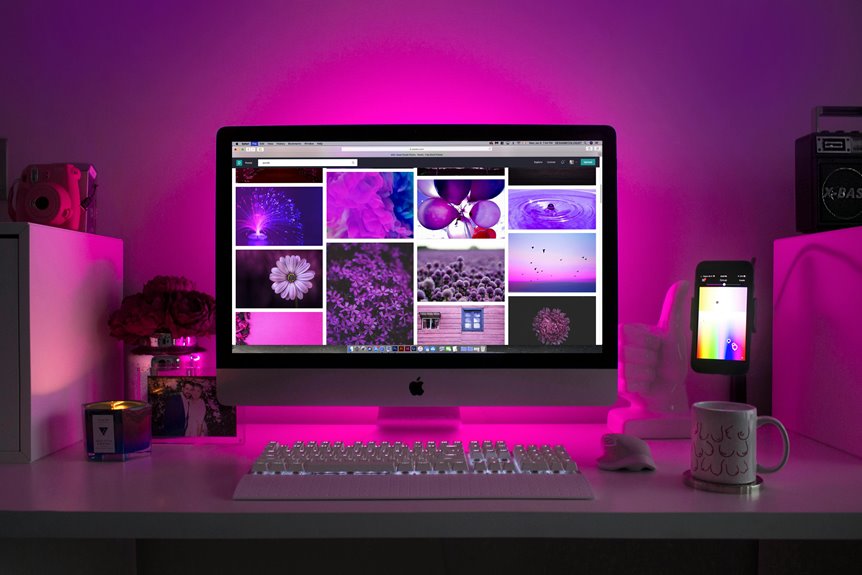
Yes, you should use different colors for distinct zones in your office. Colors can influence mood and productivity, so assigning hues like blue for focus zones and yellow for collaboration areas can optimize your workspace. Vibrant colors energize brainstorming sessions, while calming shades help with concentration. Creating separate zones enhances team dynamics and individual performance. If you want to learn more about effective color zoning strategies, keep exploring this topic for greater insights!
Key Takeaways
- Using different colors for office zones enhances mood and productivity, aligning with the specific purpose of each area.
- Collaboration zones thrive with vibrant colors like orange or yellow to stimulate interaction and teamwork.
- Focus zones benefit from calming shades like blue or green, promoting concentration and minimizing distractions.
- Relaxation zones should feature soft neutrals or pastel tones to create a tranquil break environment.
- Cohesive color choices across zones ensure a harmonious design, improving the overall workplace atmosphere.
The Psychology of Color in the Workplace
Colors play an essential role in shaping the atmosphere of your workplace. They can influence your mood, productivity, and even creativity.
For instance, blue can promote calmness and focus, making it ideal for tasks requiring concentration. On the other hand, red can energize and stimulate, perfect for brainstorming sessions or high-energy meetings.
Yellow, often associated with optimism, can spark creativity, while green brings a sense of balance and tranquility.
You might find that incorporating these colors into your office design can enhance your overall work experience. Consider how different hues affect you personally and tailor your space to reflect those feelings.
Defining Zones: Collaboration, Focus, and Relaxation
To create an effective workspace, it’s essential to define distinct zones for collaboration, focus, and relaxation.
Each zone serves a specific purpose and enhances productivity. Here’s how you can set them up:
- Collaboration Zone: This area should encourage teamwork. Equip it with comfortable seating and tools for brainstorming, like whiteboards or projectors.
- Focus Zone: Design a quiet space where you can concentrate. Use sound-absorbing materials and minimal distractions to help you stay on task.
- Relaxation Zone: Create a spot for breaks and rejuvenation. Include comfortable seating, plants, or calming decor to help you recharge during the workday.
Choosing the Right Color Palette for Each Zone
Creating distinct zones in your office is just the beginning; the right color palette can greatly enhance the purpose of each space.
For your collaboration zone, consider vibrant colors like orange or yellow to stimulate creativity and communication. In the focus area, opt for calming shades like blue or green that promote concentration and tranquility.
When it comes to the relaxation zone, soft neutrals or pastel tones can create a soothing atmosphere, encouraging rest and rejuvenation.
Tips for Implementing Color Zoning Effectively
While selecting a color palette is essential, implementing color zoning effectively can truly elevate your office environment.
To make the most of your color choices, follow these tips:
- Define Clear Zones: Identify specific areas for tasks like collaboration, focus, and relaxation. Each zone should have a distinct purpose that guides your color selection.
- Use Accent Walls: Instead of painting entire rooms, consider using accent walls to introduce bold colors. This keeps the space dynamic without overwhelming it.
- Test Before Committing: Apply sample swatches in each zone and observe them at different times of the day. This helps you see how lighting affects your chosen colors.
Maintaining Cohesion in Your Office Design
Maintaining a cohesive office design is essential, as it fosters a harmonious work environment that enhances productivity and creativity. To achieve this, you should guarantee that your color choices complement each other across different zones. Here’s a simple guide to help you maintain that cohesion:
| Zone | Color Choice | Purpose |
|---|---|---|
| Work Station | Soft Blue | Promotes focus and calmness |
| Break Area | Vibrant Green | Encourages relaxation |
| Meeting Room | Neutral Gray | Supports professionalism |
| Reception Area | Warm Yellow | Creates a welcoming atmosphere |
Frequently Asked Questions
Can I Use Patterns Instead of Solid Colors for Zoning?
Absolutely, you can use patterns instead of solid colors for zoning. Patterns can create visual interest and define areas effectively. Just make sure they complement each other and don’t overwhelm the space.
What if My Office Has Limited Natural Light?
If your office has limited natural light, consider using lighter colors to brighten the space. Incorporating mirrors or reflective surfaces can also enhance light, making your environment feel more open and inviting.
Are There Colors to Avoid in an Office Environment?
In an office environment, you should avoid overly bright colors like neon shades, which can be distracting. Instead, opt for calming tones that promote focus and productivity, such as soft blues, greens, or neutral shades.
How Often Should I Update My Office Color Scheme?
You should update your office color scheme every few years or whenever you feel your environment needs a refresh. Changing colors can rejuvenate your space, boost productivity, and keep your inspiration flowing.
Can I Mix Different Color Zones in One Area?
Absolutely, you can mix different color zones in one area! Just guarantee the colors complement each other and create a cohesive look. Experiment with shades that inspire creativity and focus, making your space functional and inviting.