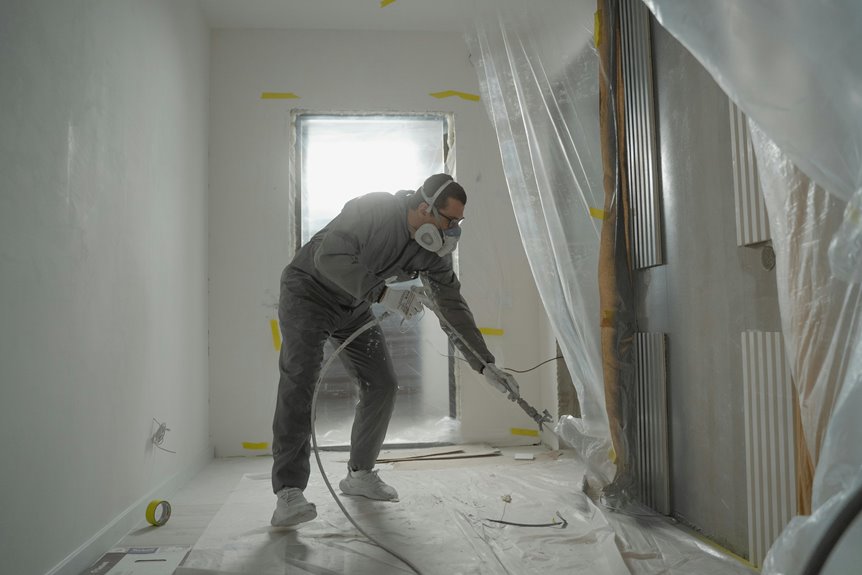
Soundproof paint can really help reduce noise in your home office, making it a good choice for working from home. It dampens minor sounds like chatter and distant music, especially if you apply multiple layers. However, it’s not a fix-all solution for louder noise disturbances. For the best effects, consider combining it with other soundproofing methods. If you’re curious about how it stacks up against other options, there’s more you might want to explore.
Key Takeaways
- Soundproof paint effectively dampens minor noises, making it suitable for a home office environment.
- It works best when applied in multiple layers to increase sound absorption.
- While it reduces chatter and distant music, it may not block loud machinery sounds.
- Combining soundproof paint with acoustic panels or curtains enhances overall noise reduction.
- Consider the type of noise and surface suitability before investing in soundproof paint.
Understanding Soundproof Paint: What Is It?
When you’re looking to reduce noise in your space, soundproof paint might be the solution you need. This specialized paint contains sound-absorbing materials, designed to dampen sound waves and minimize echo.
Unlike regular paint, soundproof paint can help you create a quieter environment, making it ideal for home offices, studios, or any noisy area. It’s easy to apply, just like traditional paint, and comes in various colors to suit your style.
While it won’t completely eliminate all noise, it can greatly reduce unwanted sounds, enhancing your comfort. You’ll find it particularly beneficial in urban settings or shared living spaces.
Just remember, it’s one part of a broader noise reduction strategy, but a great start nonetheless!
The Science Behind Soundproofing
Understanding how soundproofing works can enhance your use of soundproof paint. Soundproofing involves reducing noise transmission through barriers, and soundproof paint can contribute to this process. It contains sound-dampening materials that help absorb sound waves, making your environment quieter.
Here are some key aspects to contemplate:
- Vibration Absorption: The unique compounds in soundproof paint can absorb vibrations, reducing noise impact.
- Density Matters: Thicker layers of paint increase sound insulation, creating a more peaceful atmosphere.
- Layering Benefits: Applying multiple coats can enhance soundproofing effectiveness, giving you that much-needed serenity.
- Complementary Solutions: Combining soundproof paint with other soundproofing methods, like acoustic panels, amplifies your results.
How Effective Is Soundproof Paint for Home Offices?
How effective is soundproof paint for home offices?
Soundproof paint can reduce sound transmission, but its effectiveness varies. While it might dampen minor noises, like chatter or distant music, it’s not a miracle solution for heavy sounds, such as loud machinery or barking dogs.
The paint works best when applied on multiple layers, increasing density and absorption. However, keep in mind that it won’t completely eliminate noise; it merely lessens it.
If you’re working in a particularly noisy environment, soundproof paint alone may not suffice. Consider combining it with other soundproofing methods like acoustic panels or weather stripping for better results.
Ultimately, soundproof paint can be a helpful addition, but it’s not a standalone fix for a quiet home office.
Comparing Soundproof Paint to Other Soundproofing Solutions
While soundproof paint offers some benefits, it’s essential to compare it with other soundproofing solutions to find the best fit for your needs.
You might want to take into account these alternatives:
- Acoustic Panels: They absorb sound waves, providing a more considerable reduction in noise, especially in larger spaces.
- Soundproof Curtains: These heavy drapes block external noise and add aesthetic value to your room.
- Weatherstripping: Sealing gaps around doors and windows can considerably minimize sound leakage, creating a more focused work environment.
- Insulation: Adding soundproof insulation in walls can drastically reduce noise transmission, making your home office a peaceful retreat.
Each option has its strengths, so weigh them against your specific noise challenges before making a decision.
Factors to Consider Before Investing in Soundproof Paint
Before you invest in soundproof paint, there are several important factors to take into account to confirm it meets your needs.
First, consider the type of noise you’re dealing with—some paints are more effective against airborne noise, while others help with impact noise.
Consider the noise type; some soundproof paints excel against airborne noise, while others target impact noise effectively.
Next, evaluate the surface you’ll be painting; soundproof paint works best on porous materials.
Also, check the product’s specifications and confirm it offers the decibel reduction you require.
Don’t forget to think about the application process; some paints may require professional installation, while others are DIY-friendly.
Finally, weigh the cost against potential benefits—sometimes, traditional soundproofing methods might offer better value for your investment.
Make sure you choose wisely!
Real User Experiences: Testimonials and Reviews
You might be curious about how soundproof paint has worked for others in their personal soundproofing journeys.
Many users have shared their experiences, especially regarding its effectiveness in home offices.
Let’s explore their testimonials and see if this solution could fit your needs.
Personal Soundproofing Journeys
Many people have discovered the transformative power of soundproof paint in their homes, finding relief from the disruptive noises of city life or noisy neighbors.
You might be surprised at how it can change your daily life. Here are a few experiences that resonate deeply:
- Peaceful Workdays: One user reported a noticeable drop in distractions, allowing for improved focus during important calls.
- Better Sleep: Another found that soundproofing their bedroom led to uninterrupted nights, resulting in improved mood and energy.
- Family Harmony: A parent shared how it muffled children’s noise, creating a more serene home environment.
- Enhanced Creativity: An artist noted that soundproof walls sparked inspiration, free from external disturbances.
These journeys highlight how soundproof paint can genuinely enhance your living space.
Effectiveness in Home Offices
While working from home can offer flexibility, it often comes with its own set of distractions, which is where soundproof paint comes into play for many users.
You might find that your home office is plagued by noises from kids, pets, or noisy neighbors. Users have reported mixed results, with some claiming a noticeable reduction in sound, while others felt minimal difference.
One user mentioned how the paint helped muffle the chatter from the living room, allowing for better focus during meetings.
However, others warn that it’s not a miracle solution; combining it with other soundproofing methods, like acoustic panels, may yield better results.
Ultimately, it’s worth trying if you’re seeking a quieter workspace.
Frequently Asked Questions
Can Soundproof Paint Be Applied Over Existing Wall Textures?
Yes, you can apply soundproof paint over existing wall textures. Just make sure to clean the surface properly first. This helps the paint adhere better and enhances its soundproofing effectiveness for your space.
How Long Does Soundproof Paint Take to Dry Completely?
Soundproof paint typically takes about 24 hours to dry completely, but drying times can vary based on humidity and temperature. It’s best to check the manufacturer’s instructions for specific recommendations to guarantee ideal results.
Is Soundproof Paint Safe for Children and Pets?
Yes, soundproof paint is generally safe for children and pets once it’s fully cured. Just make sure to choose non-toxic options and ventilate the area during application to minimize any potential risks while it dries.
Can Soundproof Paint Help With External Noise From Outside?
Yes, soundproof paint can help reduce external noise, but it’s not a complete solution. For better results, you should combine it with other soundproofing methods, like weatherstripping and heavy curtains, to achieve ideal noise reduction.
Does Soundproof Paint Work on Ceilings as Well?
Yes, soundproof paint can work on ceilings. It helps reduce noise transmission from above, making your space quieter. However, combine it with other soundproofing methods for better results, as its effectiveness can vary.