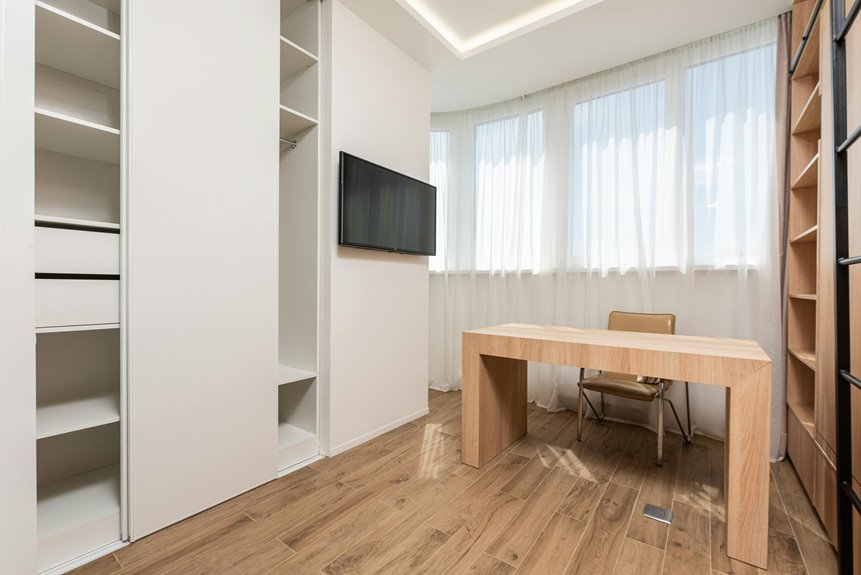
To soundproof your WFH closet office, start by evaluating your space. Clear out clutter and measure dimensions. Choose effective soundproofing materials like heavy curtains and acoustic panels. Insulate walls and seal gaps around doors and windows with weather stripping. Don’t forget the ceiling and floor; rugs can help absorb sound. Adding acoustic panels at ear level also reduces noise. With these tips, you can create a quieter workspace that meets your needs—keep exploring for more ideas!
Key Takeaways
- Measure your closet space to ensure a comfortable layout for your desk, chair, and equipment while maximizing available area.
- Install acoustic panels and heavy curtains to absorb sound and reduce echo within your closet office.
- Use weather stripping and door sweeps to seal gaps around doors and windows, minimizing sound leakage.
- Incorporate rugs or carpets to dampen noise from footsteps and hard surfaces, enhancing sound insulation.
- Consider a white noise machine or sound masking apps to further block distracting noises during work hours.
Assessing Your Closet Space
When you’re evaluating your closet space for a WFH office, start by measuring the dimensions.
Take note of the height, width, and depth to guarantee your setup will fit comfortably. Next, clear out any items that aren’t essential; a decluttered space promotes focus.
Consider the layout: you’ll want enough room for your desk, chair, and any necessary equipment. Identify power outlets and natural light sources, as these will impact your productivity.
If you’re limited on space, think about vertical storage solutions to maximize your area. Finally, assess the closet door—will it swing open freely?
Once you’ve got a clear vision of your space, you can better plan for soundproofing and furnishing your new office.
Choosing the Right Soundproofing Materials
After evaluating your closet space, it’s time to focus on soundproofing materials that will create a quieter work environment.
Start with acoustic panels; they effectively absorb sound and reduce echo. You can choose fabric-wrapped panels for aesthetics or foam panels for budget-friendly options.
Acoustic panels are essential for absorbing sound and reducing echo, with options for both style and budget.
Next, consider mass-loaded vinyl (MLV) for its dense properties, which block sound transmission.
If you’re looking to cover gaps, weatherstripping and door sweeps are essential for sealing edges around doors and windows.
Don’t forget about rugs or carpets—they can help dampen noise from hard surfaces.
Finally, curtains made from heavy fabric can also contribute greatly to sound absorption.
Insulating Walls and Doors
To effectively soundproof your closet office, you need to focus on insulating both the walls and doors.
Choosing the right wall insulation materials can greatly reduce noise, while proper door sealing techniques keep unwanted sounds at bay.
Let’s explore how these elements can transform your workspace.
Wall Insulation Materials
Insulating the walls and doors of your closet office is essential for creating a quiet workspace. Choosing the right materials can make a significant difference in sound reduction. Here are some effective insulation options:
| Material | Pros | Cons |
|---|---|---|
| Fiberglass Batts | Affordable, effective | Can irritate skin |
| Foam Panels | Lightweight, easy to install | Higher cost |
| Mass Loaded Vinyl | Excellent sound barrier | Heavier, more complex |
Door Sealing Techniques
While many focus on wall insulation, sealing your closet office door is equally essential for minimizing sound intrusion.
Start by checking the gaps around your doorframe; even small cracks can let noise in. Use weatherstripping or door sweeps to seal these gaps effectively. Choose a dense material that absorbs sound, like rubber or foam.
If your door isn’t solid, consider adding a soundproofing door blanket for extra insulation. You might also want to install a door sweep at the bottom to block sound from seeping underneath.
Finally, verify your door fits snugly in its frame—if it doesn’t, you may need to adjust the hinges.
With these techniques, you’ll create a quieter workspace, allowing you to focus better.
Soundproofing the Ceiling and Floor
If you want a truly quiet workspace, addressing the ceiling and floor is essential.
Start with the ceiling; consider adding acoustic tiles or soundproofing panels. These can absorb sound and minimize echo, creating a more peaceful environment. If you’re dealing with a shared space above, you might want to reinforce the ceiling with mass-loaded vinyl or soundproofing drywall.
Next, focus on the floor. Carpets or thick rugs can greatly reduce noise from footsteps or other disturbances. If your floor is hard, adding a layer of soundproofing underlayment can further dampen sound transmission.
Don’t forget to secure any gaps around the edges to prevent noise leakage. By soundproofing both the ceiling and floor, you’ll create a much more productive workspace.
Adding Acoustic Panels
If you’re looking to enhance the sound quality in your closet office, adding acoustic panels is a great option.
You can choose from various types and installation techniques to fit your space perfectly. Not only do they improve soundproofing, but they also create a more professional environment for your work-from-home setup.
Types of Acoustic Panels
Acoustic panels are essential for creating a quiet workspace in your WFH closet office. There are several types to evaluate, each offering unique benefits.
Foam panels are lightweight and easy to install, perfect for absorbing sound waves.
Fabric-wrapped panels, available in various colors and designs, not only reduce noise but also add a touch of style to your space.
Wooden panels provide a more natural look and can enhance acoustics while maintaining aesthetics.
For a more budget-friendly option, reflect on mass-loaded vinyl, which blocks sound effectively.
Finally, bass traps can help manage low-frequency noises, ensuring your calls are clear and uninterrupted.
Choose the right combination of panels to maximize soundproofing in your closet office.
Installation Techniques Overview
Choosing the right acoustic panels is just the first step in soundproofing your closet office; installing them correctly is equally important.
Start by identifying the areas where sound leaks most, like walls and doors. Clean these surfaces to guarantee the adhesive or mounting hardware sticks well.
For adhesive panels, peel off the backing and press firmly for a few seconds. If you’re using hooks or brackets, measure carefully to verify even spacing and alignment.
Don’t forget to take into account height; placing panels at ear level maximizes sound absorption. For a more professional look, stagger the panels instead of lining them up directly.
Finally, step back and assess your work to make adjustments if necessary. Happy soundproofing!
Benefits of Soundproofing
While you might think soundproofing is just about blocking noise, adding acoustic panels offers a range of benefits that enhance your work-from-home experience.
First, they improve sound quality, reducing echoes and creating a more pleasant audio environment for calls and virtual meetings. This means you can communicate clearly without distractions.
Second, acoustic panels help you focus by minimizing external disturbances, allowing you to concentrate and boost productivity. You’ll find it easier to immerse yourself in tasks without interruptions.
Additionally, these panels can enhance the aesthetic of your closet office, adding a professional touch.
Sealing Gaps and Cracks
To create a truly soundproof closet office, you have to pay attention to the gaps and cracks around doors, windows, and walls.
Start by inspecting these areas for any openings where sound might seep in. Use weatherstripping tape or door sweeps to seal gaps under doors and around frames.
For cracks in the walls, apply acoustic caulk, which remains flexible and effectively blocks sound.
Don’t forget about window edges; use window insulation film or heavy drapes to minimize noise intrusion.
If you have outlets or vents, consider using soundproofing covers or inserts.
Creating a Quiet Environment Inside the Closet
Creating a quiet environment inside your closet office is essential for maintaining focus and productivity. Here are some effective strategies to achieve this:
- Acoustic Panels: Install foam or fabric-covered panels on walls to absorb sound.
- Thick Curtains: Use heavy drapes to block noise from outside and dampen echo.
- Carpet or Rugs: Lay down soft flooring materials to reduce sound reflection and add comfort.
- White Noise Machine: Utilize a white noise machine or app to mask distracting sounds.
Frequently Asked Questions
How Can I Improve Ventilation Without Compromising Soundproofing?
To improve ventilation without compromising soundproofing, consider installing acoustic vents or using a silent fan. You can also add weatherstripping to doors and windows, ensuring air circulation while minimizing noise leakage into your space.
Will Soundproofing Materials Affect My Closet’s Aesthetics?
Yes, soundproofing materials can affect your closet’s aesthetics. However, you can choose stylish options that blend well with your decor, ensuring a balance between functionality and visual appeal without sacrificing the overall look of your space.
Can I Soundproof a Shared Closet Office Effectively?
You can effectively soundproof a shared closet office by using acoustic panels, weather stripping, and heavy curtains. Just guarantee you balance sound absorption with the overall design, so it remains functional and visually appealing.
How Long Does the Soundproofing Process Typically Take?
The soundproofing process usually takes a few hours to a couple of days, depending on the materials and techniques you choose. You’ll want to plan accordingly to guarantee everything’s completed efficiently and effectively.
What Are the Costs Associated With Soundproofing My Closet Office?
The costs associated with soundproofing vary based on materials and methods you choose. You might spend anywhere from a few hundred to several thousand dollars, depending on your specific needs and the complexity of the project.