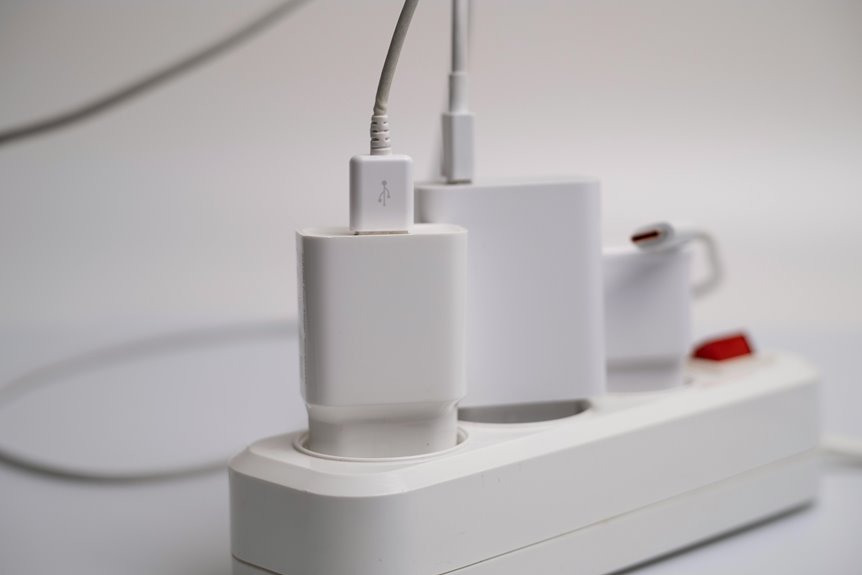
Daisy-chaining power strips in your workspace can lead to serious dangers. It greatly increases the risk of circuit overload, which can cause overheating and potential fires. Additionally, multiple strips may damage your electronic devices due to unstable power supply and surges. If you’re not careful about wattage limits and compatible devices, you might face costly repairs or data loss. There are safer alternatives for power management that can help you avoid these risks. Discover more about them for a better setup.
Key Takeaways
- Daisy-chaining power strips increases the risk of circuit overload, leading to potential overheating and equipment failure.
- Relying on multiple strips heightens fire hazards due to limited capacity and potential overheating.
- Unstable power supply from daisy-chaining can cause damage to electronics, including overheating and data loss.
- Exceeding wattage limits when daisy-chaining can result in short circuits and decreased lifespan of devices.
- Safer alternatives include using surge protectors with overload protection and power distribution units (PDUs) to manage outlets effectively.
Understanding Daisy-Chaining: What It Is and Why It’s Popular
Although it might seem convenient, daisy-chaining power strips has become a common practice in homes and offices alike. You might find yourself connecting multiple power strips to accommodate all your devices, especially when outlets are scarce.
This setup allows you to plug in everything from computers to lamps without much hassle. The popularity stems from the immediate need for more access to power, particularly in crowded workspaces or entertainment areas. You appreciate the flexibility it offers, making it easy to rearrange your setup as needed.
However, while it seems like a quick fix, understanding the implications of this practice is vital for your safety and the longevity of your devices. It’s important to know the potential pitfalls before you engage with this solution.
The Risk of Overloading Circuits
Daisy-chaining power strips might seem like an easy solution to your outlet shortage, but it greatly increases the risk of overloading circuits.
When you plug multiple power strips together, you’re pushing the limits of your electrical system. This can lead to overheating and potential equipment failure.
Here are some key points to take into account:
Consider these important factors before using multiple power strips together: wattage limits, device compatibility, circuit breakers, and voltage drops.
- Wattage Limits: Each power strip has a maximum wattage. Exceeding this can cause damage.
- Device Compatibility: Not all devices can safely share the same circuit.
- Circuit Breakers: Overloading can trip breakers, cutting off power unexpectedly.
- Voltage Drops: Too many devices can decrease voltage, affecting performance.
Stay safe and avoid daisy-chaining power strips in your workspace!
Increased Fire Hazards Associated With Power Strips
When you rely on multiple power strips, you’re not just risking circuit overload; you’re also increasing the potential for fire hazards. Each power strip has a limited capacity, and daisy-chaining them can lead to overheating. This scenario can ignite nearby materials, putting your workspace at serious risk.
Here’s a quick overview of the fire hazards associated with power strips:
| Hazard Type | Description | Prevention Tips |
|---|---|---|
| Overheating | Excessive load causes heat | Limit devices per strip |
| Poor Quality Strips | Inferior materials can fail | Use certified power strips |
| Blocked Vents | Dust and debris accumulation | Regularly clean strips |
| Incorrect Usage | Not following guidelines | Read manufacturer instructions |
Stay safe by avoiding daisy-chaining!
Potential Damage to Electronic Devices
Using multiple power strips can lead to serious damage to your electronic devices, as the unstable power supply increases the risk of surges.
This instability can harm your gadgets in various ways, often resulting in costly repairs or replacements. Here are some potential damages you should consider:
- Overheating: Excessive load can cause overheating, risking permanent damage to internal components.
- Short Circuits: Poor connections may lead to short circuits, which can instantly ruin your devices.
- Data Loss: Sudden power interruptions can corrupt files or damage hard drives, leading to data loss.
- Decreased Lifespan: Frequent surges shorten the lifespan of your electronics, making them less reliable over time.
Stay cautious and minimize the use of daisy-chaining power strips!
Ineffective Surge Protection
While you might think that multiple power strips provide extra surge protection, they can actually leave your devices more vulnerable.
When you daisy-chain power strips, you’re increasing the chances of overloading the circuits, which can compromise their ability to absorb surges. Each strip has a limited capacity, and stacking them can exceed this limit, leading to ineffective surge protection.
If a power spike occurs, it may overwhelm the first strip and pass through to the next, leaving your devices exposed.
Instead of relying on multiple strips, consider investing in a high-quality surge protector with a built-in circuit breaker. This will give your electronics the protection they need without the risks associated with daisy-chaining power strips.
Protect your workspace wisely!
Safety Standards and Regulations
Daisy-chaining power strips not only weakens surge protection but also raises significant safety concerns. Many workplaces overlook essential safety standards and regulations that are in place to protect you and your equipment.
It’s vital to familiarize yourself with these guidelines to guarantee a safe working environment. Here are some key safety considerations:
- UL Certification: Verify your power strips have Underwriters Laboratories (UL) certification, indicating they meet safety standards.
- Amperage Limits: Know the amperage limit of your power strips and never exceed it.
- Heat Resistance: Use power strips designed to handle heat and prevent overheating.
- Regular Inspections: Check for signs of wear, frayed cords, or damage to maintain safety.
Following these standards helps you avoid potential hazards.
Safer Alternatives for Power Management
To create a safer power management system, consider alternatives that minimize risks associated with daisy-chaining power strips. Instead of connecting multiple strips, use a surge protector with built-in overload protection. These devices are designed to handle multiple devices safely, reducing the risk of overheating or electrical fires.
Consider using a surge protector with overload protection instead of daisy-chaining power strips for a safer power management system.
If you need more outlets, invest in a power distribution unit (PDU) that meets your workspace’s needs. Additionally, consider installing additional wall outlets to reduce reliance on power strips altogether.
Regularly inspect your equipment and cords for any signs of wear or damage. Finally, avoid overloading sockets by ensuring that the total wattage of connected devices stays within safe limits.
Taking these steps can help you maintain a safer workspace.
Frequently Asked Questions
Can I Daisy-Chain Power Strips if They Have Surge Protection?
You can daisy-chain power strips with surge protection, but it’s risky. Even with protection, overloading can occur, leading to potential fire hazards. Always consider using a single, more capable power strip instead for safety.
What Should I Do if a Power Strip Is Damaged?
What would you do if a power strip’s damaged? First, unplug it immediately to prevent hazards, then inspect it for visible issues. If it’s beyond repair, replace it to guarantee your safety and device protection.
How Can I Identify Overloaded Circuits in My Workspace?
To identify overloaded circuits in your workspace, check for warm outlets or flickering lights. If circuit breakers trip frequently, it’s a sign. You’ll want to redistribute devices to balance the load effectively.
What Are the Signs of a Failing Power Strip?
Imagine your power strip as a weary traveler, struggling under too much weight. If you notice flickering lights, unusual heat, or strange sounds, it’s time to give that tired traveler a well-deserved rest.
Are There Any Power Strips Specifically Designed for Daisy-Chaining?
You won’t find power strips specifically designed for daisy-chaining, as most manufacturers advise against it. Instead, look for high-capacity strips with surge protection to safely power multiple devices without risking overload or damage.