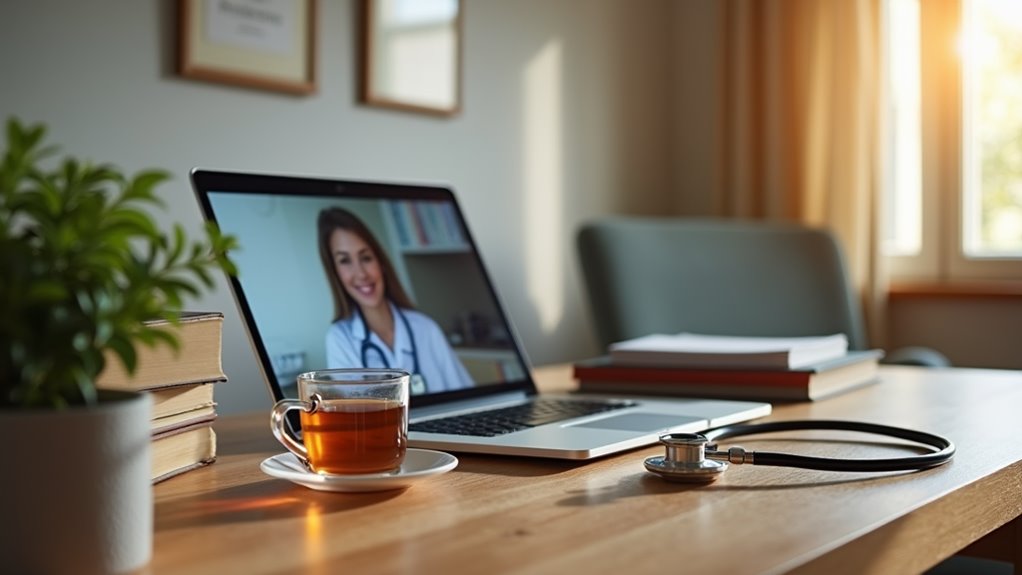
If you’re a nurse looking to shift to remote work, you’ll find a variety of online positions available. From telehealth roles to nursing informatics, these jobs offer flexibility while allowing you to make a real impact on patient care. Imagine helping patients from the comfort of your home. Curious about which roles might suit your skills and lifestyle? Let’s explore the top online nursing jobs you can consider.
Key Takeaways
- Telehealth Nurses provide remote patient care through video calls, managing chronic conditions and triaging symptoms from home.
- Virtual Nurse Practitioners assess, diagnose, and prescribe treatments via telehealth platforms, offering significant patient impact with flexible schedules.
- Nurse Educators design curricula, mentor students, and evaluate performance in various academic and clinical settings, contributing to nursing education.
- Case Managers coordinate patient services, develop care plans, and advocate for patient well-being while enjoying flexible hours and remote work options.
- Nursing Informatics Specialists analyze data and implement electronic health record systems, improving patient care through technology from a remote environment.
Telehealth Nurse
As telehealth becomes increasingly popular, you might find that working as a telehealth nurse offers a flexible and rewarding career option. In this role, you’ll provide patient care remotely, utilizing technology to assess, diagnose, and educate patients.
You’ll connect with individuals via video calls, phone consultations, or messaging, making healthcare more accessible. Your responsibilities may include managing chronic conditions, triaging symptoms, and guiding patients through treatments.
Plus, you’ll have the chance to work from home, allowing you to balance your personal life with your professional duties. With the ongoing demand for telehealth services, your skills as a nurse will be invaluable.
Embracing this opportunity can lead to career growth while making a meaningful impact on patients’ lives.
Nurse Educator
As a nurse educator, you play an essential role in shaping the next generation of nurses.
You’ll need specific qualifications and skills to effectively teach and mentor, and the demand for educators in this field is growing.
Let’s explore what responsibilities come with this position and the opportunities available for you.
Responsibilities of Nurse Educators
While shaping the next generation of nurses, nurse educators take on a variety of responsibilities that are vital to both student success and the healthcare field.
You’ll find yourself engaging in numerous tasks that foster learning and professional growth. Here are some key responsibilities you’ll likely embrace:
- Designing and delivering curriculum that meets educational standards
- Evaluating student performance through exams, projects, and clinical evaluations
- Mentoring students to develop critical thinking and clinical skills
- Staying current with healthcare advancements to provide relevant instruction
These roles not only enhance your students’ knowledge but also contribute to a higher standard of care in nursing practice.
Required Qualifications and Skills
To become an effective nurse educator, you need a blend of advanced qualifications and essential skills that enable you to teach and inspire future nurses.
First, you’ll typically require a master’s degree in nursing, although a Doctor of Nursing Practice (DNP) or PhD can enhance your prospects. You’ll also need a valid nursing license and experience in clinical practice.
Strong communication skills are critical, as you’ll explain complex concepts clearly. Additionally, you should possess organizational skills to manage coursework and student assessments effectively.
Empathy and adaptability are key, allowing you to connect with diverse learners. Familiarity with online teaching tools and technology is essential, ensuring you can engage students in a virtual environment.
Job Opportunities and Demand
With the growing demand for healthcare professionals, job opportunities for nurse educators are on the rise.
As healthcare systems expand, the need for skilled educators to train the next generation of nurses is greater than ever.
If you’re considering a role as a nurse educator, here are some key points to keep in mind:
- Many institutions offer flexible online teaching positions.
- You can work with diverse student populations across various programs.
- There’s a rising demand for continuing education and specialized training.
- Opportunities exist in both academic settings and clinical environments.
Case Manager
A case manager plays an essential role in the healthcare system, ensuring patients receive the right care at the right time. In this position, you’ll coordinate services, monitor patient progress, and collaborate with healthcare teams to develop effective care plans.
You’ll assess patients’ needs and connect them with resources, advocating for their well-being. As a case manager, you’ll work closely with insurance providers and understand policies to facilitate coverage for necessary treatments.
Strong communication skills are vital, as you’ll guide patients and their families through complex healthcare systems. This role often allows for flexible hours and remote work options, making it a great choice for nurses looking to balance professional and personal commitments.
Clinical Research Coordinator
As a Clinical Research Coordinator, you’ll oversee clinical trials and guarantee they run smoothly.
Your role requires a mix of organizational skills and a strong understanding of medical protocols.
Let’s explore the responsibilities and qualifications needed to excel in this position.
Role Responsibilities Overview
Although many may think of nursing as purely patient care, the role of a Clinical Research Coordinator (CRC) is equally essential in advancing medical science.
As a CRC, you’ll oversee clinical trials, ensuring they run smoothly and ethically. Your responsibilities include:
- Coordinating with researchers, sponsors, and regulatory bodies
- Recruiting and screening participants for studies
- Collecting and managing data throughout the trial
- Ensuring compliance with all regulations and protocols
Required Skills and Qualifications
To succeed as a Clinical Research Coordinator, you need a blend of technical knowledge and interpersonal skills.
First, a solid understanding of clinical trials and regulatory requirements is essential. You’ll also need proficiency in data management software, as accurate data collection and analysis are imperative.
Strong communication skills are key, enabling you to collaborate effectively with research teams, participants, and sponsors. Additionally, you should possess excellent organizational abilities to manage multiple projects simultaneously.
A degree in nursing or a related field is often required, along with certification in clinical research. Experience in a clinical setting can greatly enhance your qualifications, giving you the edge needed to excel in this essential role within the healthcare industry.
Health Coach
If you’re passionate about helping others achieve their health goals, becoming a health coach can be a rewarding online nursing job from home. You’ll guide clients in making lifestyle changes and developing healthier habits. Your role involves evaluating their needs, creating personalized plans, and providing ongoing support.
Here are some key aspects of being a health coach:
- Evaluating clients’ overall health and wellness
- Designing customized nutrition and fitness plans
- Offering motivation and accountability
- Educating clients on health-related topics
With flexible hours and the ability to work one-on-one with clients, you can make a significant impact on their lives while enjoying the comfort of your own home.
This role combines your nursing expertise with a focus on holistic health.
Remote Triage Nurse
As a remote triage nurse, you play an essential role in evaluating patients’ needs from the comfort of your home.
You’ll assess symptoms, provide guidance, and determine the urgency of care required. Using your nursing expertise, you’ll communicate effectively with patients over the phone or through secure messaging, ensuring they understand their health concerns.
Assessing symptoms and providing guidance, you’ll communicate with patients to ensure they understand their health concerns.
You’ll also document your assessments accurately and collaborate with physicians to create care plans. Your ability to remain calm under pressure and think critically is crucial, as you may need to make quick decisions about patient care.
This role not only allows you to utilize your nursing skills but also offers the flexibility to maintain a work-life balance while making a significant impact on patients’ lives.
Medical Writer
As a medical writer, you’ll be responsible for creating clear and concise content that communicates complex medical information.
You’ll need a strong background in nursing or healthcare, along with excellent writing skills.
With the right qualifications, you can explore various opportunities and potentially earn a competitive salary in this growing field.
Job Responsibilities Overview
While many may think of nursing as a hands-on profession, medical writers play an essential role in the healthcare field by translating complex medical information into clear, accessible content.
Your responsibilities as a medical writer will vary, but you’ll find yourself engaged in vital tasks that support healthcare professionals and patients alike.
- Researching medical topics to guarantee accuracy
- Writing and editing documents like reports, articles, and manuals
- Collaborating with healthcare experts to gather insights
- Adhering to regulatory guidelines and maintaining compliance
Required Qualifications and Skills
To succeed as a medical writer, you need a blend of specialized knowledge and strong communication skills. A bachelor’s degree in a relevant field, such as nursing or life sciences, is essential. Many employers prefer candidates with a master’s degree or additional certifications in medical writing.
You’ll also need a solid understanding of medical terminology and clinical practices. Good writing skills are vital, so make sure you can convey complex information clearly and accurately. Familiarity with research methodologies and the ability to interpret scientific literature is important, too.
Attention to detail is key, as is the ability to work independently and meet deadlines. Building a portfolio showcasing your writing samples can help you stand out in this competitive field.
Potential Earnings and Opportunities
With the right qualifications and skills in medical writing, you can tap into a rewarding career with competitive earnings.
Medical writers typically earn between $60,000 and $100,000 annually, depending on experience and specialization. Plus, the demand for skilled medical writers continues to grow, opening up various opportunities.
Here’s what you can expect:
- Work with pharmaceutical companies, creating regulatory documents.
- Develop patient education materials for healthcare providers.
- Write articles for medical journals or healthcare websites.
- Collaborate with researchers to publish findings.
Nursing Informatics Specialist
As healthcare continues to evolve, the role of a Nursing Informatics Specialist has become increasingly essential in bridging the gap between clinical practice and technology.
If you’re passionate about both nursing and IT, this position could be a perfect fit for you. You’ll analyze data, implement electronic health record systems, and improve patient care through technology.
Working from home, you’ll collaborate with healthcare teams to guarantee data accuracy and usability in clinical settings. Your ability to communicate effectively with both nurses and IT professionals will be key.
Plus, as you leverage data analytics, you’ll contribute to better healthcare outcomes. With the increasing reliance on technology, the demand for Nursing Informatics Specialists is only expected to grow, making it a smart career choice.
Quality Improvement Nurse
The role of a Quality Improvement Nurse focuses on enhancing patient care and outcomes within healthcare settings. You’ll analyze data, identify trends, and implement strategies to boost care quality.
This position allows you to work remotely while making a significant impact on healthcare systems.
- Collaborate with healthcare teams to establish best practices.
- Monitor patient outcomes and track quality metrics.
- Educate staff on quality improvement initiatives.
- Utilize data analytics to drive informed decision-making.
Virtual Nurse Practitioner
While you navigate the evolving landscape of healthcare, becoming a Virtual Nurse Practitioner offers a unique opportunity to provide essential patient care from the comfort of your home. You’ll assess patients, diagnose conditions, and prescribe treatments using telehealth technology. This role allows for flexibility in your schedule while making a significant impact on patient lives.
Here’s a snapshot of what the job entails:
| Task | Frequency | Tools Used |
|---|---|---|
| Patient Consultations | Daily | Telehealth Platforms |
| Follow-up Appointments | Weekly | Video Conferencing Tools |
| Medication Management | Ongoing | Electronic Health Records |
| Patient Education | Regularly | Digital Resources |
| Care Coordination | As Needed | Communication Apps |
Embrace this rewarding path in nursing!
Frequently Asked Questions
What Qualifications Do I Need for Online Nursing Jobs?
To qualify for online nursing jobs, you’ll typically need a nursing degree, valid license, and relevant certifications. Experience in your specialty area can enhance your chances, so stay updated with continuing education and training.
Are Online Nursing Jobs Flexible With Scheduling?
Yes, online nursing jobs often offer flexible scheduling. You can choose shifts that fit your lifestyle, allowing you to balance work with personal commitments. This flexibility makes online nursing an appealing option for many professionals.
Can I Work Part-Time in Remote Nursing Roles?
Yes, you can definitely work part-time in remote nursing roles. Many employers offer flexible hours, allowing you to balance your personal commitments while still gaining valuable experience and contributing to patient care from home.
How Do I Find Legitimate Online Nursing Positions?
To find legitimate online nursing positions, start by researching reputable job boards, networking with professionals, and checking company reviews. You can also join nursing associations that often post remote job opportunities for members.
What Technology Do I Need for Online Nursing Work?
To succeed in online nursing work, you’ll need a reliable computer, high-speed internet, a webcam, and secure software for communication and patient management. Familiarizing yourself with telehealth tools is essential for effective patient care.