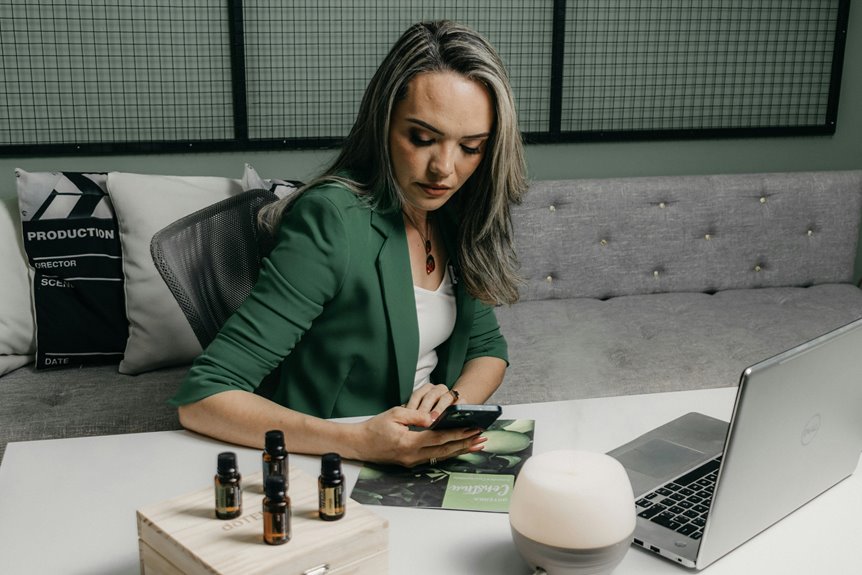
Using aromatherapy with plants in your office can transform your workspace into a more enjoyable place. Incorporating essential oils like lavender or peppermint boosts mood, reduces stress, and improves focus. You can use oil diffusers or personal inhalers to enjoy their benefits. Keep in mind to choose high-quality oils and consider allergies among coworkers. With the right approach, you can create a calming environment that fosters productivity and creativity. There's so much more to explore on this topic!
Key Takeaways
- Incorporate plants like lavender and peppermint to enhance workplace mood and productivity through their aromatic properties.
- Use essential oil diffusers or personal inhalers for easy access to plant-based aromas throughout the day.
- Choose plants based on specific goals, such as rosemary for focus or lavender for relaxation.
- Ensure proper ventilation and be mindful of coworkers' sensitivities to avoid overwhelming scents.
- Experiment with plant blends to discover the most effective combinations for your office environment.
Benefits of Aromatherapy in the Workplace
When you introduce aromatherapy in your office, you'll likely notice a boost in both mood and productivity. The soothing scents can create a more pleasant atmosphere, helping to reduce stress and anxiety.
With improved air quality, employees may feel more energized and focused, enhancing their overall performance. Additionally, certain essential oils can stimulate creativity, allowing for fresh ideas and innovative solutions.
By incorporating aromatherapy, you're not just enhancing the physical space; you're also fostering a supportive environment that promotes well-being. This simple addition can lead to stronger collaboration and teamwork as everyone feels more relaxed and connected.
Ultimately, integrating aromatherapy is a straightforward way to enhance employee satisfaction and cultivate a more positive workplace culture.
Choosing the Right Essential Oils
Incorporating aromatherapy in your office is only the first step; selecting the right essential oils can significantly enhance the benefits.
Start by identifying your goals—do you want to boost focus, reduce stress, or promote relaxation? For mental clarity, oils like peppermint and rosemary can be energizing. If you're looking to create a calming atmosphere, consider lavender or chamomile.
It's crucial to ensure the oils you choose are high-quality and pure. Look for brands that provide transparency about their sourcing and distillation processes.
You might also want to experiment with blends to find what resonates best with you. Remember, the right essential oils can transform your workspace, creating a more productive and enjoyable environment.
Popular Plants for Aromatherapy
Aromatherapy isn't just about essential oils; popular plants also play a vital role in enhancing your workspace. Incorporating aromatic plants can boost your mood, reduce stress, and improve focus.
Lavender is a top choice, known for its calming scent that promotes relaxation. If you need energy, consider peppermint; its invigorating aroma can help you stay alert. For a touch of freshness, try rosemary, which can enhance memory and concentration.
Other great options include eucalyptus, known for its refreshing scent, and lemon balm, which brings a citrusy uplift. By adding these plants to your office, you'll not only beautify your space but also create an inviting atmosphere that supports your well-being and productivity.
How to Incorporate Aromatherapy in Your Office
To bring aromatherapy into your office, start by choosing essential oils that suit your needs, like lavender for relaxation or citrus for energy.
Next, you'll want to explore different diffusion methods, such as oil diffusers or simply using a cotton ball.
Essential Oils Selection
When you want to enhance your office environment with aromatherapy, selecting the right essential oils is crucial.
The oils you choose can significantly impact your mood and productivity. Here are three essential oils to consider:
- Lavender: Known for its calming effects, lavender can reduce stress and promote relaxation, making it ideal for a hectic workday.
- Peppermint: This invigorating scent boosts energy and mental clarity, helping you stay focused during long hours at your desk.
- Lemon: Fresh and uplifting, lemon essential oil can enhance your mood and create a positive atmosphere, perfect for collaborative spaces.
Diffusion Methods Explained
Creating a calming atmosphere in your office can be as simple as using the right diffusion methods for essential oils. One popular method is an essential oil diffuser, which disperses tiny oil particles into the air.
You can also use a nebulizer, which breaks down oils into a fine mist, providing a more intense aroma. If you're looking for something low-tech, try placing a few drops of essential oil on cotton balls and setting them around your workspace.
Another option is to use a personal inhaler, allowing you to enjoy scents on the go. Whatever method you choose, remember to consider the oil's properties and your office environment to create a soothing and productive atmosphere.
Safety Considerations for Using Essential Oils
When using essential oils in your office, it's crucial to keep safety in mind.
You'll want to follow proper dilution guidelines, be aware of any allergies or sensitivities among your coworkers, and ensure adequate ventilation.
These steps can help you create a safe and enjoyable aromatic environment.
Essential Oil Dilution Guidelines
Understanding essential oil dilution guidelines is crucial for ensuring safety in the workplace. Proper dilution helps prevent skin irritation and other adverse effects.
Here are three key points to remember:
- Dilution Ratios: For general use, a 2-5% dilution is safe for adults. This means mixing 12-30 drops of essential oil with 1 ounce of carrier oil.
- Sensitive Populations: For children or pregnant individuals, a lower dilution of 1% or less is recommended, using 6 drops per ounce of carrier oil.
- Application Method: Always test a small area of skin before applying diluted oils more broadly, especially for first-time users.
Allergies and Sensitivities Awareness
While essential oils can enhance your office environment, it's important to be aware of potential allergies and sensitivities. Before introducing any essential oil, consider asking your colleagues if they've known allergies or sensitivities.
Some people might react negatively to certain scents, leading to headaches, respiratory issues, or skin irritations. Start with a small amount in a well-ventilated area, and pay attention to how everyone responds. If someone mentions discomfort, discontinue use immediately.
Opt for hypoallergenic oils, and always dilute them properly to minimize reactions. It's also wise to keep essential oils out of reach of sensitive individuals, including pregnant women and those with asthma.
Prioritizing safety ensures a harmonious workspace for everyone.
Proper Ventilation Practices
Effective ventilation is crucial for safely using essential oils in your office. Proper airflow helps disperse the oils, reducing the risk of overwhelming scents or adverse reactions.
Here are three practices to ensure your workspace stays fresh and safe:
- Open Windows Regularly: Allow fresh air to circulate by opening windows when weather permits. This helps dilute concentrated aromas.
- Use Air Purifiers: Consider utilizing air purifiers with HEPA filters to trap any excess particles and maintain air quality.
- Limit Diffuser Time: Avoid running diffusers continuously. Instead, use them for short bursts to prevent scent overload and allow the air to refresh.
Creating a Calming Workspace Environment
A calming workspace can significantly enhance your productivity and overall well-being.
Start by incorporating plants like lavender or jasmine, known for their soothing scents. Place these near your desk to help reduce stress and promote focus.
Soft lighting is essential, too; consider using warm bulbs or desk lamps to create a cozy atmosphere.
Keep your space organized and clutter-free, as a tidy environment can clear your mind.
Use calming colors like blues and greens in your decor to evoke tranquility.
Lastly, don't underestimate the power of essential oils. A diffuser with calming blends can make your workspace feel more serene.
With these simple adjustments, you'll create a more peaceful and productive work environment.
Frequently Asked Questions
Can I Mix Different Essential Oils Together?
Yes, you can mix different essential oils together! Just make sure to choose complementary scents and test small amounts first. Experimenting can lead to delightful blends that enhance your mood and create a pleasant atmosphere.
How Often Should I Replace My Essential Oil Diffuser?
You should replace your essential oil diffuser every six to twelve months, depending on usage. Regular cleaning helps maintain effectiveness, but if you notice a decline in scent, it's time for a replacement.
Are There Any Essential Oils That Can Enhance Creativity?
Yes, essential oils like rosemary, lemon, and peppermint can enhance creativity. They stimulate your brain, boost focus, and energize your thinking. Just a few drops in a diffuser can transform your creative environment beautifully.
Can Aromatherapy Help Reduce Workplace Stress?
Yes, aromatherapy can help reduce workplace stress. When you inhale calming essential oils like lavender or chamomile, you'll likely feel more relaxed and focused, improving your overall productivity and creating a more enjoyable work environment.
What Are the Best Essential Oils for Focus and Concentration?
For enhanced focus and concentration, try essential oils like peppermint, rosemary, or lemon. They energize your mind, promote clarity, and help maintain mental alertness. Just a few drops can make a significant difference in your productivity.