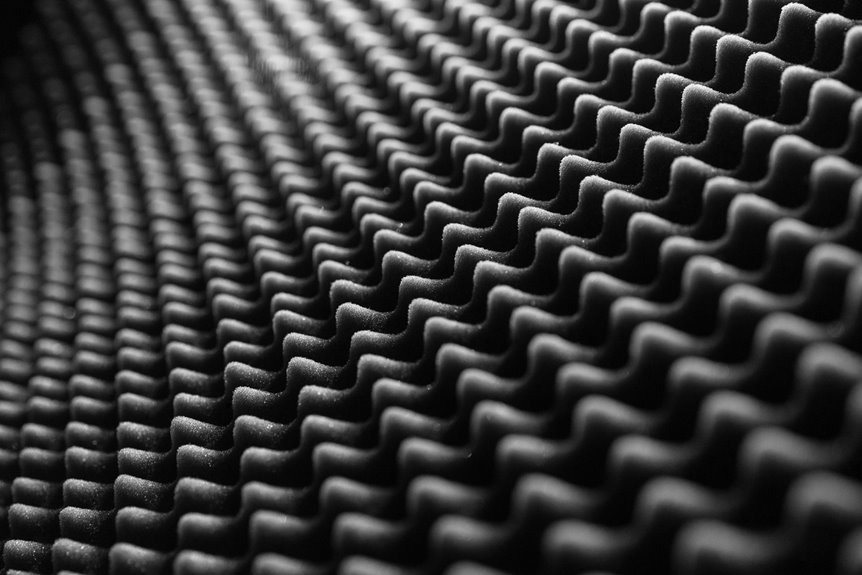
There are several misconceptions about sound absorption that could lead you astray. Many people think thicker materials always absorb more sound, but density matters too. Soundproofing is confused with sound absorption, although they serve different purposes. You might believe carpets and curtains make a room soundproof, but that’s not true. Not all acoustic panels work the same way, and furniture can actually impact sound. To understand effective absorption strategies, there’s much more to explore.
Key Takeaways
- Sound absorption and soundproofing are often confused; sound absorption reduces reflections, while soundproofing blocks sound from entering or leaving a space.
- Thicker materials are not always more effective for sound absorption; material density and type significantly influence performance.
- Not all acoustic panels absorb sound equally; their composition and placement are crucial for maximizing sound absorption effectiveness.
- Soft, porous materials are generally better at absorbing sound than dense materials, which may block it without absorbing effectively.
- High-frequency sounds are perceived as easier to absorb, but low frequencies can penetrate deeper and require specific strategies for effective management.
Thicker Materials Always Absorb More Sound
While it might seem logical that thicker materials absorb more sound, this isn’t always the case. The thickness of a material doesn’t guarantee better sound absorption; it depends on the material’s density, type, and structure.
For instance, a dense concrete wall might block sound effectively, but it won’t absorb it well compared to softer, porous materials like foam or fiberglass. These lighter materials can trap sound waves and reduce echoes, even if they’re thinner.
Soundproofing and Sound Absorption Are the Same
You might think soundproofing and sound absorption are the same, but they actually serve different purposes.
Understanding their definitions can help you choose the right solution for your needs.
Let’s explore how each works and why it matters.
Definitions Matter
Understanding the difference between soundproofing and sound absorption is essential, as many people mistakenly believe they’re interchangeable.
Soundproofing focuses on blocking sound from entering or leaving a space. It involves using dense materials to create barriers that prevent sound waves from passing through.
On the other hand, sound absorption deals with reducing sound reflections within a room. It involves using soft, porous materials that soak up sound waves, preventing echoes and improving acoustics.
By recognizing these distinct definitions, you can make informed decisions about your space. Whether you want to keep noise out or enhance sound quality, knowing what you need is vital for achieving your goals effectively.
Don’t let misconceptions lead you to the wrong solutions!
Different Purposes Explained
Many people assume soundproofing and sound absorption serve the same purpose, but this misconception can lead to ineffective solutions.
Soundproofing blocks sound from entering or leaving a space, while sound absorption dampens echo and minimizes noise within a room. Understanding the difference is essential for achieving your desired acoustic environment.
- Soundproofing focuses on creating barriers, like thicker walls or specialized insulation.
- Sound Absorption uses materials like foam or carpets to reduce reverberation.
Choosing the right method depends on your specific needs, whether it’s a recording studio or a quiet office.
Carpets and Curtains Make Rooms Soundproof
While carpets and curtains can certainly absorb sound, they don’t make rooms completely soundproof. You might think adding these elements will block all noise, but that’s a misconception.
While they help reduce echoes and soften sounds, they can’t eliminate external noise entirely. Sound travels through walls, ceilings, and floors, so even with plush carpets and thick curtains, you’ll still hear footsteps, traffic, or conversations from nearby rooms.
Instead of relying solely on these materials, consider a combination of solutions for better sound control. Acoustic panels, door seals, and double-glazed windows can greatly enhance your room’s soundproofing.
All Acoustic Panels Are Equally Effective
Not all acoustic panels are created equal, and their effectiveness varies based on several factors.
You need to evaluate material composition, thickness, and placement to truly optimize sound absorption in your space.
Understanding these elements can help you choose the right panels for your needs.
Material Composition Matters
When choosing acoustic panels, it’s essential to understand that not all materials provide the same level of sound absorption. The composition of these panels plays a key role in their effectiveness.
Different materials interact with sound waves uniquely, impacting how well they reduce noise.
- Fiberglass: Often used for its high absorption capabilities and lightweight nature.
- Mineral Wool: Known for its density, offering excellent sound control, especially in lower frequencies.
- Foam: While it’s lightweight and easy to install, its effectiveness can vary considerably based on density and shape.
Thickness Influences Performance
Although many people assume that all acoustic panels offer the same level of sound absorption, the thickness of these panels greatly influences their performance.
Thicker panels generally absorb sound waves more effectively than thinner ones. This is because thicker materials can trap more sound energy, reducing noise levels in your space.
If you’re looking to minimize echoes or background noise, opting for thicker panels can make a noticeable difference. Conversely, using thinner panels may lead you to underestimate their effectiveness, leading to unsatisfactory results.
Placement Affects Effectiveness
While many people believe that all acoustic panels deliver the same results regardless of where they’re placed, the reality is that effective sound absorption hinges considerably on their positioning.
You can’t just throw panels on any wall and expect ideal results. To make the most of your acoustic treatment, consider the following factors:
- Reflection Points: Place panels at first reflection points to minimize sound bouncing off walls.
- Room Usage: Different rooms require different placements; a recording studio needs more focused treatment than a casual living space.
- Height and Coverage: Verify panels are installed at ear level and cover enough surface area to absorb significant sound energy.
Sound Absorption Only Matters in Recording Studios
Many people believe sound absorption is only essential for recording studios, but that misconception overlooks its importance in various environments.
You mightn’t realize that sound absorption plays a vital role in schools, offices, and even homes. Excessive echo and noise can hinder communication, disrupt focus, and create uncomfortable atmospheres.
In classrooms, sound absorption helps students hear lessons clearly, while in offices, it promotes productivity by minimizing distractions.
Even in your living space, soft furnishings like curtains and rugs can enhance comfort and reduce noise levels.
By recognizing the value of sound absorption across different settings, you can improve both the acoustics and overall experience in your environment.
Don’t limit its benefits to just studios; it’s essential everywhere!
Furniture Has No Impact on Sound Absorption
When you think about sound absorption, it’s easy to overlook how furniture can considerably influence acoustic quality in a room. Many people assume that only specialized materials matter, but your everyday furnishings play a key role too.
Soft materials like fabric sofas or curtains can absorb sound, reducing echoes and making your space feel cozier. Here are a few ways furniture contributes to sound absorption:
- Upholstered furniture: Sofas and chairs help absorb sound waves, lowering noise levels.
- Bookshelves: Filled with books, they act as barriers to sound, breaking up reflections.
- Rugs and carpets: They soften hard floors, minimizing sound bounce and improving the overall acoustics.
You Can Completely Soundproof a Room
Although you might dream of a completely soundproof room, achieving total sound isolation is nearly impossible. Every building material allows some sound to pass through, whether it’s walls, windows, or doors.
Even if you invest in heavy soundproofing materials, you’ll still encounter sound leaks from gaps and vibrations.
Instead of aiming for complete soundproofing, focus on sound absorption, which reduces echoes and minimizes noise. You can use acoustic panels, carpets, and curtains to notably improve the sound quality in your space.
Higher Frequency Sounds Are Always Easier to Absorb
Sound absorption isn’t just about materials; it’s also about the frequencies of the sounds you’re dealing with.
While higher frequency sounds tend to be more easily absorbed, it’s a misconception that they’re always easier to manage. The reality is more nuanced:
- Material Type: Some materials absorb high frequencies better than others, while certain low frequencies can penetrate deeper.
- Room Design: The shape and size of your space can influence how sound waves interact, affecting absorption effectiveness.
- Sound Wave Behavior: Higher frequencies may reflect more easily off surfaces, complicating their absorption in certain environments.
Understanding these factors can help you create a more effective sound absorption strategy tailored to your specific needs.
Frequently Asked Questions
Can Plants Improve Sound Absorption in a Room?
Yes, plants can improve sound absorption in a room. Their leaves and branches help reduce noise levels by breaking up sound waves. Adding greenery not only enhances aesthetics but also creates a calmer, quieter environment.
Do Open Spaces Affect Sound Absorption Effectiveness?
In an open space, sound dances freely, creating echoes that can diminish absorption effectiveness. You’ll find that larger areas often amplify noise rather than absorb it, leading to a cacophony instead of a calming ambiance.
How Does Humidity Influence Sound Absorption Properties?
Humidity affects sound absorption by altering air density. When humidity increases, sound waves travel more efficiently, reducing absorption. You’ll notice that sounds can seem clearer and more pronounced in humid conditions compared to dry ones.
Are There Specific Colors That Enhance Sound Absorption?
Certain colors don’t directly enhance sound absorption; instead, it’s the materials and textures that matter. You’ll find that soft, porous materials—regardless of color—tend to absorb sound better, creating a quieter environment for you.
Does Room Shape Impact Sound Absorption Efficiency?
Yes, room shape does impact sound absorption efficiency. When you arrange furniture and select materials, you can enhance or hinder sound absorption. Experimenting with different layouts helps you achieve the best acoustic environment for your needs.