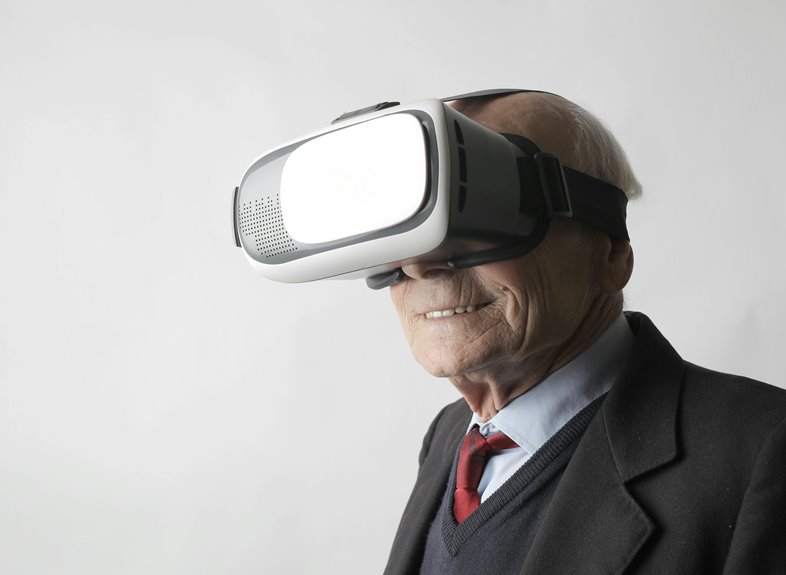
When it comes to immersive technologies, VR, AR, and MR each offer unique experiences that can enhance how you interact with the world around you. You might think they’re similar, but their differences are significant. Understanding these distinctions can open up new possibilities for entertainment, education, and even professional applications. Curious about how these technologies can impact your everyday life and work? Let’s break it down further.
Key Takeaways
- VR (Virtual Reality) immerses users in a fully digital environment, isolating them from the real world.
- AR (Augmented Reality) overlays digital content onto the real world, enhancing real-life experiences without total immersion.
- MR (Mixed Reality) combines physical and digital worlds, allowing interaction with both real and virtual objects in real-time.
- VR requires specialized headsets, while AR typically uses smartphones/tablets; MR may need advanced devices for optimal experiences.
- Applications vary: VR is popular in gaming and training, AR enhances navigation and retail, while MR is utilized in industries like healthcare and architecture.
Understanding Virtual Reality (VR)
Virtual Reality (VR) immerses you in a fully digital environment, creating a sense of presence that feels incredibly real. When you put on a VR headset, you’re transported to another world, whether it’s exploring distant planets or traversing a virtual city.
Your movements are tracked, allowing you to interact with the environment as if you’re truly there. This technology uses visuals, sounds, and sometimes haptic feedback to enhance your experience, making it more engaging.
You can play games, attend virtual events, or even engage in training simulations, all within this enthralling space. As you explore VR, you’ll discover a range of applications that can entertain, educate, and inspire, pushing the boundaries of how you perceive reality.
Exploring Augmented Reality (AR)
Augmented Reality (AR) is changing how you interact with the world around you.
From enhancing your shopping experience to improving education, its applications are everywhere.
Let’s explore the key features of AR, how it fits into your daily life, and what future trends you can expect.
Key Features of AR
One of the most exciting aspects of AR is its ability to seamlessly blend digital information with the real world. This technology enhances your environment and enriches your experiences. Here are some key features of AR that you should know:
| Feature | Description |
|---|---|
| Real-time Interaction | You can interact with digital objects instantly. |
| Context Awareness | AR adapts to your surroundings for relevance. |
| Enhanced Visualization | It overlays graphics, improving your perception. |
| Multi-Device Support | Works across smartphones, tablets, and wearables. |
| User Engagement | Encourages active participation and immersion. |
With these features, AR transforms how you perceive reality, making everyday experiences more engaging and informative.
Applications in Daily Life
As you navigate your daily life, AR enhances various activities, making them more interactive and enjoyable. You mightn’t realize how often you encounter AR, but it’s becoming an integral part of your experiences.
Here are some applications you can explore:
- Navigation: Use AR apps to overlay directions onto your real-world surroundings, helping you find your way effortlessly.
- Shopping: Try on clothes or visualize furniture in your home before purchasing, ensuring you make the right choice.
- Education: Engage with interactive lessons that bring subjects to life, making learning more effective and fun.
- Gaming: Immerse yourself in games that blend your environment with virtual elements, creating an unforgettable experience.
With AR, your everyday activities transform into something extraordinary!
Future Trends in AR
How will augmented reality shape our future? You’ll see AR transforming various sectors, from retail to education, enhancing how you interact with the world. Imagine shopping with virtual try-ons or learning through immersive experiences.
| Area | Future Trends |
|---|---|
| Retail | Virtual fitting rooms and personalized ads |
| Education | Interactive textbooks and hands-on simulations |
| Healthcare | Remote surgeries with AR overlays |
As AR technology advances, expect devices to become more user-friendly and affordable. You’ll likely find AR integrated into everyday apps, making tasks easier and more engaging. This evolution in AR will bridge the gap between digital and physical realities, enriching your experience in countless ways.
Defining Mixed Reality (MR)
Mixed Reality (MR) blends the physical and digital worlds, allowing you to interact with both simultaneously.
This technology has various applications, from gaming to training simulations, enhancing your experience by merging real and virtual elements.
Let’s explore how MR works and where it’s making an impact.
MR Technology Overview
While many people are familiar with virtual reality (VR) and augmented reality (AR), mixed reality (MR) combines elements of both to create an immersive experience where digital and physical worlds interact seamlessly.
MR technology enables you to engage with digital content in real-time, enhancing your environment with interactive elements. Here are four key aspects of MR technology:
- Spatial Mapping: MR devices use sensors to understand and map your surroundings, allowing digital objects to anchor realistically in physical spaces.
- Real-Time Interaction: You can manipulate and interact with digital objects as if they were part of the real world.
- User Engagement: MR encourages active participation, making experiences more engaging and personalized.
- Enhanced Collaboration: MR facilitates teamwork by allowing multiple users to interact with the same digital content in a shared space.
Applications of Mixed Reality
As technology continues to evolve, the applications of mixed reality (MR) are becoming increasingly diverse and impactful.
You’ll find MR transforming industries like healthcare, where surgeons can visualize complex anatomy during operations. In education, MR provides immersive learning environments, allowing students to interact with 3D models of historical artifacts or biological systems.
The retail sector also benefits; you can virtually try on clothes or visualize furniture in your home before purchasing. Moreover, MR enhances remote collaboration, enabling teams to share a virtual workspace regardless of location.
These applications not only improve efficiency and engagement but also revolutionize how we interact with the world around us, making MR an essential tool for the future.
Key Differences Between VR, AR, and MR
Virtual Reality (VR), Augmented Reality (AR), and Mixed Reality (MR) are distinct technologies that transform our interaction with digital content. Understanding their key differences can help you choose the right experience for your needs.
- Immersion: VR fully immerses you in a digital environment, while AR overlays digital elements onto your real world. MR combines both, allowing interaction with virtual and real objects simultaneously.
- Hardware: VR typically requires headsets, AR often uses smartphones or tablets, and MR might need specialized devices like Microsoft’s HoloLens.
- User Experience: VR isolates you from your surroundings, AR enhances your environment, and MR creates a blend of both.
- Applications: Each technology serves different purposes, from gaming and training in VR to navigation and education in AR and MR.
Applications of VR in Various Industries
In today’s fast-paced world, industries are increasingly leveraging VR to enhance training, improve design processes, and elevate customer experiences.
In healthcare, you can practice surgical procedures in a safe, simulated environment, reducing risks before touching a real patient.
The automotive industry uses VR for virtual prototyping, allowing engineers to test designs and make adjustments without the costs of physical models.
In real estate, VR lets potential buyers tour properties remotely, providing immersive experiences that save time and resources.
Retailers are also adopting VR to create engaging shopping environments, helping customers visualize products in their own spaces.
Applications of AR in Everyday Life
While VR offers immersive experiences primarily in controlled environments, augmented reality (AR) brings digital elements into your everyday surroundings.
AR enhances your everyday life by integrating digital elements into your real-world surroundings, unlike VR’s controlled immersive experiences.
You mightn’t realize it, but AR is already enhancing your daily life in various ways. Here are some applications you can enjoy:
- Navigation: Use AR in apps to overlay directions on your real-world view, making it easier to find your way.
- Shopping: Try on clothes virtually or visualize how furniture looks in your home before buying.
- Education: Engage with interactive lessons, allowing complex concepts to come to life in your environment.
- Gaming: Enjoy games that blend real-world elements with digital characters and challenges, creating unique play experiences.
These applications show how AR seamlessly integrates technology into your life.
Applications of MR in Professional Settings
As businesses increasingly adopt mixed reality (MR) technologies, you’ll find that these tools are revolutionizing professional settings across various industries.
In healthcare, MR enhances surgical training by allowing you to visualize complex anatomy in 3D.
In manufacturing, you can overlay digital schematics onto physical machinery, streamlining assembly processes.
Retailers are using MR to create immersive shopping experiences, letting customers visualize products in their own spaces before purchasing.
In architecture and construction, MR enables you to walk through virtual models of buildings, facilitating better design decisions.
MR also supports remote collaboration, allowing teams to interact in shared virtual spaces, reducing travel costs and improving communication.
With these applications, MR is shaping how you work, learn, and collaborate.
The Future of XR Technologies
The future of XR technologies promises to reshape our everyday experiences, offering unprecedented opportunities for innovation and interaction.
As these technologies evolve, you’ll find yourself immersed in richer, more engaging environments that enhance both work and leisure.
Here are four key areas where XR is set to make a significant impact:
- Education: Interactive learning experiences that deepen understanding and retention.
- Healthcare: Enhanced patient care through simulations and remote assistance.
- Entertainment: New forms of storytelling that captivate audiences beyond traditional media.
- Retail: Immersive shopping experiences that allow you to visualize products in your space.
Embracing XR technologies not only transforms how you engage with the world but also opens doors to innovative possibilities you never thought possible.
Frequently Asked Questions
What Devices ARe Required to Experience VR, AR, and MR?
To experience VR, you’ll need a headset like Oculus Quest or HTC Vive. For AR, smartphones or tablets work well. MR often requires specialized headsets, like Microsoft HoloLens, blending real and digital environments seamlessly.
Can VR, AR, and MR Be Used Together?
Yes, you can use VR, AR, and MR together to create immersive experiences. By blending these technologies, you enhance interactivity and realism, allowing you to engage in unique ways that wouldn’t be possible with just one.
How Do User Experiences Differ Between VR, AR, and MR?
User experiences differ greatly; in VR, you’re fully immersed in a virtual world, while AR overlays digital elements onto your real surroundings. MR combines both, allowing interactions with virtual objects that coexist in your physical space.
ARe There Health Risks Associated With Using VR, AR, and MR?
You might experience eye strain, motion sickness, or headaches when using VR, AR, and MR. It’s important to take breaks, adjust settings, and be mindful of your surroundings to minimize potential health risks during use.
What ARe the Costs of VR, AR, and MR Technologies?
The costs of VR, AR, and MR technologies vary widely. You’ll find budget options starting around a few hundred dollars, while high-end systems can exceed several thousand. It all depends on your needs and preferences.