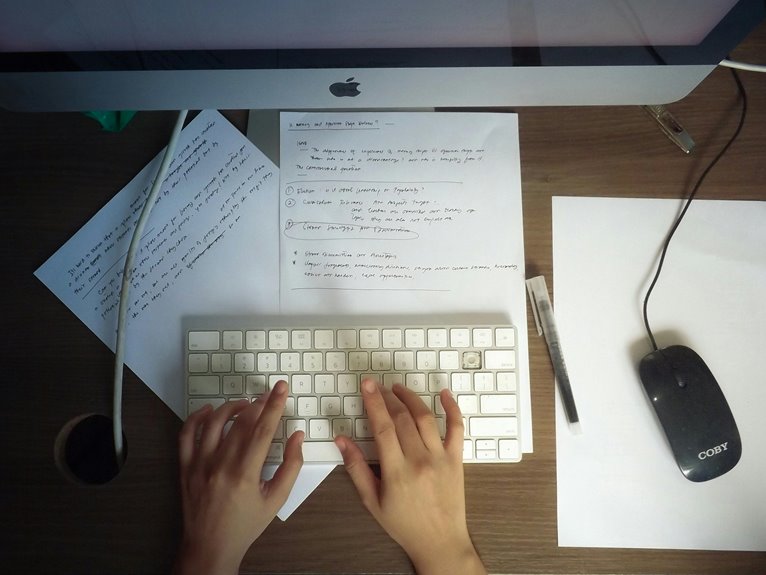
The ideal average height for a home office desk is between 28 and 30 inches. This range helps guarantee your elbows sit comfortably at a 90-degree angle while typing. If you’re shorter, a desk around 25 to 27 inches may work better, while taller individuals might prefer a height of 30 to 32 inches. Make certain your chair complements the desk height for best posture. There’s so much more to think about for your workspace setup!
Key Takeaways
- The ideal average height for a home office desk typically ranges from 28 to 30 inches.
- Shorter individuals may find a desk height of 25 to 27 inches more comfortable.
- Taller users should consider desks that are 30 to 32 inches high for optimal ergonomics.
- Adjustable desks are beneficial, allowing users to customize height based on personal preference.
- Ensuring elbows are at a 90-degree angle while typing is crucial for comfort and productivity.
Understanding Desk Height Standards
When it comes to choosing the right desk height, understanding desk height standards is essential for your comfort and productivity.
Typically, most desks range from 28 to 30 inches in height, which suits the average person. If you find yourself slouching or straining while typing, your desk might be too high or low.
Ideally, your elbows should be at a 90-degree angle when your hands rest on the keyboard. You should also keep your feet flat on the ground or on a footrest.
Factors Influencing Desk Height
Several factors influence desk height, and knowing them can help you make the best choice for your workspace.
First, consider your chair height; a desk should complement your seating to guarantee proper posture.
Consider your chair height to ensure your desk complements your seating for optimal posture and comfort.
Second, think about your computer setup; if you use multiple screens, you’ll need a desk that accommodates them comfortably.
Third, assess your workspace layout; a small room may require a more compact design, while larger spaces can handle taller desks.
Finally, factor in your personal preferences; some people prefer standing desks or adjustable options to switch between sitting and standing.
Ideal Desk Height for Different Users
Finding the right desk height can make a significant difference in your comfort and productivity.
For most users, a desk height of 28 to 30 inches works well. If you’re shorter, consider a desk that’s around 25 to 27 inches tall. This height allows your feet to rest flat on the floor while keeping your elbows at a 90-degree angle.
Taller individuals may benefit from a desk that’s 30 to 32 inches high. Remember, if you often use a chair with adjustable height, it’s essential to find the right combination to maintain proper posture.
If you’re working while standing, aim for a desk height of about 40 to 42 inches. Ultimately, the best desk height caters to your individual measurements and preferences.
Ergonomic Considerations for Comfort
Creating an ergonomic workspace is essential for your comfort and productivity. To guarantee your desk height and setup support your well-being, consider these key factors:
Establishing an ergonomic workspace is crucial for enhancing your comfort and productivity at work.
- Chair Height: Adjust your chair so your feet rest flat on the floor, with knees at a 90-degree angle.
- Monitor Position: Place your monitor at eye level, about an arm’s length away, to minimize neck strain.
- Keyboard and Mouse: Keep your keyboard and mouse close, allowing your elbows to remain at a 90-degree angle while typing.
- Wrist Support: Use a wrist rest to maintain a neutral wrist position, preventing discomfort during long work sessions.
Tips for Adjusting Your Workspace
Adjusting your workspace can markedly enhance your comfort and productivity, especially when you take the time to make small changes that suit your needs.
First, verify your desk height allows your elbows to remain at a 90-degree angle when typing. If your feet don’t touch the floor, consider a footrest.
Next, position your monitor at eye level to reduce neck strain; an adjustable stand can help.
Keep your chair supportive, providing lumbar support to your lower back.
Use proper lighting to minimize eye strain, ideally natural light.
Finally, take regular breaks to stretch and move around, preventing stiffness.
Frequently Asked Questions
Can Desk Height Affect Productivity Levels?
Yes, desk height can greatly affect your productivity levels. If your desk’s too high or low, it can lead to discomfort, making it hard for you to focus and work efficiently throughout the day.
What Materials Are Best for Desk Construction?
When choosing materials for desk construction, consider durability and aesthetics. Solid wood offers strength and warmth, while metal provides a modern touch. Laminates are cost-effective, and glass adds elegance. You’ll find the perfect fit for your style.
How Often Should I Change My Desk Height?
You should change your desk height whenever you start feeling discomfort or fatigue. Regular adjustments help maintain good posture and keep your workspace comfortable. Aim for a change every few hours for ideal productivity.
Are There Specific Desk Features for Small Spaces?
When you’re working in small spaces, look for desks with multifunctional features like foldable designs, built-in storage, or wall-mounted options. These can maximize your area while keeping your workspace organized and efficient.
Do Standing Desks Require Different Height Considerations?
Yes, standing desks do require different height considerations. You should adjust the desk so your elbows are at a 90-degree angle when typing. This guarantees comfort and promotes better posture while you work.