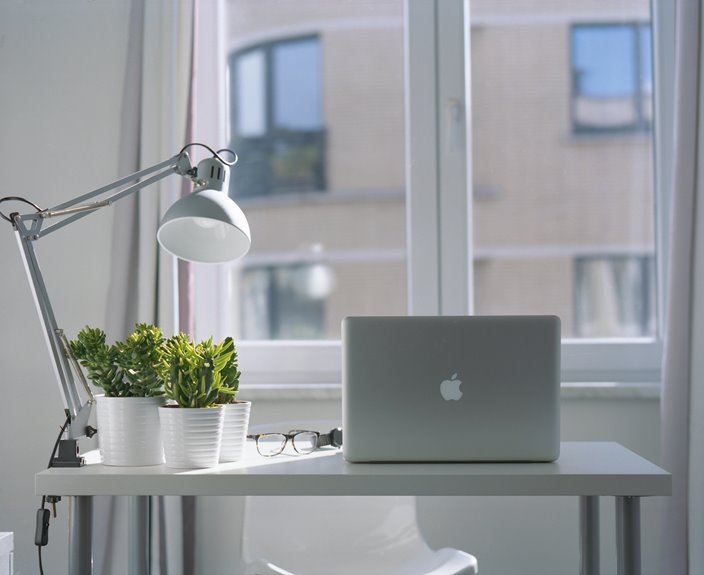
If you’re setting up a home office, steer clear of toxic plants like poinsettias and philodendrons, and those needing constant care, like orchids or fiddle leaf figs. Avoid messy options that shed leaves, like rubber plants, or fragrant varieties such as jasmine that might cause headaches. Pest-prone plants, like peace lilies, can also interfere with your productivity. Want to discover more about plants to avoid for a better workspace? There’s plenty more to learn!
Key Takeaways
- Toxic plants like poinsettias and philodendrons can pose risks to pets and children in a home office environment.
- High-maintenance plants such as orchids and fiddle leaf figs require excessive care and attention, which can distract from work.
- Plants that require excessive light, like hibiscus and bird of paradise, may struggle in low-light office spaces.
- Messy plants like rubber plants and weeping figs frequently shed leaves, creating additional cleanup tasks in your workspace.
- Pests are attracted to plants like spider plants and peace lilies, which can disrupt productivity and impact air quality.
Toxic Plants to Avoid
When you’re setting up your home office, it’s essential to contemplate the plants you bring in, especially those that could be toxic.
Some popular choices, like poinsettias and philodendrons, can pose risks to pets and even children. If you’ve got a furry friend roaming around, it’s best to steer clear of these plants.
Consider the safety of your pets and children when choosing plants; steer clear of toxic options like poinsettias and philodendrons.
Additionally, dieffenbachia, commonly known as dumb cane, contains sap that can irritate your skin and mouth.
Another one to avoid is the rubber plant, which can cause discomfort if ingested.
Always check for toxicity before adding greenery to your workspace. Opt for safer options, ensuring your environment remains pleasant and safe for everyone who spends time there.
Your home office should inspire, not endanger.
High-Maintenance Plants
After considering the toxicity of certain plants, it’s important to look at how much care your greenery will need. High-maintenance plants can be a hassle in a home office, demanding more attention than you might have time for. You’ll want to steer clear of those that require frequent watering, specialized soil, or constant pruning.
| Plant Type | Care Requirements |
|---|---|
| Fiddle Leaf Fig | Needs high humidity and regular feeding. |
| Orchids | Requires specific watering schedules and humidity levels. |
| Maidenhair Fern | Prefers consistent moisture and indirect sunlight. |
| Bonsai Tree | Demands meticulous pruning and frequent repotting. |
Choosing low-maintenance options can help you focus on work without worrying about your plants.
Plants That Require Excessive Light
If you’re considering plants for your home office, be cautious of those with high light demands.
These plants often struggle to adapt indoors, leaving you frustrated with their lack of growth.
You’ll want to choose options that thrive in lower light conditions instead.
High Light Demands
While the allure of lush greenery can brighten up your home office, some plants come with high light demands that might leave you feeling frustrated.
If you don’t have the right lighting conditions, these plants can wilt or stop growing altogether. Here are three plants to take into account avoiding:
- Fiddle Leaf Fig: This trendy plant craves bright, indirect sunlight and can struggle in lower light conditions.
- Bird of Paradise: It thrives in full sun and needs ample light to showcase its stunning flowers.
- Hibiscus: Known for its vibrant blooms, it requires at least six hours of direct sunlight daily, making it challenging for indoor spaces.
Choosing low-light alternatives might save you from the hassle of managing these demanding plants.
Poor Adaptability Indoors
When it comes to indoor gardening, some plants simply can’t adjust to the confines of a home office environment.
If you’re considering adding greenery to your workspace, watch out for those that require excessive light, like succulents or certain tropical plants. These species thrive in bright, direct sunlight and often struggle in the limited lighting of an office. You might find them wilting or losing their vibrant colors within weeks.
Instead of boosting your mood, they’ll only add to your stress as you try to keep them alive. Opt for more adaptable options that can thrive in lower light, ensuring your space feels inviting without the hassle of high-maintenance plants.
Your workspace should inspire, not frustrate!
Messy Plants That Shed Leaves
Although plants can bring life and color to your home office, some can be downright messy. If you’re not careful, you might find yourself constantly cleaning up fallen leaves and debris.
Here are three plants notorious for shedding:
- Fiddle Leaf Fig: Known for its large leaves, this plant often drops them unexpectedly, creating a mess.
- Rubber Plant: While beautiful, its leaves can easily fall off, especially if it’s stressed or not getting enough light.
- Weeping Fig: This tree-like plant is prone to leaf drop, particularly when it’s moved or experiences changes in environment.
Choosing low-shedding plants can help maintain a clean and tidy workspace, allowing you to focus on your work rather than cleanup.
Plants With Strong Odors
When you’re working in your home office, strong odors from certain plants can be more distracting than you think.
These overpowering fragrances mightn’t only affect your concentration but could also trigger allergies and sensitivities.
It’s crucial to reflect on how a plant’s scent can impact your workspace before bringing it home.
Overpowering Fragrance Effects
While it can be delightful to have plants in your home office, some varieties come with fragrances that can be overwhelming.
Instead of enhancing your workspace, these strong odors can distract you and make it hard to concentrate.
Here are three plants you might want to avoid:
- Jasmine – Its sweet scent can be lovely, but it’s often too potent for small spaces and can cause headaches.
- Gardenia – While beautiful, the strong aroma can easily dominate the room, making it hard to focus.
- Eucalyptus – This plant’s invigorating scent might initially seem revitalizing, but it can quickly become overpowering in enclosed areas.
Choosing the right plants can help maintain a pleasant atmosphere in your home office.
Allergies and Sensitivities
Strongly scented plants not only distract but can also trigger allergies and sensitivities for some individuals. If you or anyone in your home office suffers from respiratory issues, it’s wise to steer clear of plants like jasmine, gardenia, or even certain herbs like rosemary.
These fragrant plants can release volatile organic compounds that irritate the airways, causing sneezing, headaches, or worse. You mightn’t even realize the source of your discomfort until it’s too late.
Instead, consider opting for low-odor plants such as snake plants or pothos, which still add a touch of greenery without the risk of triggering allergies.
Prioritizing a comfortable workspace means creating an environment that promotes productivity, not one that heightens sensitivities.
Allergic Reaction Prone Plants
If you’re considering adding greenery to your home office, you should be aware that some plants can trigger allergic reactions.
These plants may release pollen or irritate your skin, which could lead to discomfort or health issues. Here are three common plants you might want to avoid:
- Bamboo Palm: While it’s popular for air purification, it can cause skin irritation in sensitive individuals.
- Ficus: This tree can release latex, which is a common allergen for many people.
- Mugwort: Known for its aromatic properties, it can provoke respiratory issues in those allergic to its pollen.
To maintain a comfortable workspace, consider alternatives that are less likely to cause allergies.
Your well-being is essential!
Invasive Plants That Spread
Adding plants to your home office can enhance your environment, but some species can become invasive and spread uncontrollably. One such offender is the pothos. Though it’s easy to care for, its vigorous growth can quickly take over your space.
Similarly, the spider plant may seem harmless, but its prolific offshoots can clutter your workspace. Another notorious spreader is the English ivy, which can cling to surfaces and dominate areas if left unchecked.
Keep in mind that these plants can also choke out other plants, disrupting your carefully curated office atmosphere. To maintain control, always monitor your plants’ growth and prune them regularly, ensuring your home office remains a serene and organized space.
Choose wisely!
Plants That Attract Pests
While plants can brighten up your home office, some also attract unwelcome pests that can disrupt your workspace.
You mightn’t realize it, but certain plants can invite insects that create a nuisance and affect your productivity.
Here are three plants you should consider avoiding:
- Spider Plant: While it’s popular for air purification, it can attract spider mites and aphids.
- Fiddle Leaf Fig: This trendy plant is prone to mealybugs and scale, which can leave a sticky residue.
- Peace Lily: Though beautiful, it can lure in gnats and other pests, especially in damp conditions.
Choosing the right plants is essential for maintaining a pest-free environment while you work.
Frequently Asked Questions
What Are the Signs of Plant Toxicity for Pets?
If you suspect plant toxicity for your pets, watch for symptoms like vomiting, diarrhea, excessive drooling, or lethargy. If you notice these signs, contact your vet immediately to guarantee your pet’s safety.
How Can I Tell if a Plant Is High-Maintenance?
Did you know that over 70% of houseplants require regular watering? To tell if a plant’s high-maintenance, check its light and water needs, soil preferences, and susceptibility to pests. You’ll want easy care options!
Which Plants Are Best for Low-Light Conditions?
If you’re looking for plants that thrive in low-light conditions, consider snake plants, pothos, or ZZ plants. They’re resilient, require minimal care, and can brighten up your space without needing much sunlight.
Are There Plants That Can Improve Air Quality in Offices?
You’ll feel like you’re breathing in pure mountain air with plants like snake plants and peace lilies. They filter toxins and boost air quality, making your office a revitalizing haven for productivity and creativity.
How Can I Manage Plant Pests Effectively?
To manage plant pests effectively, inspect your plants regularly, remove any affected leaves, and use natural remedies like neem oil or insecticidal soap. You’ll keep your greenery healthy and thriving with consistent care and monitoring.