
Biophilic design brings nature indoors, creating a calmer workspace that boosts your mood and productivity. By incorporating natural light, you'll feel more energized and focused. Adding natural materials gives warmth, while greenery enhances air quality and reduces noise—creating a serene environment. Water features not only soothe your mind but also improve concentration. As you explore the many benefits, you'll discover how these elements can transform your workspace into a rejuvenating haven.
Key Takeaways
- Incorporate ample natural light to enhance employee productivity, mood, and overall job satisfaction in the workspace.
- Use natural materials like wood, stone, and eco-friendly furniture to create a warm and aesthetically pleasing environment.
- Integrate air-purifying plants to improve indoor air quality and reduce noise, fostering a calming atmosphere.
- Add water features for their soothing sounds, which promote relaxation and enhance focus in the workspace.
- Implement biophilic design to boost productivity and reduce absenteeism while providing significant economic and environmental benefits.
The Importance of Natural Light in Workspaces
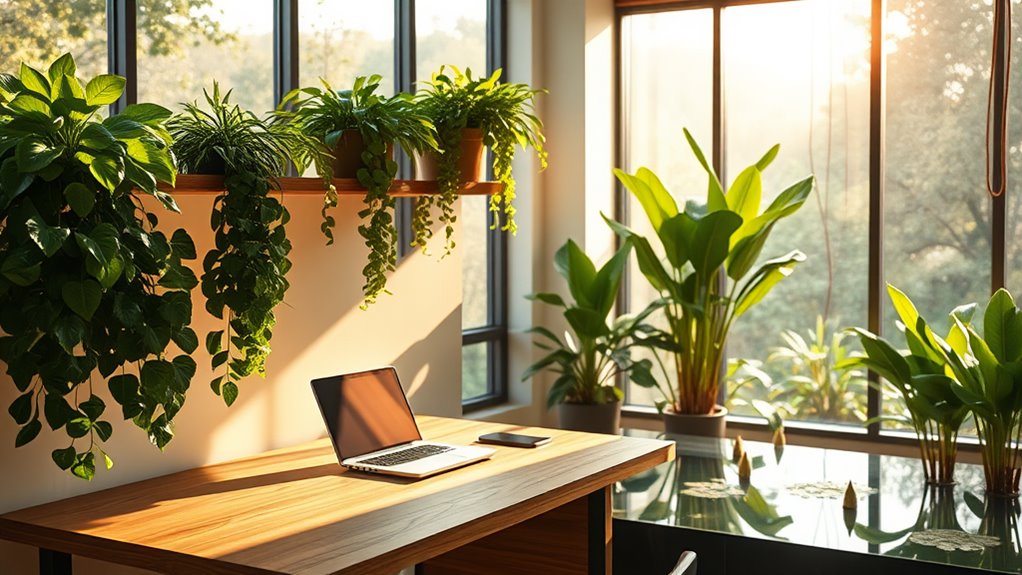
When you think about creating a productive workspace, don't overlook the power of natural light.
It's proven that natural light boosts employee productivity and satisfaction. With ample sunlight, you'll notice an improvement in mood and engagement among your team. This increased job satisfaction can lead to reduced employee turnover, saving your organization time and money. Additionally, exposure to natural light supports health and wellness by regulating circadian rhythms, helping to reduce fatigue and stress. You might even find that employees experience better sleep quality and higher energy levels.
Incorporating Natural Materials for a Tactile Experience
Incorporating natural materials into your workspace not only enhances aesthetics but also creates a tactile experience that connects employees to nature. By integrating textures and elements inspired by the outdoors, you foster a calming environment. Consider these options:
Integrating natural materials in your workspace elevates design and fosters a deeper connection to nature for employees.
- Wood Accents: Add warmth and a cozy feel.
- Stone Elements: Ground your space with a natural look.
- Bamboo and Rattan: Use these sustainable materials for eco-friendly furniture.
- Wool Rugs: Introduce comfort and a soft touch underfoot.
- Cork Bulletin Boards: Create a textured, natural feel for your ideas. Additionally, incorporating natural materials promotes emotional well-being and enhances the overall atmosphere of your workspace.
Enhancing Air Quality and Reducing Noise With Greenery

Natural materials create a soothing atmosphere, but enhancing air quality and reducing noise with greenery takes your workspace to the next level. Incorporating air-purifying plants like Pothos or Boston Ferns can greatly improve indoor air quality by filtering out harmful VOCs. Utilizing indoor gardens or living walls not only acts as natural air filters, but also insulates your space, reducing external noise. Greenery absorbs sound, making your environment quieter and more serene. Adding elements like potted plants or vertical gardens can create a calming atmosphere, boosting focus and productivity. This approach to design enhances health and well-being, making it essential for creating a productive workspace.
The Calming Effects of Water Features
The gentle trickle of a water feature can transform any workspace into a serene oasis.
The soothing sound of running water reduces stress, allowing you to focus better. It creates a calming environment that not only enhances your concentration but also promotes mental wellbeing. Additionally, the sound of running water has been scientifically proven to reduce stress levels, which can significantly improve overall workplace productivity.
Here are some benefits you'll experience:
- Reduced Stress: The sound of water lowers stress levels.
- Enhanced Focus: A peaceful atmosphere boosts your concentration.
- Visual Appeal: Water features break the monotony of your workspace.
- White Noise: They mask distracting sounds, creating a tranquil setting.
- Emotional Balance: Being near water stabilizes your mood and promotes relaxation.
Incorporating a water feature can meaningfully improve your workspace, making it a more enjoyable place to be.
Economic and Environmental Benefits of Biophilic Design
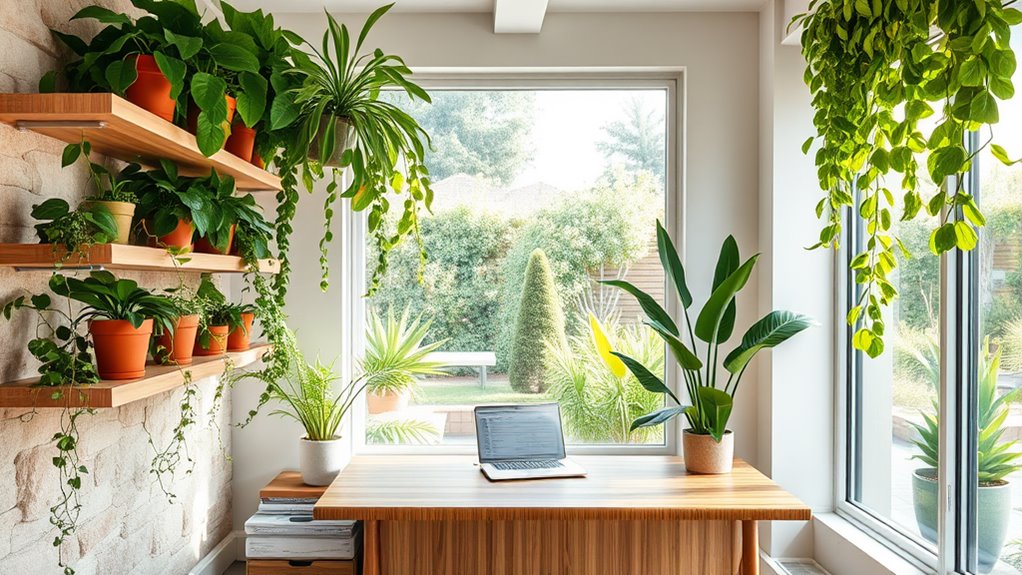
Biophilic design offers compelling economic and environmental benefits that can transform your workspace into a more productive and sustainable environment.
By integrating natural elements, you can boost productivity and reduce absenteeism by up to 15%, as seen at ING Bank's headquarters. For every £1 invested in biophilia, you might earn about £2.70 in return due to enhanced well-being. Research shows that access to plants in the workspace can save over $2,000 per employee annually, further emphasizing the financial advantages of biophilic design.
Additionally, biophilic designs often feature energy-efficient systems, leading to significant energy savings.
Environmentally, incorporating green spaces improves air quality and supports local biodiversity. Using sustainable materials and water-saving systems can conserve resources and reduce CO2 emissions.
Frequently Asked Questions
How Do I Start Incorporating Biophilic Design in My Home Workspace?
Start by adding low-maintenance plants like pothos or snake plants. Position your desk near windows for natural light, and use natural materials for furniture. Incorporate calming art and textures to enhance your workspace's overall ambiance.
What Types of Plants Are Best for Indoor Air Quality?
To improve indoor air quality, consider adding peace lilies, snake plants, and spider plants. They effectively remove toxins and enhance air freshness, making your environment healthier and more enjoyable without requiring extensive care.
Can Biophilic Design Improve Employee Retention Rates?
Yes, biophilic design can considerably improve employee retention rates. By creating a more engaging and healthier work environment, you'll foster greater job satisfaction, reduce stress, and enhance overall well-being, encouraging employees to stay longer.
What Maintenance Is Required for Indoor Water Features?
To maintain indoor water features, you'll need daily cleaning, weekly surface washes, monthly disassembly, and annual deep cleanings. Regularly check pump components, water levels, and humidity to guarantee peak performance and longevity.
How Can Biophilic Design Be Applied in Small Spaces?
You can apply biophilic design in small spaces by using vertical planters, natural materials, and mirrors to maximize light. Incorporate plants and earthy colors to create a calming, nature-inspired atmosphere without overwhelming the area.